Industrial Displays for Self-Service Systems
Self-service equipment such as kiosks, ticketing machines, and smart lockers relies on responsive and durable display interfaces for unattended operation. In these environments, display selection is typically influenced by touch responsiveness, front-surface durability, continuous duty performance, and service-friendly system integration.
Display Interfaces for Unattended Service Equipment
Self-service systems typically operate without direct staff supervision. The display therefore functions as the primary interaction point between the system and the end user, guiding transactions, instructions, and service operations.
Engineering review usually focuses on reliable touch interaction, front-surface durability for repeated public use, and practical integration that allows maintenance or component replacement during the equipment service lifecycle.
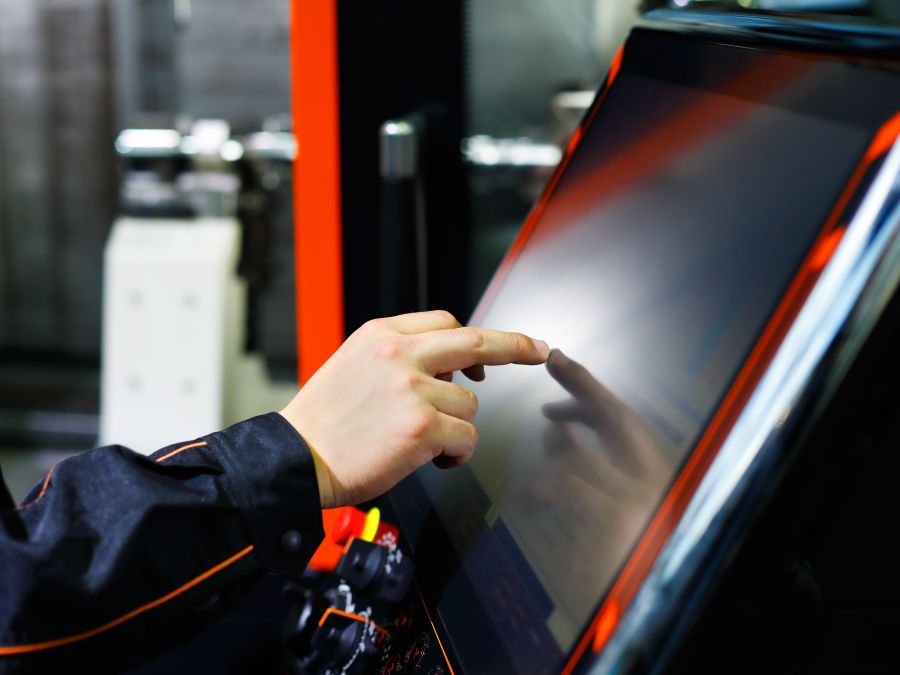
Common examples include kiosks, ticketing terminals, locker systems, vending machines, and check-in equipment where users interact directly with the display interface.
Why Self-Service Display Review Is Usually Interaction- and Maintenance-Driven
In self-service systems, the main issue is usually not whether a display can present content. The practical question is whether the interface remains responsive, durable, and maintainable under repeated public use without direct staff support.
The Display Is the Service Interface
For unattended equipment, the display is often the main point of contact between the system and the user. If touch response is inconsistent, the front surface wears too quickly, or field service is difficult, the issue affects both usability and operating continuity.
For that reason, platform review usually considers public interaction, mechanical protection, and service access before visual format alone.
Estabilidad táctil
Frequent public interaction requires predictable and responsive touch behavior across repeated daily use.
Frente Durabilidad
Cover glass, surface treatment, and front protection affect long-term performance in public-facing deployment.
Acceso a los servicios
Field replacement and maintenance planning can affect total program practicality after deployment.
Qué suele significar esto en la práctica
The suitable platform is normally selected according to user interaction pattern, enclosure structure, duty cycle, and maintenance requirements rather than by display size alone.
Dónde suelen aparecer estos requisitos de visualización
Self-service systems depend on clear interface flow, durable front design, and practical long-term serviceability in unattended operating environments.
Kiosk Terminals
Uso públicoUsed for payments, check-in procedures, service information, identity verification, or ticketing workflows in unattended environments.
These systems usually require stable touch interaction, clear front-surface usability, and practical service access after deployment.
Ticketing Machines
Transaction FlowInstalled in transportation hubs, parking facilities, and public venues where users need to complete guided transactions without staff assistance.
In these cases, interface consistency and front durability often affect daily operating reliability more than nominal display size.
Smart Locker Systems
Unattended AccessUsed where users authenticate access, retrieve parcels, or manage temporary storage through a direct display interface.
These installations often require a balanced approach to touch usability, enclosure fit, and predictable service replacement.
Vending & Service Machines
Continuous DutyApplied in systems that provide automated product dispensing or service access through an integrated user-facing interface.
Here, continuous duty operation and maintenance practicality often matter as much as the front-end user experience.
Áreas típicas de evaluación antes de la selección final de la plataforma
Display platforms are usually reviewed according to interaction behavior, front protection, enclosure installation, and practical long-term serviceability within the final equipment program.
Interaction and Front Structure Review
Touch performance
Touch tuning is typically reviewed to support responsive and stable interaction across frequent public usage cycles.
Front durability
Cover glass thickness, surface treatment, and front protection approach may be reviewed for long-term repeated contact.
User-facing interface clarity
The interface should remain predictable and usable in the actual service flow, not only in controlled test conditions.
Installation and Lifecycle Review
Integración mecánica
Display installation should align with enclosure layout, opening dimensions, structural support, and access requirements.
Perfil de servicio continuo
Many unattended systems operate for extended hours, so operating profile review is usually part of early platform selection.
Service lifecycle planning
Replacement compatibility and field-maintenance planning can affect long-term service continuity after deployment.
Preguntas frecuentes
Revisión de ingeniería
Envíe los detalles de su solicitud. Le responderemos con la dirección de configuración y los siguientes pasos.