Kopersgids voor industriële beeldschermleveranciers voor OEM-apparatuur

Inleiding Mens-machine-interfaces (MMI's) zijn tegenwoordig standaardcomponenten in moderne industriële apparatuur. Met displays kunnen operators ...
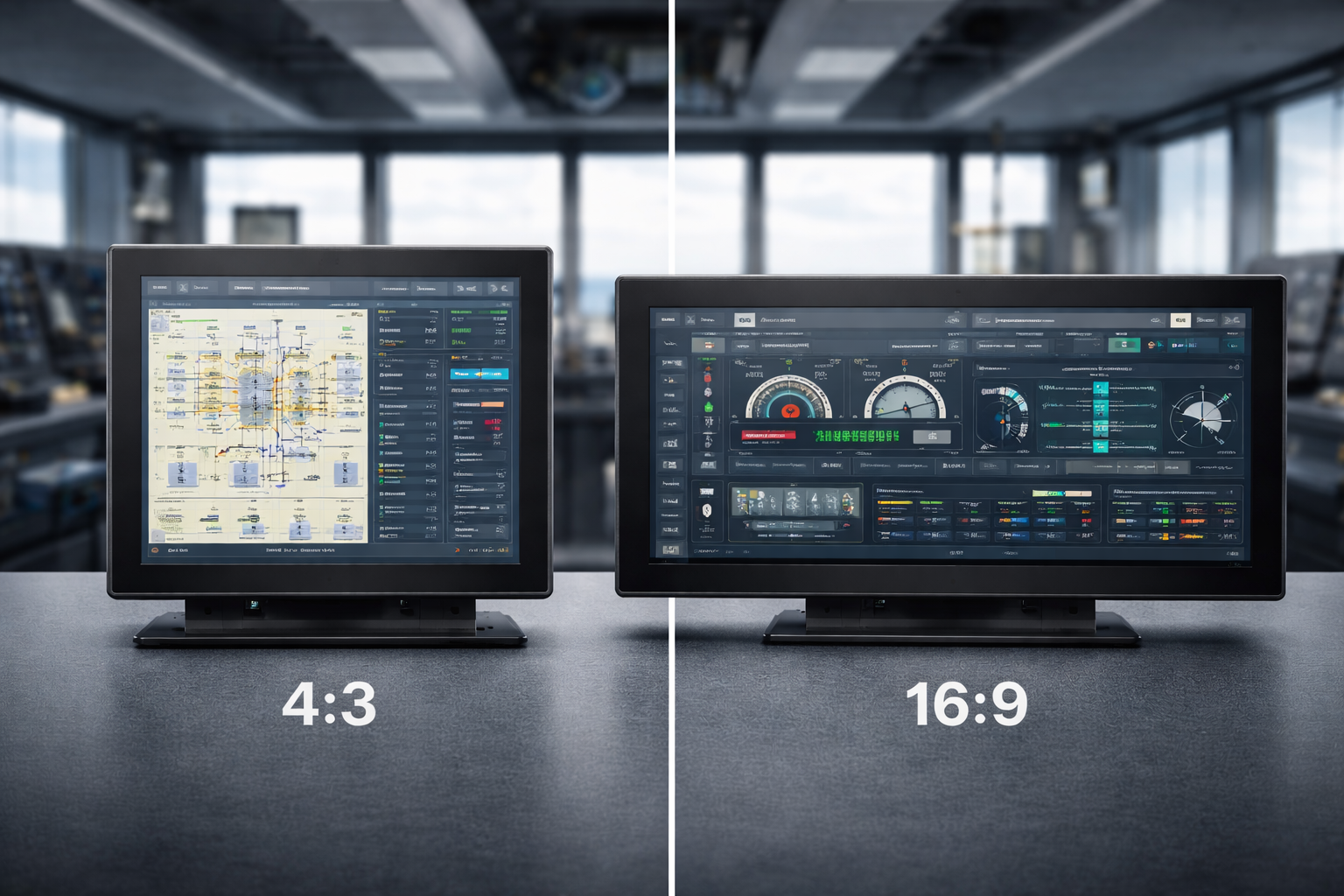
Bij het selecteren van een monitor moet de beeldverhouding is een cruciale factor die bepaalt hoe je digitale inhoud bekijkt, ermee werkt en ermee omgaat. Of u nu een monitor kiest voor professionele taken, gaming of multimediaconsumptie, het verschil tussen 4:3 en 16:9 beeldverhoudingen kan je ervaring aanzienlijk veranderen.
Deze gids vergelijkt deze twee veelgebruikte beeldverhoudingen en helpt je beslissen welke het beste past bij jouw specifieke behoeften.
In wezen verwijst de beeldverhouding van een monitor naar de proportionele verhouding tussen breedte en hoogte. Hoewel dit een eenvoudige specificatie lijkt, heeft het een directe invloed:
De beeldverhouding beïnvloedt alles, van de lay-out van de interface tot hoe natuurlijk je ogen over het scherm bewegen.
De overgang van 4:3 tot 16:9 weerspiegelt een bredere evolutie in digitale media.
De 4:3 beeldverhouding was ooit de standaard, nauw afgestemd op vroege televisieformaten en oudere computersystemen. Toen multimedia-inhoud zich uitbreidde en videoformaten verschoven in de richting van breedbeeldpresentatie, 16:9 werd de dominante standaard, Vooral met de opkomst van HDTV en moderne computerapparatuur.
Deze verschuiving werd gedreven door inhoud, niet alleen door hardware.
De 4:3 beeldverhouding biedt een meer vierkante weergave, die waardevol blijft in bepaalde contexten.
De belangrijkste voordelen zijn:
In professionele omgevingen wordt vaak de voorkeur gegeven aan 4:3-monitoren voor codering, tekstbewerking, lezen en besturingsinterfaces, waarbij verticale duidelijkheid belangrijker is dan horizontale uitbreiding.
Ze zijn ook populair in retrogaming en toepassingen die oorspronkelijk rond dit formaat zijn ontworpen.
De 16:9 beeldverhouding is de standaard geworden voor moderne digitale inhoud.
Het wordt overal gebruikt:
Deze indeling sluit perfect aan bij HD-, Full HD- en 4K-videostandaarden, waardoor het ideaal is voor:
Dankzij het bredere horizontale veld blinkt 16:9 uit in het weergeven van dashboards, tijdlijnen en zij-aan-zij-inhoud.
Bij het vergelijken van deze twee beeldverhoudingen hangt de keuze af van hoe de monitor zal worden gebruikt.
Geen van beide is universeel beter - de juiste optie hangt af van je prioriteiten.
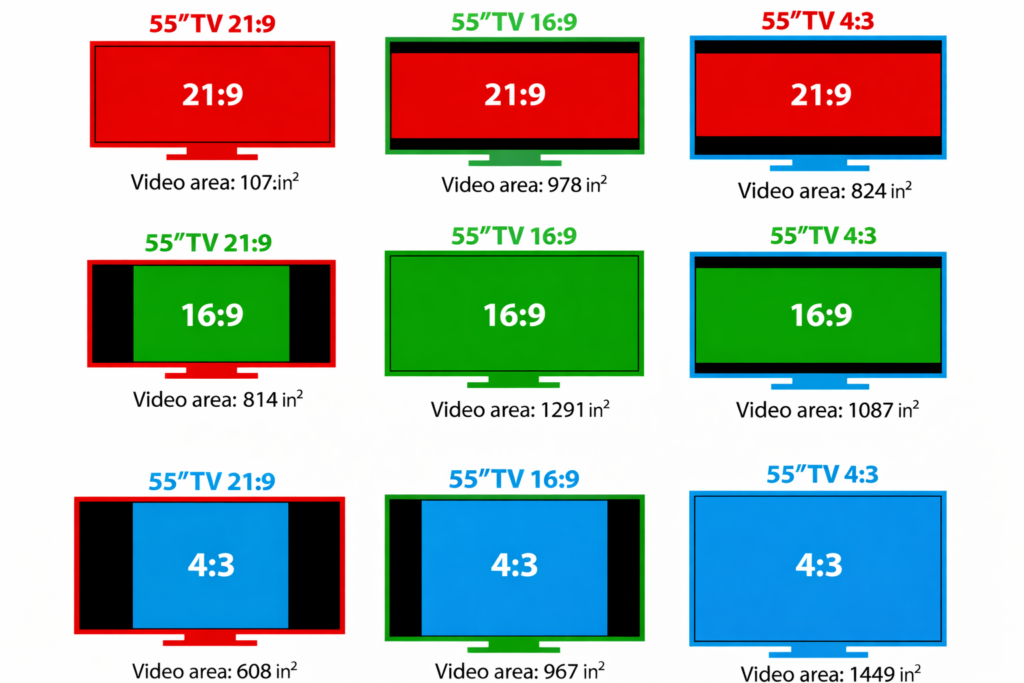
De verschuiving weerspiegelt hoe content tegenwoordig wordt gemaakt en geconsumeerd.
Moderne media, vooral video en interactieve toepassingen, profiteren van bredere kijkgebieden. Toen breedbeeldformaten de norm werden, volgde de beeldschermtechnologie dit voorbeeld om te voldoen aan de verwachtingen van de inhoud en het gedrag van de gebruiker.
Ja, maar minder gebruikelijk, 4:3-monitoren blijven relevant in specifieke gebruiksgevallen.
Ze worden nog steeds gebruikt:
Door hun verticale efficiëntie en compatibiliteit zijn ze waardevol als modernisering niet het primaire doel is.
Naarmate de beeldschermtechnologie zich ontwikkelt, ultrabrede formaten zoals 21:9 worden steeds populairder en bieden meer beleving en productiviteit. Gebogen en panoramische beeldschermen breiden de mogelijkheden uit, vooral voor multitasking en zwaar visueel werk.
Nog steeds, 4:3 en 16:9 blijven basisnormen, en ze zullen naast elkaar blijven bestaan op basis van de toepassingsbehoeften.
Kiezen tussen een 4:3 en 16:9 monitor is niet alleen een technische beslissing, het gaat over hoe je omgaat met digitale inhoud.
De juiste beeldverhouding verhoogt de productiviteit, het comfort en de algehele bruikbaarheid.
Dat hangt af van de taak. Een 4:3-monitor is vaak beter voor tekstintensief of verticaal georiënteerd werk, terwijl een 16:9-monitor geschikter is voor multitasking, moderne software en multimediacontent.
16:9-monitoren voldoen aan de moderne videostandaarden en breedbeeldindelingen, waardoor ze ideaal zijn voor het afspelen van video's, games en moderne toepassingen.
Ja. 4:3-monitoren worden nog steeds gebruikt in professionele en industriële omgevingen, vooral waar verouderde software, vaste behuizingen of verticale schermruimte belangrijk is.
Ja. De beeldverhouding beïnvloedt hoe informatie op het scherm wordt weergegeven. Het kiezen van de juiste verhouding kan de efficiëntie van de workflow, de leesbaarheid en het algemene gebruiksgemak verbeteren.
Voor langetermijn- of oudere projecten kan 4:3 een betere compatibiliteit bieden. Voor nieuwe systemen en toekomstige schaalbaarheid is 16:9 meestal de betere keuze.
Inleiding Mens-machine-interfaces (MMI's) zijn tegenwoordig standaardcomponenten in moderne industriële apparatuur. Met displays kunnen operators ...
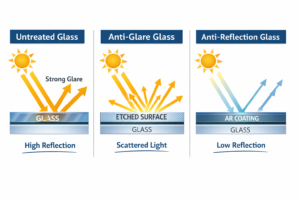
Inleiding Industriële beeldschermen worden vaak gebruikt in omgevingen waar de lichtomstandigheden moeilijk te regelen zijn. Apparatuur ...
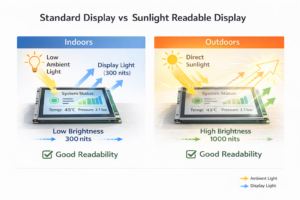
Inleiding Displays zijn een cruciale interfacecomponent in veel soorten industriële apparatuur. Ze bieden systeem ...
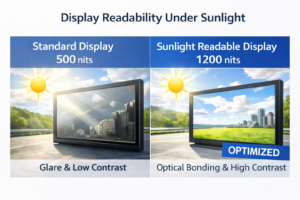
Inleiding De zichtbaarheid van schermen is een kritieke ontwerpparameter in industriële apparatuur. Operators vertrouwen op grafische interfaces ...
Stuur je aanvraaggegevens. We geven je een reactie met de richting van de configuratie en de volgende stappen.