Kopersgids voor industriële beeldschermleveranciers voor OEM-apparatuur

Inleiding Mens-machine-interfaces (MMI's) zijn tegenwoordig standaardcomponenten in moderne industriële apparatuur. Met displays kunnen operators ...
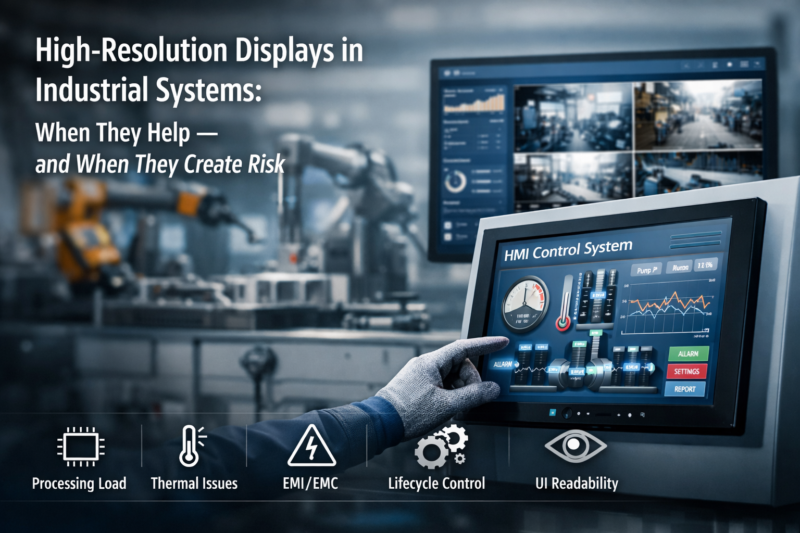
Industriële beeldschermen met hoge resolutie worden steeds vaker gebruikt in moderne industriële apparatuur. Omdat software voor mens-machine-interfaces (HMI) zich ontwikkelt in de richting van rijkere grafische interfaces, dashboards met meerdere vensters en tools voor gegevensvisualisatie, vragen engineeringteams vaak om schermen met een hogere pixeldichtheid.
Op het eerste gezicht lijkt het verhogen van de beeldschermresolutie een eenvoudige verbetering. Met een hoger aantal pixels kan meer grafische informatie tegelijk worden weergegeven, waardoor de operator zich mogelijk beter bewust wordt van de situatie en de bewakingsmogelijkheden worden verbeterd.
In industriële systemen echter, Beeldschermresolutie is niet alleen een visuele specificatie. Het beïnvloedt verschillende aspecten van de systeemarchitectuur, waaronder:
Industriële apparatuur werkt vaak jarenlang continu, vaak in een omgeving met trillingen, temperatuurschommelingen en elektromagnetische interferentie.
Voor OEM-fabrikanten en systeemintegrators moet de beeldschermresolutie daarom worden geëvalueerd als onderdeel van de algemene systeemarchitectuur, in plaats van te worden behandeld als een afzonderlijke weergaveparameter.
Een industrieel beeldscherm met hoge resolutie verwijst naar een HMI-scherm of industriële monitor met een pixeldichtheid die aanzienlijk hoger is dan de traditionele standaarden voor industriële beeldschermen.
In het verleden gebruikten veel industriële HMI's gematigde resoluties zoals:
Deze resoluties waren voldoende voor machine-interfaces die alarmen, machinetoestanden en eenvoudige besturingselementen weergeven.
Moderne industriële systemen gebruiken steeds hogere resoluties, waaronder:
Deze displays zijn meestal geïntegreerd in:
In veel projecten komt de vereiste resolutie voort uit HMI-software die oorspronkelijk is ontwikkeld voor desktopomgevingen. Dergelijke softwareframeworks gaan uit van grotere grafische werkruimten en een hogere pixeldichtheid dan oudere industriële beeldschermen.
Ingebedde computerplatforms die worden gebruikt in industriële apparatuur - vaak ARM-processors of x86-systemen met een laag stroomverbruik - schalen echter niet altijd efficiënt mee met een hogere beeldschermresolutie.
Verschillende hardware subsystemen bepalen of een systeem effectief een hogere beeldschermresolutie kan ondersteunen.
Moderne industriële beeldschermen gebruiken vaak snelle interfaces zoals:
Een hogere resolutie verhoogt de vereiste pixeldoorvoer.
| Resolutie | Pixels per frame | Relatieve pixelbelasting |
|---|---|---|
| 1024×768 | ~0,79 MP | Basislijn |
| 1280×800 | ~1,02 MP | ~1.3× |
| 1920×1080 | ~2,07 MP | ~2.6× |
Een Full HD-scherm vereist daarom meer dan twee keer de pixelverwerking van een traditioneel XGA-scherm.
Bij een vernieuwingsfrequentie van 60 Hz is een 1920×1080 interface vereist doorgaans een pixelklok rond 148,5 MHz. Afhankelijk van de kleurdiepte en codering kan de effectieve gegevenssnelheid meerdere gigabits per seconde bereiken.
Naarmate de bandbreedte toeneemt, wordt de weergave-interface gevoeliger voor:
Deze factoren zijn vooral belangrijk in industriële apparatuur met motoren, aandrijvingen of lange interne kabeltrajecten.
Een hogere beeldschermresolutie verhoogt de grafische werkbelasting aanzienlijk.
De grafische pijplijn moet dit afhandelen:
Bijvoorbeeld een Voor een beeldscherm van 1920 × 1080 met een 32-bits framebuffer is ongeveer:
1920 × 1080 × 4 bytes ≈ 8 MB per frame
Met dubbele buffering en extra grafische lagen kan het geheugengebruik oplopen tot 16-32 MB actieve framebufferruimte.
In veel ingebedde systemen wordt de schermprestatie niet beperkt door het paneel zelf, maar door GPU-capaciteit en geheugenbandbreedte.
Als de grafische pijplijn zijn limieten nadert, kunnen operators dit waarnemen:
Het handhaven van voldoende verwerkingsmarge is daarom belangrijk voor systemen die continu werken.
Beeldschermen met een hogere resolutie worden vaak geassocieerd met:
Deze factoren verhogen het totale energieverbruik.
In ventilatorloze of afgedichte industriële apparatuur draagt extra vermogensdissipatie direct bij aan interne warmteontwikkeling. Zelfs kleine verhogingen van de warmteafgifte kunnen de temperatuur in de binnenruimte beïnvloeden.
Thermische ontwerpmarges moeten daarom worden gecontroleerd bij het upgraden van de beeldschermresolutie.
De beeldschermresolutie moet altijd samen met schermgrootte en kijkafstand.
Een hoger aantal pixels op een klein scherm verhoogt de pixeldichtheid, maar dit verbetert niet altijd de bruikbaarheid voor operators die op een afstand van een paar meter van de apparatuur staan.
In veel industriële omgevingen wordt bruikbaarheid sterker beïnvloed door:
in plaats van alleen pixeldichtheid.
Voor fabrieks-HMI's bekeken vanaf een afstand van ongeveer een meter of meer, Grotere UI-elementen en een duidelijke grafische hiërarchie verbeteren de bruikbaarheid vaak meer dan een hogere pixeldichtheid.
Een hogere resolutie verhoogt zowel GPU-werkbelasting en geheugenverkeer.
Ingebedde processors met een laag stroomverbruik kunnen moeite hebben met het aansturen van beeldschermen met een hoge resolutie en het tegelijkertijd uitvoeren van besturingssoftware die verantwoordelijk is voor:
In de praktijk worden weergaveproblemen in industriële HMI's vaak veroorzaakt door beperkingen van geheugenbandbreedte in plaats van CPU-snelheid.
Het behouden van voldoende grafische verwerkingsmarge helpt bij het garanderen van een stabiele interfacereactie onder piekbelastingen.
Veel industriële platforms vertrouwen op passieve koelstrategieën, zoals:
Deze ontwerpen bieden beperkte thermische hoofdruimte.
Een hogere resolutie zorgt indirect voor meer warmteontwikkeling:
Over lange gebruiksperioden versnelt een verhoogde interne temperatuur de veroudering van componenten. Conservatieve thermische ontwerpmarges verbeteren daarom de betrouwbaarheid op lange termijn.
Beeldscherminterfaces met hoge resolutie werken met gegevenssnelheden in de multi-gigabit bereik.
Industriële omgevingen kunnen extra uitdagingen met zich meebrengen, zoals:
Een hogere bandbreedte verlaagt de tolerantie voor signaaldegradatie.
Tijdens EMC-testen kunnen snelle beeldscherminterfaces soms bronnen worden van uitgestraalde emissies of signaalinstabiliteit, Dit vereist een zorgvuldige kabelgeleiding en afscherming.
Industriële OEM-apparatuur vereist meestal een jarenlange beschikbaarheid van onderdelen.
Beeldschermen die zijn ontwikkeld voor consumentenelektronica hebben mogelijk een kortere levenscyclus.
Mogelijke risico's zijn onder andere:
Bij het kiezen van een beeldschermresolutie moeten OEM's ook het volgende evalueren stabiliteit van de paneellevenscyclus en stappenplan voor leveranciers.
Machine vision-systemen worden vaak weergegeven:
Een hogere resolutie behoudt beelddetails en verbetert de zichtbaarheid van inspectiekenmerken.
Regelkamers en controlestations tonen vaak meerdere informatiebronnen tegelijk, waaronder:
Met industriële monitoren met hoge resolutie kunnen operators meerdere gegevensvensters bekijken zonder vaak van interface te hoeven wisselen.
Bepaalde complexe industriële machines vereisen gedetailleerde grafische interfaces, zoals:
Deze toepassingen profiteren van een grotere schermruimte voor diagrammen, configuratietools en visualisatiepanelen.
Openbare infrastructuursystemen bevatten soms service- of diagnostische displays, zoals:
In deze omgevingen kan een hogere resolutie de informatiedichtheid en beeldhelderheid verbeteren.
Een hogere resolutie is over het algemeen geschikt wanneer:
Onder deze omstandigheden kan een hogere resolutie de visualisatie verbeteren en complexere gebruikersinterfaces ondersteunen.
Een hogere resolutie kan het systeem onnodig complex maken wanneer:
In veel industriële systemen, matige resolutie in combinatie met een goed ontworpen HMI-indeling zorgt voor stabielere prestaties op de lange termijn.
Bij het ontwerpen van industriële apparatuur moet de beeldschermresolutie worden behandeld als een engineeringparameter op systeemniveau, niet alleen een visuele upgrade.
Het verhogen van de pixeldichtheid beïnvloedt:
Voor veel industriële platforms biedt een gematigde resolutie in combinatie met goed ontworpen HMI-indelingen een stabiele en onderhoudbare oplossing.
Een hogere resolutie is voordelig wanneer deze rechtstreeks operationele vereisten ondersteunt, zoals machinevisualisatie of bewaking met meerdere vensters, en wanneer de systeemarchitectuur voldoende verwerkings- en thermische marge biedt.
Het evalueren van de beeldschermresolutie in een vroeg stadium van het systeemontwerp helpt integratieproblemen te voorkomen en ondersteunt de betrouwbaarheid van de apparatuur op de lange termijn.
Niet noodzakelijkerwijs. Veel machine-interfaces geven relatief eenvoudige informatie weer waarbij resoluties zoals 1024×768 of 1280×800 voldoende bruikbaarheid bieden.
Veel industriële HMI's maken gebruik van 1024×768 (XGA) of 1280×800 (WXGA) omdat deze resoluties een goede balans bieden tussen leesbaarheid, verwerkingsvereisten en beschikbaarheid van het paneel.
Een hogere resolutie verhoogt het aantal pixels dat per frame wordt verwerkt, waardoor GPU-werkbelasting, framebuffergrootte en vereisten voor geheugenbandbreedte.
Ja. Een hogere resolutie verhoogt vaak GPU-activiteit, geheugenbandbreedtegebruik en vermogen schermverlichting, die de thermische prestaties in ventilatorloze industriële systemen kunnen beïnvloeden.
Mogelijk. Snelle displayinterfaces die met hogere datasnelheden werken, kunnen gevoeliger zijn voor problemen met signaalintegriteit en elektromagnetische emissies.
Inleiding Mens-machine-interfaces (MMI's) zijn tegenwoordig standaardcomponenten in moderne industriële apparatuur. Met displays kunnen operators ...
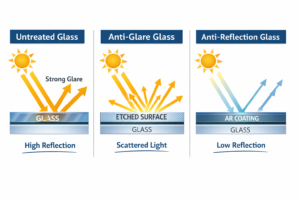
Inleiding Industriële beeldschermen worden vaak gebruikt in omgevingen waar de lichtomstandigheden moeilijk te regelen zijn. Apparatuur ...
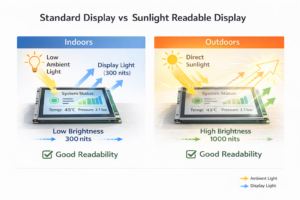
Inleiding Displays zijn een cruciale interfacecomponent in veel soorten industriële apparatuur. Ze bieden systeem ...
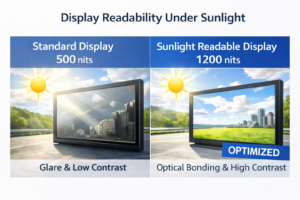
Inleiding De zichtbaarheid van schermen is een kritieke ontwerpparameter in industriële apparatuur. Operators vertrouwen op grafische interfaces ...
Stuur je aanvraaggegevens. We geven je een reactie met de richting van de configuratie en de volgende stappen.