Kopersgids voor industriële beeldschermleveranciers voor OEM-apparatuur

Inleiding Mens-machine-interfaces (MMI's) zijn tegenwoordig standaardcomponenten in moderne industriële apparatuur. Met displays kunnen operators ...
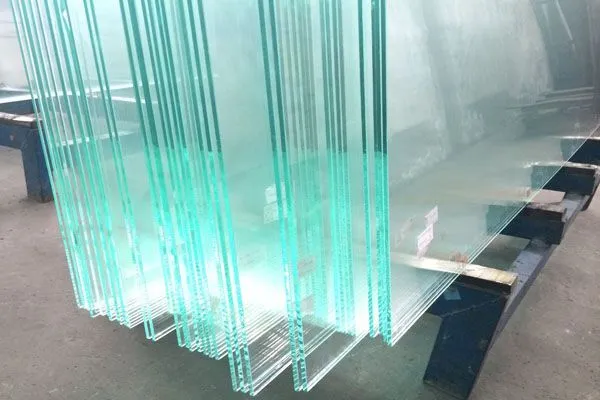
Gehard glas, ook bekend als gehard glas-is een type veiligheidsglas dat een cruciale rol speelt in industriële apparatuur, aanraakschermen, kiosken en publieke systemen.
Vergeleken met gewoon gegloeid glas biedt gehard glas:
Deze kenmerken maken het een standaard materiaalkeuze voor industriële aanraakmonitoren, ticketautomaten en displaysystemen voor buiten.
Gehard glas is een vorm van veiligheidsglas dat thermisch behandeld om de sterkte en duurzaamheid te verbeteren.
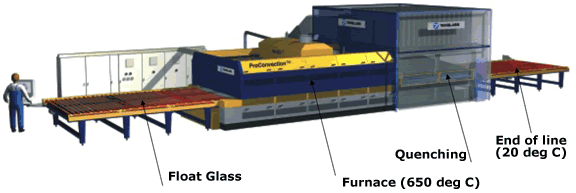
Tijdens de productie wordt het glas verwarmd tot ongeveer 620-680°C en vervolgens snel afgekoeld.
Dit proces creëert drukspanning op het oppervlak en trekspanning in het glas.
Hierdoor wordt gehard glas:
Het hardingsproces omvat een aantal belangrijke stappen:
Eenmaal gehard, is het glas kan niet worden gesneden of geboord zonder te breken.
Gehard glas kan weerstaan:
Dit maakt het ideaal voor aanraakschermen in openbare of industriële omgevingen.
Gehard glas verdraagt temperatuurverschillen tot 200-250°C, veel hoger dan standaardglas.
Dit is essentieel voor toepassingen zoals:
Bij breuk versplintert gehard glas in kleine, stompe fragmenten in plaats van scherpe scherven.
Dit vermindert het risico op letsel aanzienlijk en daarom is het geclassificeerd als veiligheidsglas.
| Functie | Gehard glas | Normaal glas |
|---|---|---|
| Sterkte | Zeer hoog | Laag |
| Thermische weerstand | Hoog | Laag |
| Veiligheid bij breuk | Kleine stompe stukken | Scherpe scherven |
| Industrieel gebruik | Ja | Geen |
In aanraakschermen en industriële displays wordt vaak gehard glas gebruikt:
Afhankelijk van het project kan het worden gecombineerd met:
Deze verbeteringen verbeteren zichtbaarheid, duurzaamheid en langdurige bruikbaarheid.
Gehard glas wordt veel gebruikt in:
Het vermogen om voortdurend gebruik, impact en milieubelasting maakt het tot een kernmateriaal in het ontwerp van industriële systemen.
Ondanks de voordelen heeft gehard glas enkele beperkingen:
Om deze reden, ontwerpvalidatie vóór massaproductie is cruciaal in industriële projecten.
Ja. “Gehard glas” en “gehard glas” verwijzen naar hetzelfde materiaal.
Ja. Met de juiste dikte en coatings wordt het veel gebruikt in semi-buiten- en buitentoepassingen.
Typische diktes variëren van 2 mm tot 6 mm, afhankelijk van de zeefgrootte en impactvereisten.
Gehard glas is niet alleen een veiligheidsupgrade, het is een fundamentele materiaalkeuze voor moderne industriële en aanraakgebaseerde systemen.
Zijn sterkte, thermische stabiliteit en veilige faalgedrag maken het onmisbaar voor:
Voor OEM's en systeemintegrators is het kiezen van de juiste specificatie voor gehard glas een belangrijke stap in de richting van betrouwbaar productontwerp met lange levensduur.
Inleiding Mens-machine-interfaces (MMI's) zijn tegenwoordig standaardcomponenten in moderne industriële apparatuur. Met displays kunnen operators ...
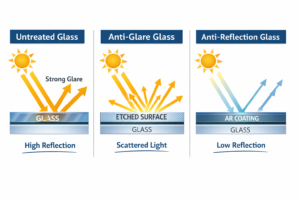
Inleiding Industriële beeldschermen worden vaak gebruikt in omgevingen waar de lichtomstandigheden moeilijk te regelen zijn. Apparatuur ...
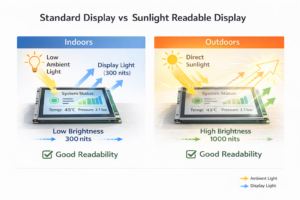
Inleiding Displays zijn een cruciale interfacecomponent in veel soorten industriële apparatuur. Ze bieden systeem ...
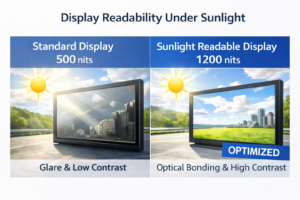
Inleiding De zichtbaarheid van schermen is een kritieke ontwerpparameter in industriële apparatuur. Operators vertrouwen op grafische interfaces ...
Stuur je aanvraaggegevens. We geven je een reactie met de richting van de configuratie en de volgende stappen.