Panel PC vs Computador Industrial: Diferenças de arquitetura e integração
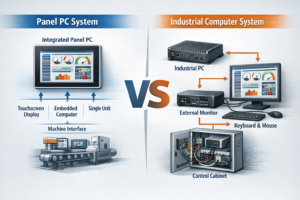
Introdução Na conceção de sistemas industriais, a seleção da arquitetura informática adequada afecta diretamente a fiabilidade e a complexidade da integração do sistema, ...
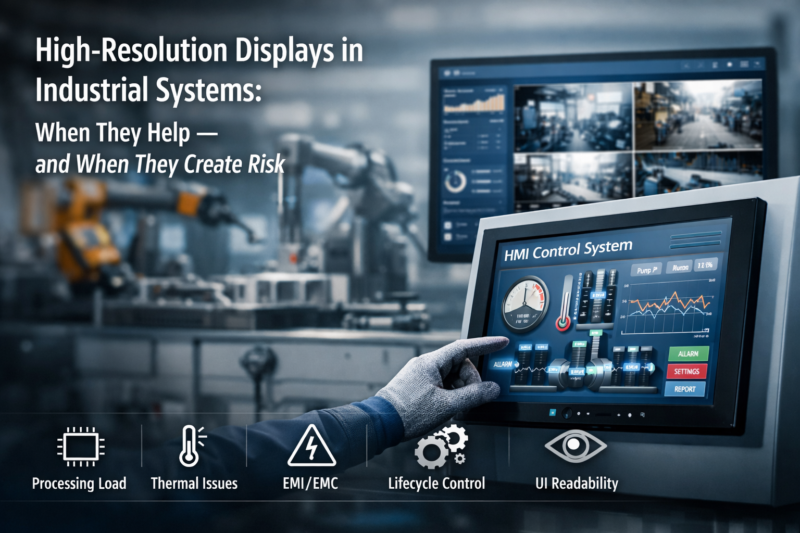
Os ecrãs industriais de alta resolução são cada vez mais especificados nos equipamentos industriais modernos. À medida que o software de interface homem-máquina (HMI) evolui para interfaces gráficas mais ricas, painéis de controlo com várias janelas e ferramentas de visualização de dados, as equipas de engenharia solicitam frequentemente ecrãs com maior densidade de píxeis.
À primeira vista, o aumento da resolução do ecrã parece ser uma melhoria simples. Um maior número de píxeis permite a visualização simultânea de mais informação gráfica, melhorando potencialmente a perceção do operador e a capacidade de monitorização.
No entanto, nos sistemas industriais, a resolução do ecrã não é apenas uma especificação visual. Afecta vários aspectos da arquitetura do sistema, incluindo:
O equipamento industrial funciona frequentemente de forma contínua durante muitos anos, muitas vezes em ambientes que envolvem vibração, variação de temperatura e interferência electromagnética.
Para os fabricantes OEM e integradores de sistemas, a resolução do ecrã deve, por conseguinte, ser avaliada como parte da arquitetura global do sistema, em vez de ser tratado como um parâmetro de visualização isolado.
Um ecrã industrial de alta resolução refere-se a um ecrã HMI ou monitor industrial com uma densidade de píxeis significativamente superior aos padrões tradicionais de ecrãs industriais.
Historicamente, muitas HMIs industriais utilizavam resoluções moderadas, tais como:
Estas resoluções eram suficientes para interfaces de máquinas que apresentavam alarmes, estados de máquinas e elementos de controlo simples.
Os sistemas industriais modernos adoptam cada vez mais resoluções mais elevadas, incluindo:
Estes ecrãs estão normalmente integrados em:
Em muitos projectos, o requisito de resolução tem origem no software HMI originalmente desenvolvido para ambientes de secretária. Essas estruturas de software pressupõem espaços de trabalho gráficos maiores e uma maior densidade de píxeis do que os ecrãs industriais antigos.
No entanto, as plataformas de computação incorporadas utilizadas em equipamento industrial - frequentemente processadores ARM ou sistemas x86 de baixo consumo - nem sempre são dimensionadas de forma eficiente com o aumento da resolução do ecrã.
Vários subsistemas de hardware determinam se um sistema pode efetivamente suportar uma resolução de ecrã mais elevada.
Os ecrãs industriais modernos utilizam normalmente interfaces de alta velocidade, tais como:
Uma resolução mais elevada aumenta o débito de píxeis necessário.
| Resolução | Pixels por fotograma | Carga relativa de píxeis |
|---|---|---|
| 1024×768 | ~0,79 MP | Linha de base |
| 1280×800 | ~1,02 MP | ~1.3× |
| 1920×1080 | ~2,07 MP | ~2.6× |
Por conseguinte, um ecrã Full HD requer mais do dobro do processamento de píxeis de um ecrã XGA tradicional.
A uma taxa de atualização de 60 Hz, um A interface 1920×1080 requer normalmente um relógio de píxeis de cerca de 148,5 MHz. Dependendo da profundidade de cor e da codificação, o débito de dados efetivo pode atingir vários gigabits por segundo.
À medida que a largura de banda aumenta, a interface de visualização torna-se mais sensível:
Estes factores são particularmente importantes nos equipamentos industriais que contêm motores, accionamentos ou longos percursos internos de cabos.
Uma resolução de ecrã mais elevada aumenta significativamente a carga de trabalho dos gráficos.
O pipeline gráfico deve ser tratado:
Por exemplo, um Um ecrã de 1920 × 1080 com um buffer de fotogramas de 32 bits requer aproximadamente
1920 × 1080 × 4 bytes ≈ 8 MB por fotograma
Com o buffering duplo e camadas gráficas adicionais, o consumo de memória pode atingir 16-32 MB de espaço de memória intermédia de fotogramas ativa.
Em muitos sistemas incorporados, o desempenho do ecrã é limitado não pelo painel em si, mas por Capacidade da GPU e largura de banda da memória.
Se o pipeline gráfico se aproximar dos seus limites, os operadores podem observar:
A manutenção de uma margem de processamento suficiente é, por conseguinte, importante para os sistemas que funcionam continuamente.
Os ecrãs de alta resolução estão frequentemente associados a:
Estes factores aumentam o consumo total de energia.
Em equipamentos industriais sem ventoinha ou selados, a dissipação de energia adicional contribui diretamente para produção interna de calor. Mesmo pequenos aumentos na produção de calor podem influenciar as temperaturas internas do armário.
As margens de conceção térmica devem, por conseguinte, ser verificadas aquando da atualização da resolução do ecrã.
A resolução do ecrã deve ser sempre avaliada em conjunto com tamanho do ecrã e distância de visualização.
Uma maior contagem de píxeis num ecrã pequeno aumenta a densidade de píxeis, mas nem sempre melhora a facilidade de utilização para os operadores que se encontram a vários metros de distância do equipamento.
Em muitos ambientes industriais, a usabilidade é mais fortemente influenciada por:
em vez de apenas a densidade de píxeis.
Para HMIs de fábrica vistas a distâncias de cerca de um metro ou mais, A utilização de elementos de IU maiores e uma hierarquia gráfica clara melhoram frequentemente a usabilidade mais do que o aumento da densidade de píxeis.
Uma resolução mais elevada aumenta tanto Carga de trabalho da GPU e tráfego de memória.
Os processadores incorporados de baixo consumo podem ter dificuldades em controlar ecrãs de alta resolução e, simultaneamente, executar software de controlo responsável por:
Na prática, os problemas de desempenho do ecrã nas IHM industriais são frequentemente causados por limitações da largura de banda da memória em vez da velocidade da CPU.
A manutenção de uma margem de processamento gráfico suficiente ajuda a garantir uma capacidade de resposta estável da interface em picos de carga de trabalho.
Muitas plataformas industriais recorrem a estratégias de arrefecimento passivo, incluindo:
Estas concepções oferecem um espaço térmico limitado.
Uma resolução mais elevada aumenta indiretamente a produção de calor:
Durante longos períodos de funcionamento, a temperatura interna elevada acelera o envelhecimento dos componentes. As margens de conceção térmica conservadora melhoram, portanto, a fiabilidade a longo prazo.
As interfaces de ecrã de alta resolução funcionam com débitos de dados da ordem dos gama multi-gigabit.
Os ambientes industriais podem introduzir desafios adicionais, tais como:
Uma maior largura de banda reduz a tolerância à degradação do sinal.
Durante os ensaios de CEM, as interfaces de ecrã de alta velocidade podem ocasionalmente tornar-se fontes de emissões por radiação ou instabilidade do sinal, A utilização de um cabo de rede de alta velocidade, que requer um encaminhamento e blindagem cuidadosos.
O equipamento industrial OEM requer normalmente a disponibilidade de componentes durante muitos anos.
Os painéis de visualização desenvolvidos para os mercados de eletrónica de consumo podem ter ciclos de vida mais curtos.
Os riscos potenciais incluem:
Ao selecionar uma resolução de ecrã, os OEM devem também avaliar estabilidade do ciclo de vida do painel e roteiro do fornecedor.
Os sistemas de visão artificial apresentam frequentemente:
Uma resolução mais elevada preserva os detalhes da imagem e melhora a visibilidade das caraterísticas de inspeção.
As salas de controlo e as estações de monitorização apresentam frequentemente várias fontes de informação em simultâneo, incluindo:
Os monitores industriais de alta resolução permitem que os operadores observem várias janelas de dados sem necessidade de mudar frequentemente de interface.
Certas máquinas industriais complexas requerem interfaces gráficas pormenorizadas, incluindo:
Estas aplicações beneficiam de um maior espaço de trabalho no ecrã para diagramas, ferramentas de configuração e painéis de visualização.
Os sistemas de infra-estruturas públicas incluem por vezes ecrãs de serviço ou de diagnóstico, tais como:
Nestes ambientes, uma resolução mais elevada pode melhorar a densidade da informação e a clareza do ecrã.
Uma resolução mais elevada é geralmente adequada quando:
Nestas condições, uma resolução mais elevada pode melhorar a visualização e suportar interfaces de utilizador mais complexas.
Uma resolução mais elevada pode introduzir uma complexidade desnecessária no sistema quando:
Em muitos sistemas industriais, a resolução moderada combinada com layouts de IHM bem concebidos proporciona um desempenho mais estável a longo prazo.
Na conceção de equipamentos industriais, a resolução do ecrã deve ser tratada como um parâmetro de engenharia a nível do sistema, e não apenas uma atualização visual.
O aumento da densidade de píxeis afecta:
Para muitas plataformas industriais, a resolução moderada combinada com layouts de IHM bem concebidos proporciona uma solução estável e de fácil manutenção.
Uma resolução mais elevada torna-se vantajosa quando suporta diretamente os requisitos operacionais - como a visualização de visão artificial ou a monitorização de várias janelas - e quando a arquitetura do sistema proporciona uma margem térmica e de processamento suficiente.
A avaliação da resolução dos ecrãs na fase inicial da conceção do sistema ajuda a evitar desafios de integração e contribui para a fiabilidade do equipamento a longo prazo.
Não necessariamente. Muitas interfaces de máquinas apresentam informações relativamente simples em que resoluções como 1024×768 ou 1280×800 proporcionar uma usabilidade suficiente.
Muitas HMIs industriais utilizam normalmente 1024×768 (XGA) ou 1280×800 (WXGA) porque estas resoluções equilibram a legibilidade, os requisitos de processamento e a disponibilidade dos painéis.
Uma resolução mais elevada aumenta o número de pixéis processados em cada fotograma, o que aumenta Carga de trabalho da GPU, tamanho do buffer de quadros e requisitos de largura de banda da memória.
Sim. Uma resolução mais elevada aumenta frequentemente Atividade da GPU, utilização da largura de banda da memória e potência da retroiluminação do ecrã, que pode influenciar o desempenho térmico em sistemas industriais sem ventoinha.
Potencialmente. As interfaces de visualização de alta velocidade que funcionam com débitos de dados mais elevados podem aumentar a sensibilidade a problemas de integridade do sinal e a emissões electromagnéticas.
Introdução Na conceção de sistemas industriais, a seleção da arquitetura informática adequada afecta diretamente a fiabilidade e a complexidade da integração do sistema, ...
Introdução Nos equipamentos industriais, o subsistema "ecrã" faz parte de uma interface homem-máquina (IHM) mais vasta e ...

Introdução Na conceção de equipamento industrial, a interface homem-máquina (HMI) afecta diretamente a facilidade de utilização, a fiabilidade e a manutenção do sistema ...

Introdução As interfaces homem-máquina (IHM) são atualmente componentes normais dos equipamentos industriais modernos. Os ecrãs permitem aos operadores ...
Envie os detalhes da sua aplicação. Responderemos com orientações de configuração e próximos passos.