Guía del comprador de pantallas industriales para equipos OEM

Introducción Las interfaces hombre-máquina (IHM) son actualmente componentes estándar de los equipos industriales modernos. Las pantallas permiten a los operarios ...
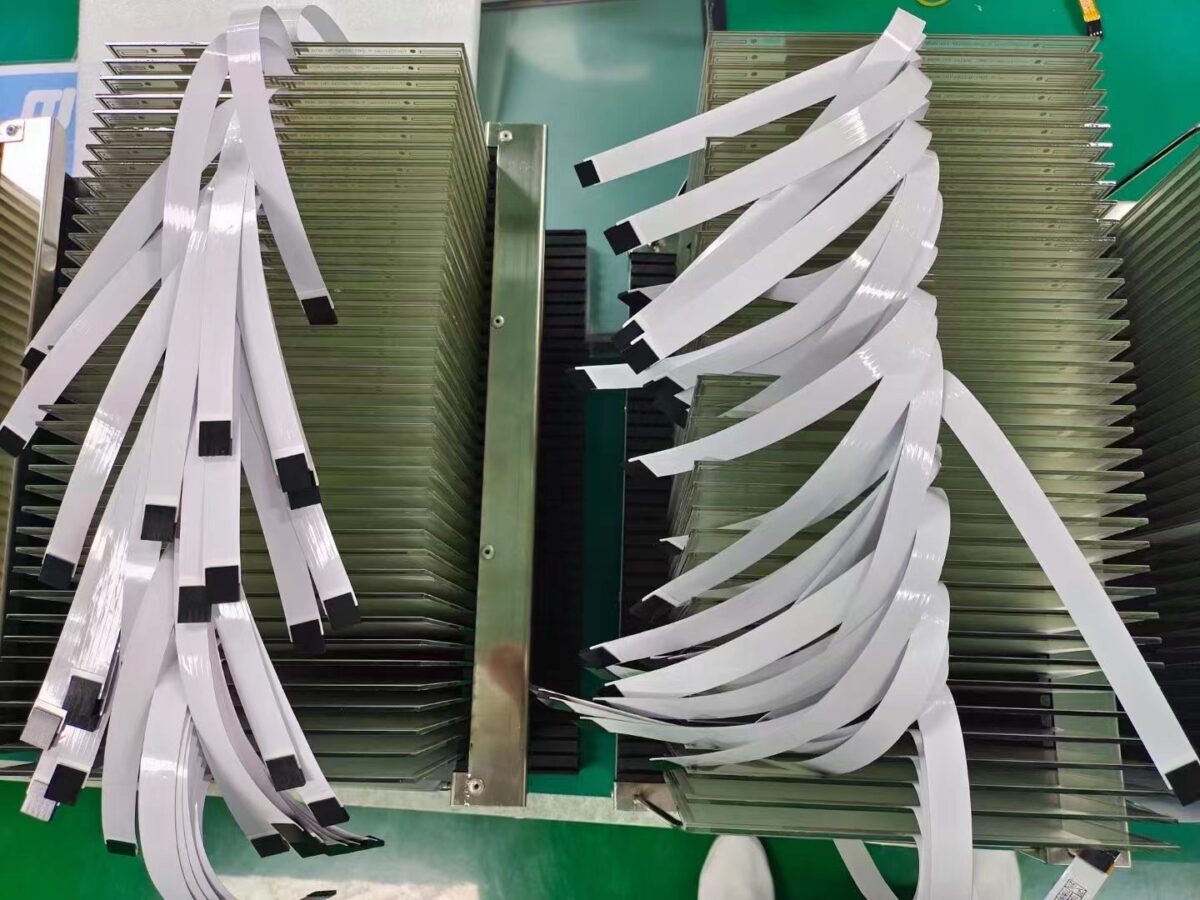
Las pantallas táctiles resistivas siguen siendo una de las tecnologías táctiles más fiables y utilizadas en aplicaciones industriales y profesionales.
A diferencia de las pantallas táctiles capacitivas orientadas al consumidor, las pantallas táctiles resistivas se activan por presión y funcionan con los dedos, guantes, lápices ópticos o cualquier objeto sólido.
Por su estabilidad, previsibilidad y resistencia al entorno, las pantallas táctiles resistivas siguen siendo la solución preferida para sistemas de control industrial, equipos médicos y proyectos de fabricantes de equipos originales que requieren disponibilidad a largo plazo.
Esta guía lo explica:
A pantalla táctil resistiva es un dispositivo de entrada sensible a la presión formado por dos capas conductoras transparentes separadas por un fino espacio. Cuando se aplica presión, las capas entran en contacto y el controlador detecta la ubicación táctil.
Las características clave incluyen:
Esto hace que la tecnología resistiva sea especialmente adecuada para aplicaciones industriales, médicas y de exterior.
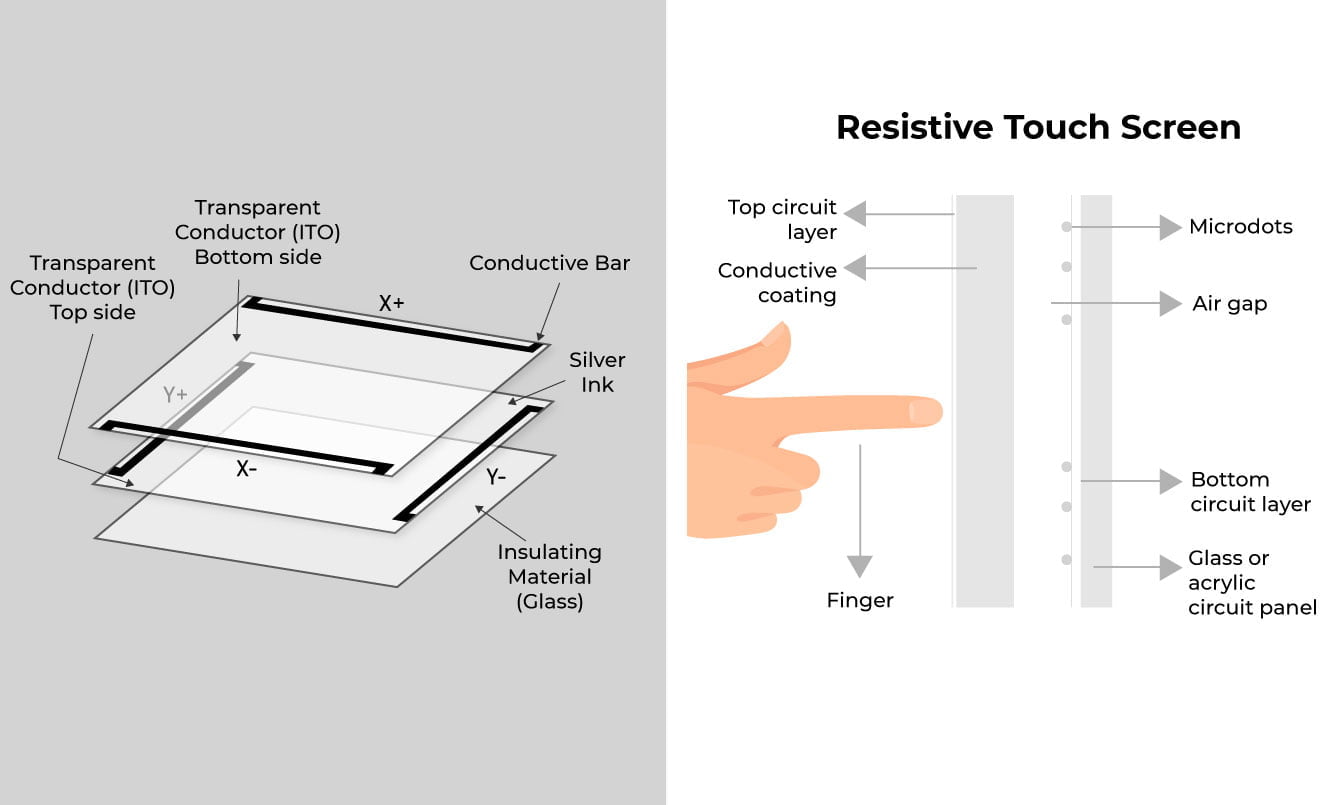
Cuando se aplica presión a la pantalla:
Como el sistema se basa en la presión física y no en la conductividad eléctrica, las pantallas táctiles resistivas funcionan con fiabilidad en entornos polvorientos, húmedos o con mucho ruido eléctrico.
Para aplicaciones que requieren mayor vida útil y rendimiento estable, En general, se recomienda la tecnología resistiva de 5 hilos.
| Característica | Pantalla táctil resistiva | Pantalla táctil capacitiva |
|---|---|---|
| Método de entrada | A presión | Basado en la conductividad |
| Funcionamiento de los guantes | ✅ Sí | ❌ Limitada |
| Soporte Stylus | ✅ Sí | ❌ Limitada |
| Resistencia al agua | ✅ Alta | ⚠️ Moderado |
| Multitáctil | ❌ No | ✅ Sí |
| Estabilidad industrial | Excelente | ⚠️ Medio |
| Control de costes | ✅ Más fácil | ❌ Más alto |
Las pantallas táctiles resistivas dependen de la aplicación, mientras que las pantallas táctiles capacitivas son más comunes en los dispositivos de consumo.
Las pantallas táctiles resistivas ofrecen varias ventajas para uso industrial y profesional:
Estas ventajas hacen que la tecnología resistiva sea ideal para interfaces de misión crítica.
Aunque las pantallas táctiles resistivas son muy fiables, tienen sus limitaciones:
Para aplicaciones en las que son esenciales los gestos multitáctiles o una gran claridad visual, la tecnología capacitiva puede ser más adecuada.
Las pantallas táctiles resistivas se utilizan habitualmente en:
Estos entornos dan prioridad a fiabilidad, previsibilidad y durabilidad sobre la interacción al estilo del consumidor.
Los proyectos industriales y de OEM suelen requerir:
Las pantallas táctiles resistivas cumplen estos requisitos ofreciendo disponibilidad a largo plazo y rendimiento constante, que es fundamental para los programas industriales.
Toque de Águila proporciona soluciones personalizadas de pantalla táctil resistiva diseñadas para aplicaciones industriales y OEM, entre las que se incluyen:
Nuestro enfoque basado en la ingeniería garantiza que cada solución se ajuste con precisión a los requisitos de su aplicación.
Una pantalla táctil resistiva suele ser la mejor opción si su proyecto lo requiere:
Si está evaluando la tecnología táctil para una aplicación industrial u OEM, una pantalla táctil resistiva puede ser la solución más fiable.
Introducción Las interfaces hombre-máquina (IHM) son actualmente componentes estándar de los equipos industriales modernos. Las pantallas permiten a los operarios ...
Introducción Las pantallas industriales se instalan con frecuencia en entornos en los que las condiciones de iluminación son difíciles de controlar. Equipos ...
Introducción Las pantallas son un componente de interfaz crítico en muchos tipos de equipos industriales. Proporcionan al sistema ...
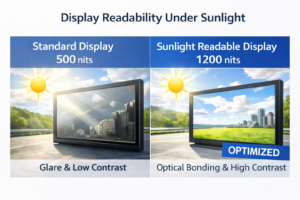
Introducción La visibilidad de las pantallas es un parámetro de diseño fundamental en los equipos industriales. Los operarios confían en las interfaces gráficas ...
Envíe los detalles de su solicitud. Le responderemos con la dirección de configuración y los siguientes pasos.