Guide d'achat des fournisseurs d'écrans industriels pour les équipements OEM

Introduction Les interfaces homme-machine (IHM) sont désormais des composants standard des équipements industriels modernes. Les écrans permettent aux opérateurs de ...
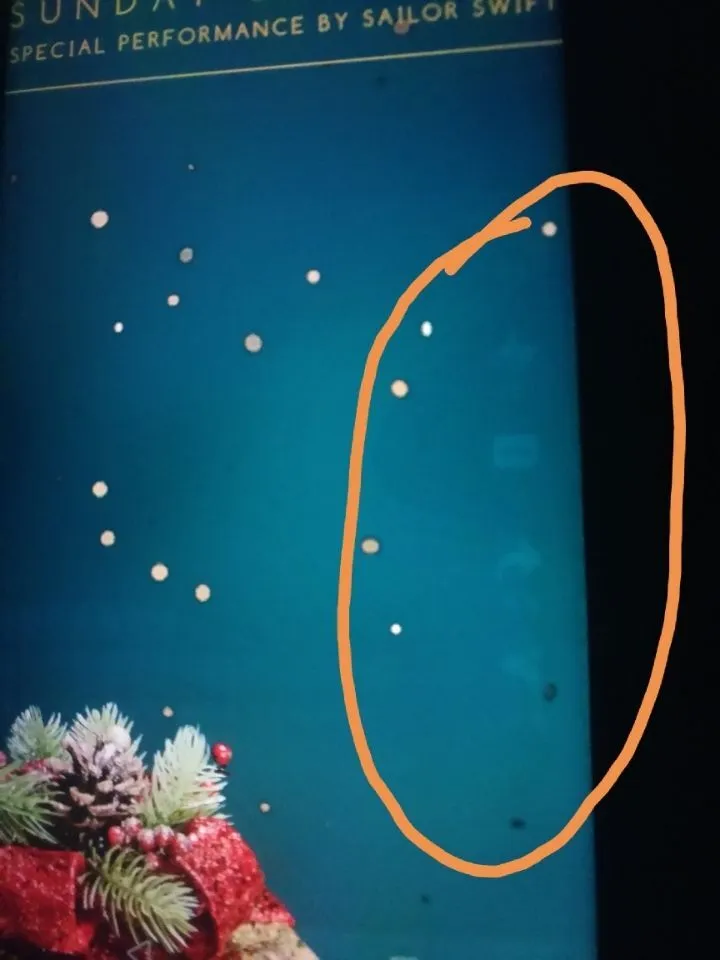
La rétention d'images, communément appelée fantôme, décrit un état dans lequel de faibles traces du contenu précédemment affiché restent visibles après le changement d'image.
En applications industrielles de l'écran LCD TFT, Le ghosting est n'est généralement pas un défaut de produit, mais un comportement d'affichage résultant de la effet combiné des caractéristiques du panneau, de la méthode de conduite, de l'environnement d'exploitation et du mode d'utilisation de l'application.
Il est essentiel de comprendre cette distinction lorsque l'on évalue la pertinence de l'affichage pour des déploiements à long terme ou critiques.
D'un point de vue technique, conservation de l'image observés dans les écrans LCD TFT peuvent provenir de différents mécanismes. L'identification du type de mécanisme permet de déterminer si le risque peut être réduit par des décisions de sélection ou d'intégration.
Conservation temporaire des images
Rétention liée à la conduite ou aux préjugés
Rétention liée à la dégradation à long terme
Tous les facteurs contributifs ne sont pas contrôlables de la même manière. Du point de vue de la conception du système, il est important de faire la distinction entre paramètres contrôlables par la conception et contraintes liées à l'application.
| Facteur | Contrôle de l'ingénierie | Notes |
|---|---|---|
| Temps de réponse de l'écran LCD | Haut | Évalué lors de la sélection du jury |
| Adaptation de la carte de conducteur | Haut | La compatibilité électrique est essentielle |
| Rapport statique de l'interface utilisateur | Moyen | Fortement lié à la conception de l'application |
| Température de fonctionnement | Moyen | Gestion thermique au niveau du système |
| Vieillissement du panneau | Faible | Comportement inhérent au cycle de vie |
Le risque d'image fantôme est rarement imputable à un seul paramètre ; il est généralement le résultat de l'empilement de plusieurs conditions marginales.
La probabilité de rémanence varie considérablement en fonction de la manière dont l'écran est utilisé sur le terrain.
Il est souvent plus important de comprendre où se situe une application dans ce spectre que de se concentrer uniquement sur les spécifications du panneau.
Plutôt que de s'en remettre à des mesures d'atténuation post-déploiement, il convient d'évaluer le risque de "ghosting". pendant la phase de sélection et d'intégration.
Les principaux éléments à prendre en compte sont les suivants :
Aucun écran LCD TFT ne peut garantir une rétention d'image nulle dans toutes les conditions. le contrôle des risques, et non une élimination absolue.
Dans les projets industriels, la rétention d'image est le plus souvent observée lorsque le comportement de l'application, l'alimentation électrique et les conditions thermiques sont évalués indépendamment plutôt que comme un système..
Lors de la sélection des écrans et des examens d'intégration, ces facteurs sont généralement évalués ensemble pour déterminer l'adéquation à long terme et le risque opérationnel, en particulier pour les systèmes IHM 24/7, les kiosques et les systèmes sans surveillance.
Un examen technique est recommandé si votre demande implique :
Vous n'êtes pas sûr que votre application soit adaptée à un affichage statique de longue durée ?
Partagez vos conditions d'exploitation, le comportement de l'IU et les détails de l'environnement avec notre équipe d'ingénieurs pour une étude de faisabilité et de risque.
Ce contenu est destiné à servir de référence technique pour l'évaluation du comportement de l'affichage et doit être considéré dans le contexte de la conception d'un système complet.
Introduction Les interfaces homme-machine (IHM) sont désormais des composants standard des équipements industriels modernes. Les écrans permettent aux opérateurs de ...
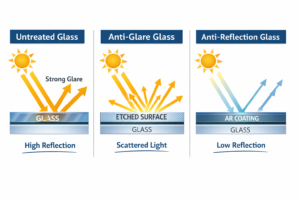
Introduction Les écrans industriels sont souvent déployés dans des environnements où les conditions d'éclairage sont difficiles à contrôler. L'équipement ...
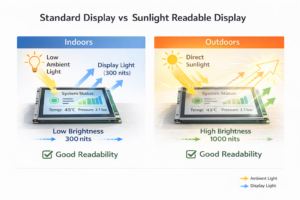
Introduction Les écrans sont des composants d'interface essentiels dans de nombreux types d'équipements industriels. Ils fournissent au système ...
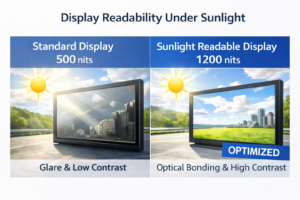
Introduction La visibilité de l'affichage est un paramètre essentiel de la conception des équipements industriels. Les opérateurs s'appuient sur des interfaces graphiques ...
Envoyez les détails de votre demande. Nous vous répondrons en vous indiquant la configuration à suivre et les prochaines étapes.