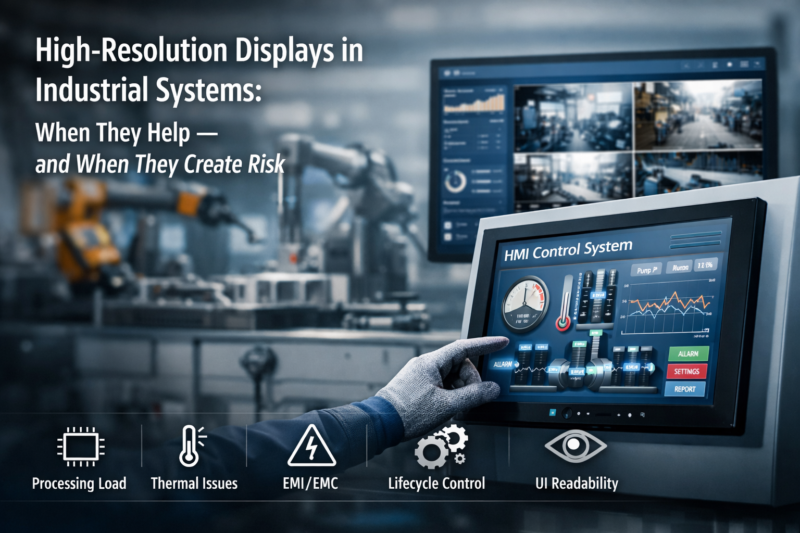
I display industriali ad alta risoluzione sono sempre più richiesti nelle moderne apparecchiature industriali. Con l'evoluzione del software di interfaccia uomo-macchina (HMI) verso interfacce grafiche più ricche, cruscotti multi-finestra e strumenti di visualizzazione dei dati, i team di ingegneri richiedono spesso display con una maggiore densità di pixel.
A prima vista, l'aumento della risoluzione del display sembra essere un miglioramento semplice. Un numero maggiore di pixel consente di visualizzare contemporaneamente più informazioni grafiche, migliorando potenzialmente la consapevolezza dell'operatore e la capacità di monitoraggio.
Tuttavia, nei sistemi industriali, La risoluzione del display non è solo una specifica visiva. Influisce su diversi aspetti dell'architettura del sistema, tra cui:
carico di lavoro dell'elaborazione grafica incorporata
larghezza di banda della memoria e dimensione del frame buffer
comportamento termico all'interno di involucri sigillati
integrità dell'interfaccia di visualizzazione ad alta velocità
disponibilità a lungo termine del pannello di visualizzazione
Le apparecchiature industriali funzionano spesso ininterrottamente per molti anni, spesso in ambienti soggetti a vibrazioni, variazioni di temperatura e interferenze elettromagnetiche.
Per i produttori OEM e gli integratori di sistemi, la risoluzione del display deve quindi essere valutata come parte del progetto. architettura generale del sistema, piuttosto che essere trattato come un parametro di visualizzazione isolato.
Che cos'è un display industriale ad alta risoluzione?
Per display industriale ad alta risoluzione si intende uno schermo HMI o un monitor industriale con una densità di pixel significativamente superiore agli standard tradizionali dei display industriali.
Storicamente, molti HMI industriali hanno utilizzato risoluzioni moderate come:
800 × 600 (SVGA)
1024 × 768 (XGA)
Queste risoluzioni erano sufficienti per le interfacce macchina che visualizzavano allarmi, stati macchina e semplici elementi di controllo.
I moderni sistemi industriali adottano sempre più risoluzioni elevate, tra cui:
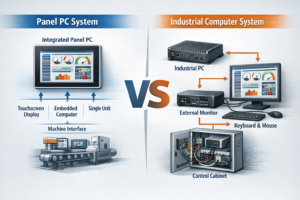
PC a pannelloin cui l'hardware informatico e il display sono integrati
In molti progetti, il requisito della risoluzione deriva dal software HMI originariamente sviluppato per ambienti desktop. Questi software presuppongono spazi grafici più ampi e una maggiore densità di pixel rispetto ai display industriali tradizionali.
Tuttavia, le piattaforme informatiche embedded utilizzate nelle apparecchiature industriali - spesso processori ARM o sistemi x86 a basso consumo - non sempre scalano in modo efficiente con l'aumento della risoluzione del display.
Le tecnologie fondamentali alla base dei display industriali ad alta risoluzione
Diversi sottosistemi hardware determinano la capacità di un sistema di supportare efficacemente una risoluzione di visualizzazione più elevata.
Larghezza di banda dell'interfaccia di visualizzazione
I moderni display industriali utilizzano comunemente interfacce ad alta velocità come:
LVDS (segnalazione differenziale a bassa tensione)
eDP (DisplayPort integrato)
HDMI
DisplayPort
Una risoluzione più elevata aumenta il throughput di pixel richiesto.
Risoluzione
Pixel per fotogramma
Carico relativo dei pixel
1024×768
~0,79 MP
Linea di base
1280×800
~1,02 MP
~1.3×
1920×1080
~2,07 MP
~2.6×
Un display Full HD richiede quindi più del doppio dell'elaborazione dei pixel di un display XGA tradizionale.
Con una frequenza di aggiornamento di 60 Hz, un L'interfaccia 1920×1080 richiede in genere un clock dei pixel di circa 148,5 MHz.. A seconda della profondità di colore e della codifica, la velocità effettiva dei dati può raggiungere diversi gigabit al secondo.
Con l'aumento della larghezza di banda, l'interfaccia di visualizzazione diventa più sensibile:
qualità del passaggio dei cavi
adattamento dell'impedenza
affidabilità del connettore
interferenze elettromagnetiche
Questi fattori sono particolarmente importanti nelle apparecchiature industriali che contengono motori, azionamenti o lunghi percorsi di cavi interni.
Carico di lavoro dell'elaborazione grafica integrata
Una maggiore risoluzione del display aumenta significativamente il carico di lavoro della grafica.
La pipeline grafica deve gestire:
memorizzazione del frame buffer
Rendering dell'interfaccia utente
scalatura dell'immagine
composizione di finestre
sovrapposizioni grafiche
Ad esempio, un La visualizzazione di 1920 × 1080 con un frame buffer a 32 bit richiede circa:
1920 × 1080 × 4 byte ≈ 8 MB per fotogramma
Con il doppio buffering e i livelli grafici aggiuntivi, il consumo di memoria può arrivare a 16-32 MB di spazio attivo per il frame buffer.
In molti sistemi embedded, le prestazioni del display sono limitate non dal pannello in sé ma da Capacità della GPU e larghezza di banda della memoria.
Se la pipeline grafica si avvicina ai suoi limiti, gli operatori possono osservare:
aggiornamenti ritardati dell'interfaccia utente
riduzione della fluidità dell'animazione
ritardo temporaneo dell'interfaccia
Il mantenimento di un margine di elaborazione sufficiente è quindi importante per i sistemi che operano in modo continuo.
Potenza e consumo energetico della retroilluminazione
I display a più alta risoluzione sono spesso associati a:
schermi di dimensioni maggiori
requisiti di luminosità più elevati
sistemi di retroilluminazione a LED multicanale
Questi fattori aumentano il consumo totale di energia.
Nelle apparecchiature industriali senza ventola o sigillate, la dissipazione di potenza aggiuntiva contribuisce direttamente a generazione di calore interno. Anche piccoli aumenti della potenza termica possono influenzare le temperature interne dell'involucro.
I margini di progettazione termica devono quindi essere verificati quando si aggiorna la risoluzione del display.
Densità dei pixel e dimensioni dello schermo negli HMI industriali
La risoluzione del display deve essere sempre valutata insieme a dimensioni dello schermo e distanza di visione.
Un numero maggiore di pixel su uno schermo piccolo aumenta la densità di pixel, ma non sempre migliora l'usabilità per gli operatori che si trovano a diversi metri di distanza dall'apparecchiatura.
In molti ambienti industriali, l'usabilità è influenzata in misura maggiore da:
Scala dell'interfaccia utente
contrasto e luminosità
angolo di visione
layout dell'interfaccia
piuttosto che la sola densità di pixel.
Per le interfacce HMI di fabbrica viste da distanze di circa un metro o più, elementi dell'interfaccia utente più grandi e una chiara gerarchia grafica spesso migliorano l'usabilità più dell'aumento della densità di pixel.
Considerazioni ingegneristiche sui display industriali ad alta risoluzione
Margine di elaborazione e stabilità del sistema
Una risoluzione più elevata aumenta sia Carico di lavoro della GPU e traffico di memoria.
I processori embedded a basso consumo possono avere difficoltà nel pilotare display ad alta risoluzione e contemporaneamente eseguire il software di controllo:
comunicazione con bus di campo
gestione degli allarmi
registrazione dei dati
monitoraggio della rete
In pratica, i problemi di prestazioni del display nelle HMI industriali sono spesso causati da limiti della larghezza di banda della memoria piuttosto che della velocità della CPU.
Il mantenimento di un margine di elaborazione grafica sufficiente contribuisce a garantire una reattività stabile dell'interfaccia in caso di picchi di carico di lavoro.
Comportamento termico nei sistemi senza ventola
Molte piattaforme industriali si affidano a strategie di raffreddamento passive, tra cui:
computer embedded senza ventola
pannelli operatore sigillati
coperture per attrezzature da esterno
Questi progetti offrono un margine termico limitato.
Una risoluzione più elevata aumenta indirettamente la generazione di calore:
aumento dell'attività della GPU
maggiore utilizzo della larghezza di banda della memoria
maggiore potenza della retroilluminazione del display
Per lunghi periodi di funzionamento, l'elevata temperatura interna accelera l'invecchiamento dei componenti. I margini di progettazione termica conservativi migliorano quindi l'affidabilità a lungo termine.
Considerazioni sull'integrità del segnale e sulla compatibilità elettromagnetica
Le interfacce di visualizzazione ad alta risoluzione funzionano con velocità di trasmissione dei dati nell'ordine del gamma multi-gigabit.
Gli ambienti industriali possono introdurre ulteriori sfide, quali:
connettori che influiscono sulle vibrazioni
interferenze elettromagnetiche da motori o azionamenti
lunghi percorsi di instradamento dei cavi all'interno delle apparecchiature
Una maggiore larghezza di banda riduce la tolleranza alla degradazione del segnale.
Durante i test EMC, le interfacce di visualizzazione ad alta velocità possono occasionalmente diventare sorgenti di emissioni irradiate o instabilità del segnale, che richiedono un'accurata posa dei cavi e una schermatura.
Ciclo di vita dei pannelli e fornitura a lungo termine
Le apparecchiature industriali OEM richiedono in genere la disponibilità dei componenti per molti anni.
I pannelli di visualizzazione sviluppati per i mercati dell'elettronica di consumo possono avere cicli di vita più brevi.
I rischi potenziali includono:
interruzione del pannello durante la produzione
disponibilità limitata di seconde fonti
riprogettazione meccanica se i pannelli di ricambio hanno dimensioni diverse
Al momento di scegliere la risoluzione del display, gli OEM dovrebbero anche valutare stabilità del ciclo di vita dei pannelli e roadmap dei fornitori.
Applicazioni tipiche
Sistemi di visione artificiale
I sistemi di visione industriale spesso visualizzano:
feed di telecamere ad alta risoluzione
sovrapposizioni di ispezione
Risultati del rilevamento dei difetti
Una risoluzione più elevata preserva i dettagli dell'immagine e migliora la visibilità degli elementi di ispezione.
Sistemi di monitoraggio multi-finestra
Le sale di controllo e le stazioni di monitoraggio spesso visualizzano contemporaneamente più fonti di informazione, tra cui:
cruscotti di processo
pannelli di allarme
diagnostica di sistema
feed video
I monitor industriali ad alta risoluzione consentono agli operatori di osservare più finestre di dati senza dover cambiare frequentemente interfaccia.
Apparecchiature HMI avanzate
Alcune macchine industriali complesse richiedono interfacce grafiche dettagliate, tra cui:
sistemi robotici
apparecchiature per la produzione di semiconduttori
piattaforme di test automatizzate
Queste applicazioni beneficiano di un maggiore spazio di lavoro sullo schermo per diagrammi, strumenti di configurazione e pannelli di visualizzazione.
Infrastruttura e terminali di servizio
I sistemi di infrastrutture pubbliche a volte includono display di servizio o di diagnostica, come ad esempio:
chioschi intelligenti
sistemi di monitoraggio dei trasporti
terminali di diagnostica di rete
In questi ambienti, una risoluzione più elevata può migliorare la densità delle informazioni e la chiarezza della visualizzazione.
Quando i display ad alta risoluzione si adattano bene
Una risoluzione più elevata è generalmente appropriata quando:
il processore incorporato include una capacità GPU sufficiente
La larghezza di banda della memoria supporta il throughput dei pixel richiesto
il design termico è stato convalidato per il funzionamento continuo
il software HMI è ottimizzato per i display ad alto DPI
la stabilità del ciclo di vita del pannello è confermata
In queste condizioni, una risoluzione più elevata può migliorare la visualizzazione e supportare interfacce utente più complesse.
Quando una risoluzione più elevata può introdurre un rischio
Una risoluzione più elevata può introdurre un'inutile complessità del sistema quando:
il sistema si basa su processori a bassa potenza
i margini termici sono già limitati
l'apparecchiatura funziona senza sorveglianza per lunghi periodi
la stabilità della distinta base a lungo termine è fondamentale
l'interfaccia visualizza semplici informazioni di stato
In molti sistemi industriali, una risoluzione moderata, combinata con un layout HMI ben progettato, garantisce prestazioni più stabili a lungo termine.
Conclusione
Nella progettazione di un'apparecchiatura industriale, la risoluzione del display deve essere trattata come un elemento di parametro di ingegneria a livello di sistema, Non si tratta di un semplice aggiornamento visivo.
L'aumento della densità di pixel influisce:
carico di lavoro dell'elaborazione grafica
requisiti di larghezza di banda della memoria
comportamento termico
integrità del segnale
gestione del ciclo di vita dei pannelli a lungo termine
Per molte piattaforme industriali, una risoluzione moderata combinata con layout HMI ben progettati offre una soluzione stabile e manutenibile.
Una risoluzione più elevata diventa vantaggiosa quando supporta direttamente i requisiti operativi, come la visualizzazione della visione artificiale o il monitoraggio di più finestre, e quando l'architettura del sistema offre un margine di elaborazione e termico sufficiente.
Valutare la risoluzione del display fin dalle prime fasi di progettazione del sistema aiuta a evitare problemi di integrazione e favorisce l'affidabilità a lungo termine dell'apparecchiatura.
FAQ
Le interfacce HMI industriali traggono sempre vantaggio da una maggiore risoluzione del display?
Non necessariamente. Molte interfacce di macchine visualizzano informazioni relativamente semplici in cui le risoluzioni, come ad esempio 1024×768 o 1280×800 fornire un'usabilità sufficiente.
Qual è la risoluzione tipica degli HMI industriali?
Molte HMI industriali utilizzano comunemente 1024×768 (XGA) o 1280×800 (WXGA) perché queste risoluzioni bilanciano la leggibilità, i requisiti di elaborazione e la disponibilità dei pannelli.
In che modo una maggiore risoluzione del display influisce sui processori embedded?
Una risoluzione più elevata aumenta il numero di pixel elaborati per ogni fotogramma, il che aumenta il numero di pixel elaborati per ogni fotogramma. Carico di lavoro della GPU, dimensioni del frame buffer e requisiti di banda della memoria.
Una risoluzione più elevata aumenta il consumo energetico del sistema?
Sì. Una risoluzione più elevata spesso aumenta Attività della GPU, utilizzo della larghezza di banda della memoria e potenza della retroilluminazione del display, che possono influenzare le prestazioni termiche dei sistemi industriali senza ventola.
I display ad alta risoluzione possono influire sulle prestazioni EMC?
Potenzialmente. Le interfacce di visualizzazione ad alta velocità che operano a velocità di dati più elevate possono aumentare la sensibilità ai problemi di integrità del segnale e alle emissioni elettromagnetiche.
Introduzione Nella progettazione di sistemi industriali, la scelta dell'architettura informatica appropriata influisce direttamente sull'affidabilità del sistema e sulla complessità dell'integrazione, ...
Introduzione Nelle apparecchiature industriali, il sottosistema di visualizzazione fa parte di un più ampio sistema di interfaccia uomo-macchina (HMI) e di un sistema di visualizzazione che si basa su un'unica interfaccia. ...
Introduzione Nella progettazione di apparecchiature industriali, l'interfaccia uomo-macchina (HMI) influisce direttamente sull'usabilità, l'affidabilità e la manutenzione del sistema. ...
Introduzione Le interfacce uomo-macchina (HMI) sono ormai componenti standard delle moderne apparecchiature industriali. I display consentono agli operatori di ...
CONTATTO
Revisione ingegneristica
Inviate i dettagli della vostra applicazione. Risponderemo con la direzione della configurazione e le fasi successive.
Ideale per progetti OEM/ODM e di integrazione. Risposta tipica: entro 1 giorno lavorativo (GMT+8).
Per la RFQ, includere dimensioni/luminosità, interfacce, montaggio, temperatura di esercizio e data di consegna prevista.