Industrie-Display-Lieferanten Einkaufsführer für OEM-Ausrüstung

Einleitung Mensch-Maschine-Schnittstellen (HMIs) sind heute Standardkomponenten in modernen Industrieanlagen. Displays ermöglichen dem Bediener ...
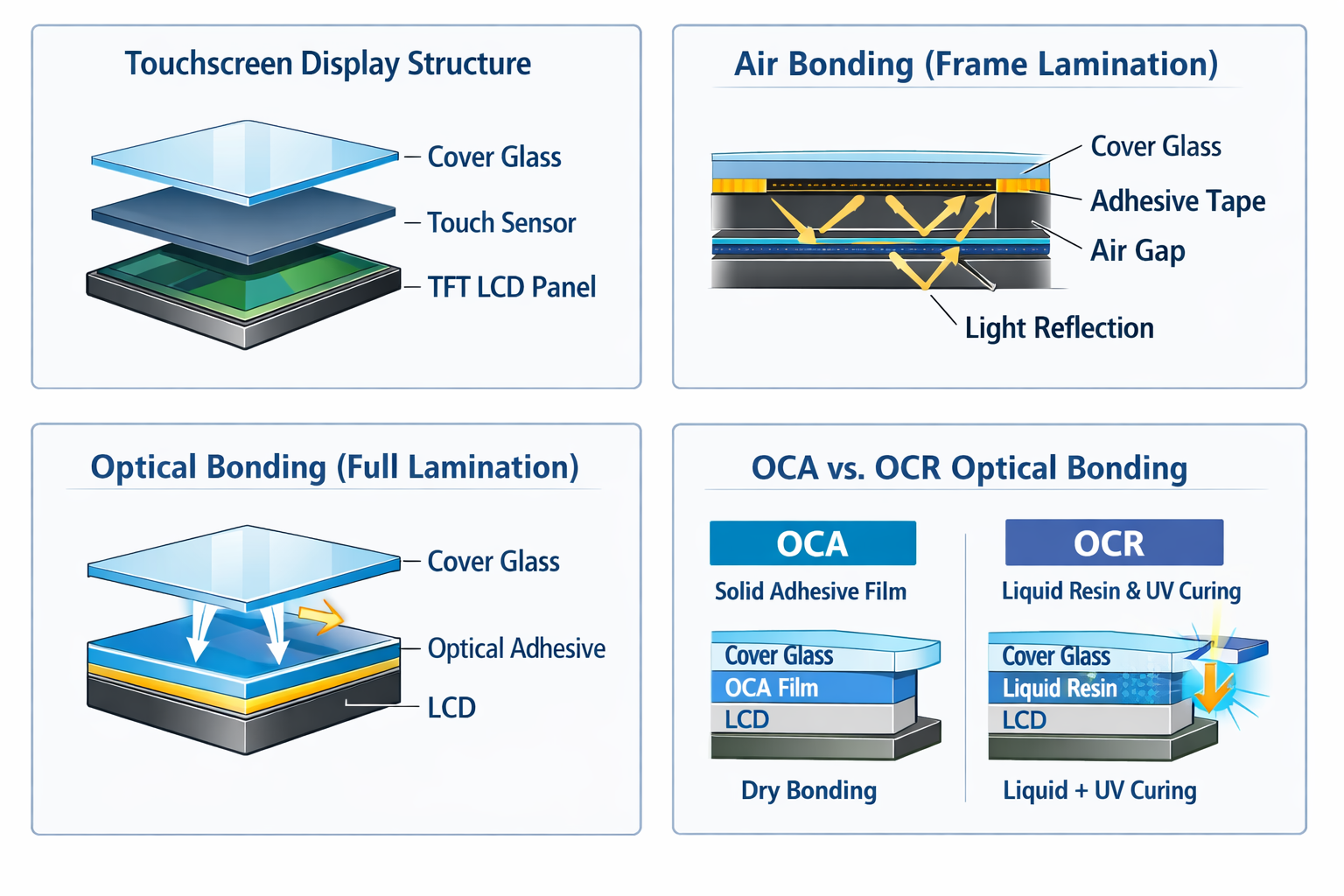
In der modernen Touch-Display-Fertigung, Siebklebetechnik spielt eine entscheidende Rolle für die Klarheit, Haltbarkeit, Berührungsempfindlichkeit und Umweltbeständigkeit von Displays.
Zwei Klebeverfahren sind heute weit verbreitet: Luftverklebung (Rahmenkaschierung) und Optische Verklebung (Volllaminierung).
Dieser Artikel bietet einen klaren, technisch orientierten Vergleich, der Ihnen hilft, die Funktionsweise dieser Technologien und ihre Unterschiede zu verstehen und herauszufinden, welche Lösung für industrielle und gewerbliche Anwendungen am besten geeignet ist.
Eine typische Touch-Display-Modul besteht aus drei Hauptschichten:
Diese Schichten müssen zusammenlaminiert werden, um ein vollständiges Display zu bilden.
Je nachdem, wie die Schichten verbunden werden, kann die Siebverklebung unterteilt werden in:
Die Klebemethode wirkt sich direkt aus optische Leistung, Haltbarkeit, Berührungsempfindlichkeit und Zuverlässigkeit, insbesondere in industriellen Umgebungen oder im Freien.
Luftverklebung, auch bekannt als Rahmenlaminierung, Bei der traditionellen Klebemethode werden Touchscreen und LCD nur an den Rändern mit Klebeband verklebt.
Eine Luftspalt bleibt zwischen dem Touchscreen und dem Display.
Die Luftverklebung wird üblicherweise verwendet in Einsteiger- oder Innenraumgeräte wenn die Kosten im Vordergrund stehen und die Umweltexposition begrenzt ist.
Optische Bindung, auch genannt Volllaminierung oder direkte Verklebung, die Verklebung des Deckglases oder des Touchpanels direkt auf das Display mit einem optisch klaren Klebstoff.
Dieser Prozess eliminiert den Luftspalt vollständig.
Durch das Entfernen der Luftschnittstelle verbessert das optische Kleben sowohl die optische als auch die mechanische Leistung erheblich, was es zur bevorzugten Lösung für Industrie-, Outdoor- und unternehmenskritische Displays.
Optisches Kleben wird häufig eingesetzt in Industrieanlagen, medizinische Geräte, Kfz-Displays, Kioske und Outdoor-Terminals.
| Merkmal | Optische Verklebung (Volllaminierung) | Luftverklebung (Rahmenkaschierung) |
|---|---|---|
| Luftspalt | Keine | Gegenwart |
| Klarheit der Anzeige | Hoher Kontrast, geringe Reflexion | Reduziert aufgrund von Reflexionen |
| Berührungsempfindlichkeit | Hoch | Mäßig |
| Dauerhaftigkeit | Starke strukturelle Bindung | Mit der Zeit schwächer |
| Widerstandsfähigkeit gegen Staub und Feuchtigkeit | Ausgezeichnet | Begrenzt |
| Lesbarkeit im Freien | Ausgezeichnet | Schlecht |
| Komplexität der Reparatur | Höher | Einfacher |
Für Industrie- und Außenanwendungen wird eine optische Verklebung dringend empfohlen.
Optisches Kleben lässt sich nach dem Klebstoff klassifizieren, der für den Klebevorgang verwendet wird.
OCA ist eine fester, vorgehärteter Klebefilm bei der trockenen optischen Verklebung verwendet.
Wesentliche Merkmale:
OCA wird üblicherweise verwendet in Smartphones, Tablets und kompakte Touch-Displays wo Präzision entscheidend ist.
OCR ist eine Flüssigkleber zwischen den Schichten aufgetragen und dann mit UV oder Wärme.
Wesentliche Merkmale:
OCR wird häufig verwendet in Großformatige Displays, Industriemonitore und robuste Geräte.
Optisches Bonding bietet mehrere Vorteile in Bezug auf Leistung und Zuverlässigkeit:
Wählen Sie Optical Bonding, wenn:
Wählen Sie Air Bonding, wenn:
Die Technologie der Siebverklebung wirkt sich direkt auf die Leistung, Zuverlässigkeit und Lebensdauer einer Anzeige.
Die Luftverklebung bleibt zwar eine kostengünstige Lösung für einfache Anwendungen, Optical Bonding hat sich zum Industriestandard für Industrie-, Outdoor- und Hochleistungsdisplays entwickelt.
Wenn Sie ein Display für anspruchsvolle Umgebungen entwerfen oder auswählen, ist Optical Bonding nicht länger ein Upgrade - es ist eine Notwendigkeit.
Benötigen Sie Hilfe bei der Auswahl der richtigen Klebetechnologie für Ihr Projekt?
Unser Ingenieurteam kann Sie bei der Bewertung Ihrer Anwendungsanforderungen unterstützen und Ihnen die am besten geeignete Lösung empfehlen.
Einleitung Mensch-Maschine-Schnittstellen (HMIs) sind heute Standardkomponenten in modernen Industrieanlagen. Displays ermöglichen dem Bediener ...
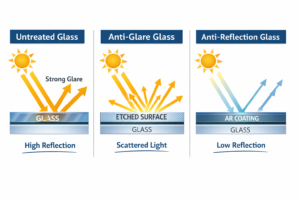
Einleitung Industrielle Bildschirme werden häufig in Umgebungen eingesetzt, in denen die Lichtverhältnisse schwer zu kontrollieren sind. Ausrüstung ...
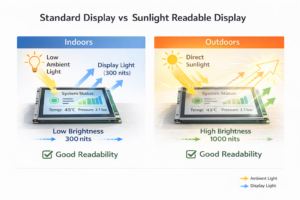
Einleitung Displays sind eine wichtige Schnittstellenkomponente in vielen Arten von Industrieanlagen. Sie bieten System ...
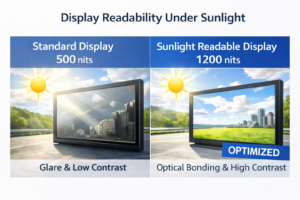
Einleitung Die Sichtbarkeit von Displays ist ein entscheidender Konstruktionsparameter bei Industrieanlagen. Die Bediener verlassen sich auf grafische Schnittstellen ...
Senden Sie uns Ihre Anwendungsdetails. Wir antworten mit einer Konfigurationsanweisung und den nächsten Schritten.