Guide d'achat des fournisseurs d'écrans industriels pour les équipements OEM

Introduction Les interfaces homme-machine (IHM) sont désormais des composants standard des équipements industriels modernes. Les écrans permettent aux opérateurs de ...
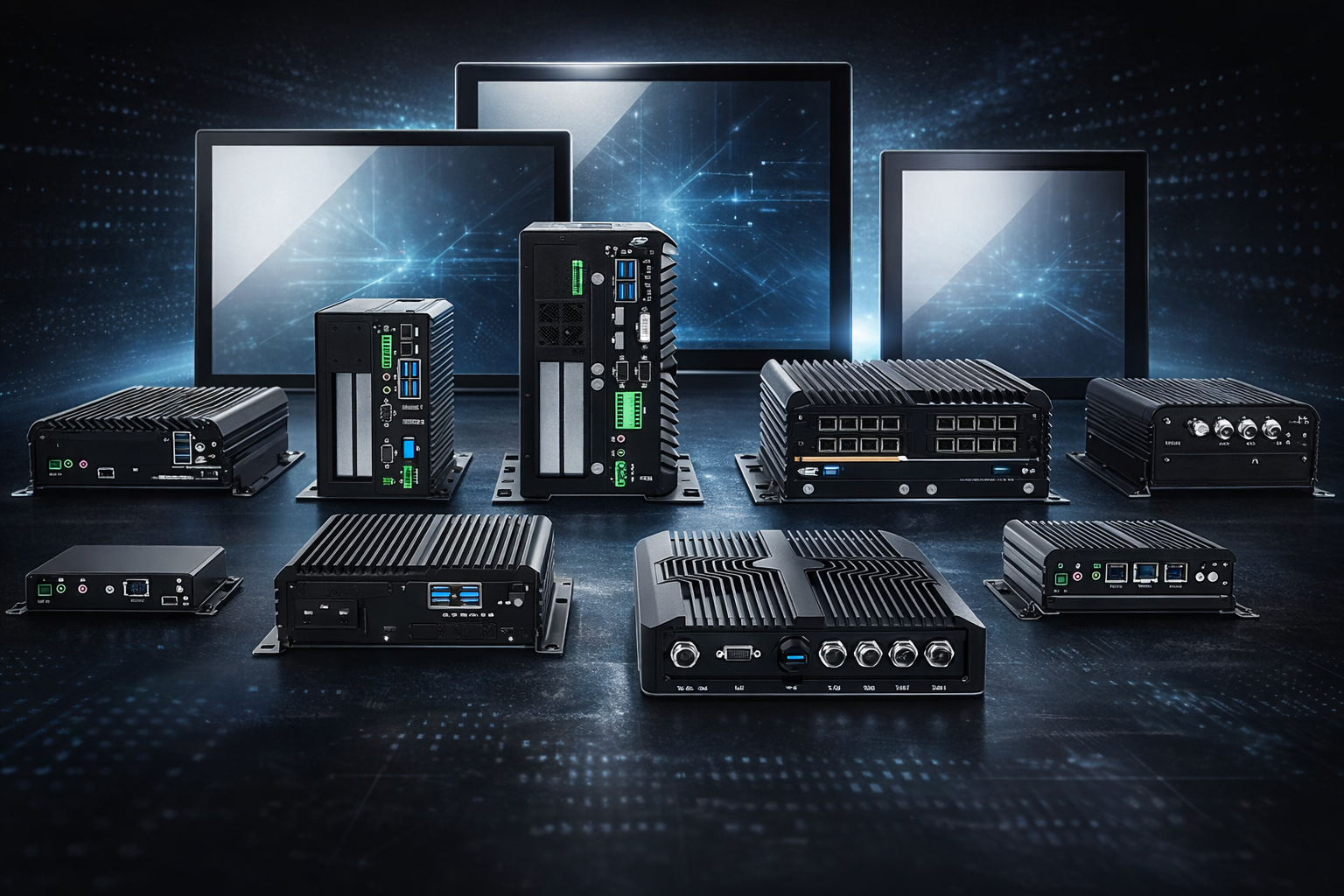
Les systèmes informatiques embarqués et les PC embarqués sont des technologies fondamentales pour l'automatisation industrielle moderne, la fabrication intelligente, l'informatique de pointe et les équipements connectés. Contrairement aux ordinateurs de bureau ou aux serveurs à usage général, ces systèmes sont conçus pour fonctionnement continu, fiable et adapté aux tâches à accomplir dans des environnements exigeants.
Dans ce guide, nous expliquons ce que sont les systèmes informatiques embarqués, pourquoi ils sont importants dans les applications industrielles et comment choisir le bon PC embarqué pour vos besoins spécifiques.
Un système informatique embarqué désigne une architecture informatique spécialisée conçue pour effectuer des tâches spécifiques de contrôle, de traitement ou de surveillance au sein d'un système ou d'un dispositif plus vaste.
Les systèmes informatiques embarqués sont largement utilisés dans l'automatisation industrielle, les machines intelligentes, la robotique, l'IIoT (Internet industriel des objets), la signalisation numérique et le traitement de l'IA en périphérie.
Un PC intégré est un type de système informatique embarqué qui intègre l'architecture de base d'un PC dans un facteur de forme industriel conçu à cet effet.
Différent des PC grand public, PC embarqués sont conçus pour fiabilité, taille compacte et longs cycles de vie. Ils sont couramment déployés dans :
Les PC embarqués sont souvent dotés de boîtiers robustes, d'un système de refroidissement sans ventilateur et de composants de qualité industrielle qui fonctionnent de manière fiable dans des environnements soumis à des vibrations, à la poussière, à des températures extrêmes et à des EMI (interférences électromagnétiques).
| Aspect | PC embarqué | PC grand public |
|---|---|---|
| Objectif de la conception | Tâches industrielles spécifiques | Informatique générale |
| Environnement opérationnel | Températures extrêmes, vibrations, poussière | Intérieur contrôlé |
| Fiabilité | Temps de fonctionnement élevé, 24 heures sur 24, 7 jours sur 7 | Limité par l'utilisation des consommateurs |
| Longévité | Soutien à long terme | Cycles de mise à niveau courts |
| Extensibilité | E/S industrielles, interfaces personnalisées | Périphériques standard |
Alors que les PC grand public sont axés sur la polyvalence et l'expérience de l'utilisateur, les PC intégrés sont conçus pour un fonctionnement fiable dans des scénarios de niveau industriel sans changements fréquents du matériel.
Les systèmes informatiques embarqués sont conçus pour fonctionner 24 heures sur 24, 7 jours sur 7, dans des conditions difficiles, sans défaillance - une exigence de l'automatisation et de la fabrication industrielles.
De nombreux PC embarqués utilisent conceptions sans ventilateur et des unités scellées pour empêcher la pénétration de la poussière, de l'humidité et des particules, ce qui augmente considérablement la fiabilité dans les usines et les installations extérieures.
Les systèmes embarqués sont optimisés pour des charges de travail spécifiques avec une utilisation efficace de l'énergie, une latence réduite et des performances prévisibles - idéal pour le contrôle en temps réel, les passerelles IIoT et le traitement en périphérie.
Les déploiements industriels exigent souvent que le matériel soit disponible pendant des années, voire des décennies. Les PC embarqués offrent généralement stabilité du cycle de vie et disponibilité à long terme, réduisant ainsi les efforts de requalification et de reconception.
Des entrepôts frigorifiques aux lignes de production à haute température, le matériel informatique embarqué est conçu pour fonctionner dans des environnements où les appareils grand public tomberaient en panne.
Les PC embarqués sont présents dans presque tous les secteurs où une informatique fiable et spécifique est nécessaire :
Ces systèmes comblent le fossé entre les données brutes des capteurs et les analyses exploitables, souvent à la périphérie, où une faible latence et une grande fiabilité sont des facteurs clés.
Sélection d'un PC intégré n'est pas une solution unique. Le choix idéal dépend des exigences de votre application.
Tenez compte des performances de l'unité centrale, de la mémoire et du stockage en fonction de la charge de travail - de la logique de contrôle de base à l'inférence complexe de l'intelligence artificielle.
Vérifiez la plage de température de fonctionnement, la tolérance aux vibrations et les indices de protection contre les agressions en fonction de votre déploiement.
S'assurer que les interfaces industrielles nécessaires (par exemple, COM série, USB, Ethernet, CAN, GPIO) et les options d'extension sont disponibles.
Les conceptions compactes et sans ventilateur sont préférables dans les environnements poussiéreux ou soumis à de fortes vibrations. Dans d'autres cas, un montage en rack ou sur panneau peut être nécessaire.
Les systèmes industriels peuvent nécessiter des entrées d'alimentation de 24 V CC ou à large plage, une commande d'alimentation à distance ou une détection d'allumage.
Choisissez des plates-formes compatibles avec votre pile logicielle - Windows, Linux ou OS en temps réel en fonction du cas d'utilisation.
Ces facteurs vous aident à adapter le PC embarqué aux besoins de votre entreprise et à votre environnement opérationnel.
Chaque facteur de forme permet d'équilibrer les performances, la durabilité et la flexibilité d'intégration pour répondre aux exigences industrielles spécifiques.
Les systèmes informatiques embarqués et les PC embarqués ne sont pas de simples composants - ils sont principaux catalyseurs Les systèmes de gestion de l'information sont au cœur de la numérisation, de l'automatisation et de l'intelligence artificielle de l'industrie moderne. Leur fiabilité, leurs performances sur mesure et leur adaptabilité aux environnements difficiles les rendent indispensables dans les applications industrielles d'aujourd'hui.
Le choix du bon PC embarqué nécessite une compréhension approfondie de vos besoins en matière de l'environnement opérationnel, les besoins de performance et les contraintes d'intégration. Lorsqu'ils sont correctement sélectionnés, les systèmes informatiques embarqués offrent une stabilité à long terme, un fonctionnement efficace et un retour sur investissement significatif pour les entreprises industrielles.
Introduction Les interfaces homme-machine (IHM) sont désormais des composants standard des équipements industriels modernes. Les écrans permettent aux opérateurs de ...
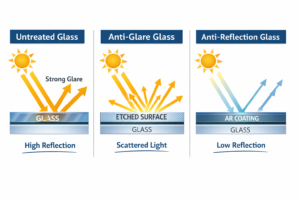
Introduction Les écrans industriels sont souvent déployés dans des environnements où les conditions d'éclairage sont difficiles à contrôler. L'équipement ...
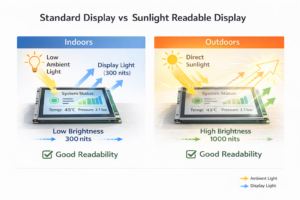
Introduction Les écrans sont des composants d'interface essentiels dans de nombreux types d'équipements industriels. Ils fournissent au système ...
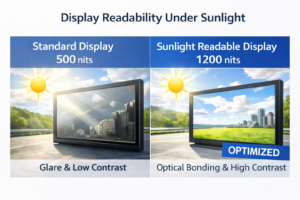
Introduction La visibilité de l'affichage est un paramètre essentiel de la conception des équipements industriels. Les opérateurs s'appuient sur des interfaces graphiques ...
Envoyez les détails de votre demande. Nous vous répondrons en vous indiquant la configuration à suivre et les prochaines étapes.