産業用ディスプレイOEM機器サプライヤーバイヤガイド

はじめに ヒューマン・マシン・インターフェース(HMI)は、現代の産業機器の標準的な構成要素となっている。ディスプレイにより、オペレーターは以下のことが可能になる。 ...
抵抗膜式タッチパネルは、産業用および業務用アプリケーションで最も信頼性が高く、広く使用されているタッチ技術の1つです。.
コンシューマー向けの静電容量式タッチスクリーンとは異なり、抵抗膜式タッチスクリーンは圧力で作動し、指、手袋、スタイラスペン、またはあらゆる固形物で動作する。.
その安定性、予測可能性、耐環境性から、抵抗膜式タッチスクリーンは、産業用制御システム、医療機器、長期的な可用性を必要とするOEMプロジェクトに好まれるソリューションであり続けている。.
このガイドブックでは、このように説明している:
A 抵抗膜式タッチスクリーン は、薄い隙間で隔てられた2つの透明導電層からなる感圧入力デバイスである。圧力が加わると層が接触し、コントローラーがタッチ位置を検出する。.
主な特徴は以下の通り:
このため、抵抗膜技術は特に次のような用途に適している。 産業用、医療用、屋外用.
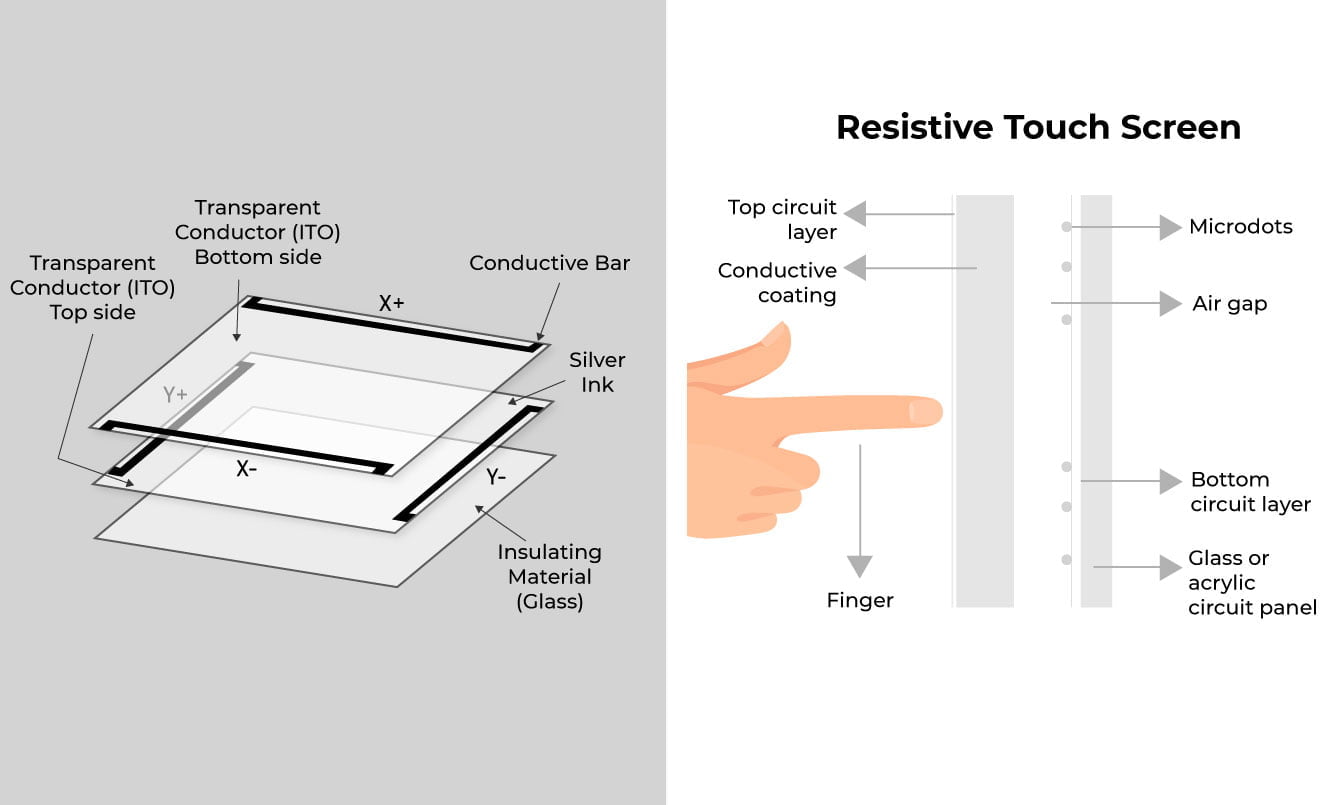
スクリーンに圧力がかかると
抵抗膜方式は導電性ではなく物理的な圧力に依存するため、埃っぽい環境や濡れた環境、電気的ノイズの多い環境でも確実に機能する。.
を必要とするアプリケーション 長寿命と安定した性能, 一般的には、5線式抵抗技術が推奨されている。.
| 特徴 | 抵抗膜式タッチスクリーン | 静電容量式タッチスクリーン |
|---|---|---|
| 入力方法 | 圧力ベース | 導電率ベース |
| グローブ操作 | はい | 限定 |
| スタイラスサポート | はい | 限定 |
| 防水性 | ✅ 高い | ⚠️ 中程度 |
| マルチタッチ | いいえ | はい |
| 産業の安定性 | 素晴らしい | ⚠️ ミディアム |
| コスト管理 | より簡単に ✅ より簡単に | より高い |
抵抗膜式タッチスクリーンはアプリケーション主導型, 一方、静電容量式タッチスクリーンはコンシューマー機器ではより一般的である。.
抵抗膜方式タッチスクリーンは、産業用および業務用としていくつかの利点がある:
これらの利点により、抵抗膜技術は次のような用途に最適です。 基幹インターフェース.
抵抗膜式タッチスクリーンは信頼性が高いが、限界がある:
マルチタッチ・ジェスチャーや高い視覚的明瞭度が不可欠なアプリケーションには、静電容量方式がより適しているかもしれない。.
抵抗膜式タッチスクリーンは、一般に次のような用途に使用されている:
これらの環境では、以下のことが優先される。 信頼性、予測可能性、耐久性 消費者的な交流よりも。.
OEMや産業用プロジェクトではしばしば必要とされる:
抵抗膜方式タッチスクリーンは、以下のような要件を満たしています。 長期的な可用性と安定した性能, これは産業用プログラムにとって極めて重要である。.
イーグル・タッチ 提供する カスタム抵抗膜式タッチスクリーン・ソリューション を含む産業用およびOEM用に設計されている:
当社のエンジニアリング主導のアプローチは、各ソリューションがお客様のアプリケーション要件に正確に合致することを保証します。.
抵抗膜式タッチスクリーンは、プロジェクトで必要とされる場合、最良の選択であることが多い:
産業用またはOEM用途でタッチ技術を評価する場合、抵抗膜方式タッチスクリーンが最も信頼できるソリューションになるかもしれません。.
はじめに ヒューマン・マシン・インターフェース(HMI)は、現代の産業機器の標準的な構成要素となっている。ディスプレイにより、オペレーターは以下のことが可能になる。 ...
はじめに 産業用ディスプレイは、照明条件の制御が困難な環境に設置されることが多い。設備 ...
はじめに ディスプレイは、多くの種類の産業機器において重要なインターフェース・コンポーネントである。システム ...
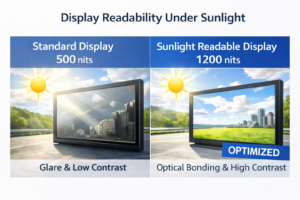
はじめに ディスプレイの視認性は、産業機器において非常に重要な設計パラメータである。オペレータはグラフィカル・インターフェース ...
アプリケーションの詳細をお送りください。構成の方向性と次のステップを返信します。.