Guia do comprador do fornecedor de ecrãs industriais para equipamento OEM
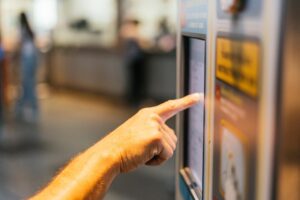
Introdução As interfaces homem-máquina (IHM) são atualmente componentes normais dos equipamentos industriais modernos. Os ecrãs permitem aos operadores ...
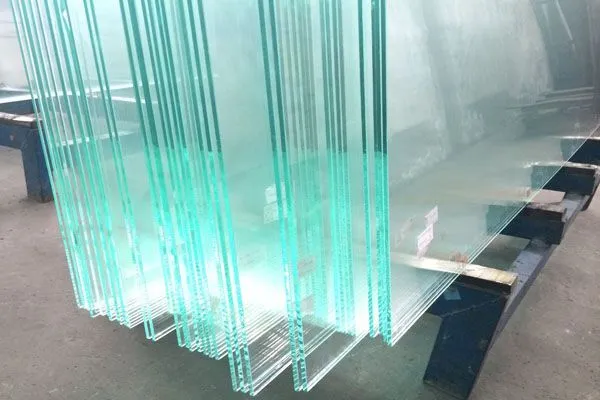
Vidro temperado - também conhecido como vidro temperado-é um tipo de vidro de segurança que desempenha um papel fundamental na equipamento industrial, ecrãs tácteis, quiosques e sistemas para o público.
Em comparação com o vidro recozido normal, o vidro temperado oferece:
Estas caraterísticas fazem dela uma escolha de material padrão para monitores tácteis industriais, máquinas de venda de bilhetes e sistemas de visualização exterior.
O vidro temperado é uma forma de vidro de segurança que foi tratado termicamente para melhorar a sua resistência e durabilidade.
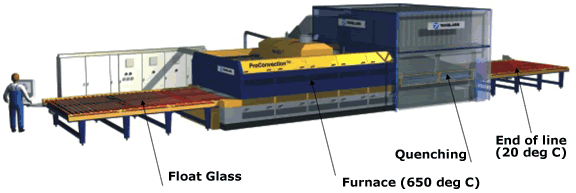
Durante o fabrico, o vidro é aquecido a cerca de 620-680°C e depois arrefecer rapidamente.
Este processo cria tensão de compressão na superfície e tensão de tração no interior do vidro.
Como resultado, o vidro temperado torna-se:
O processo de endurecimento envolve várias etapas fundamentais:
Uma vez temperado, o vidro não pode ser cortado ou perfurado sem quebrar.
O vidro temperado pode resistir:
Isto torna-o ideal para ecrãs tácteis utilizados em ambientes públicos ou industriais.
O vidro temperado tolera diferenças de temperatura até 200-250°C, muito mais elevado do que o vidro normal.
Isto é essencial para aplicações como:
Quando se parte, o vidro temperado fragmenta-se em fragmentos pequenos e rombos em vez de cacos afiados.
Este facto reduz significativamente o risco de lesões, razão pela qual é classificado como vidro de segurança.
| Caraterística | Vidro temperado | Vidro normal |
|---|---|---|
| Força | Muito elevado | Baixa |
| Resistência térmica | Elevado | Baixa |
| Segurança contra rupturas | Pequenos pedaços rombos | Cacos afiados |
| Utilização industrial | Sim | Não |
Em monitores tácteis e ecrãs industriais, o vidro temperado é normalmente utilizado como:
Dependendo do projeto, pode ser combinado com:
Estas melhorias melhoram visibilidade, durabilidade e utilização a longo prazo.
O vidro temperado é amplamente utilizado em:
A sua capacidade de resistir utilização contínua, impacto e stress ambiental torna-o um material essencial na conceção de sistemas industriais.
Apesar das suas vantagens, o vidro temperado tem algumas limitações:
Por esta razão, a validação do projeto antes da produção em massa é fundamental em projectos industriais.
Sim. “Vidro temperado” e “vidro temperado” referem-se ao mesmo material.
Sim. Com espessuras e revestimentos adequados, é amplamente utilizado em aplicações semi-exteriores e exteriores.
A espessura típica varia entre 2 mm a 6 mm, dependendo do tamanho do ecrã e dos requisitos de impacto.
O vidro temperado não é apenas uma atualização de segurança - é um escolha fundamental do material para os modernos sistemas industriais e tácteis.
A sua resistência, estabilidade térmica e comportamento de falha seguro tornam-no indispensável para..:
Para OEMs e integradores de sistemas, escolher a especificação certa de vidro temperado é um passo fundamental para conceção de produtos fiáveis e de longa duração.
Introdução As interfaces homem-máquina (IHM) são atualmente componentes normais dos equipamentos industriais modernos. Os ecrãs permitem aos operadores ...
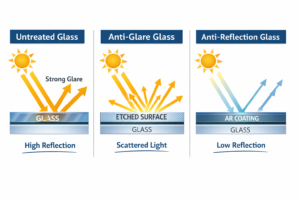
Introdução Os ecrãs industriais são frequentemente utilizados em ambientes onde as condições de iluminação são difíceis de controlar. Equipamento ...
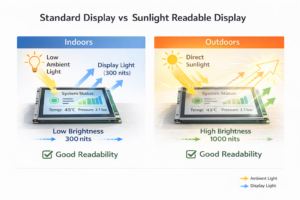
Introdução Os ecrãs são um componente de interface crítico em muitos tipos de equipamento industrial. Fornecem ao sistema ...
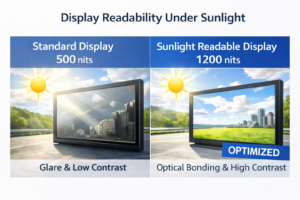
Introdução A visibilidade do ecrã é um parâmetro de conceção fundamental nos equipamentos industriais. Os operadores confiam nas interfaces gráficas ...
Envie os detalhes da sua aplicação. Responderemos com orientações de configuração e próximos passos.