Panel PC vs Computador Industrial: Diferenças de arquitetura e integração
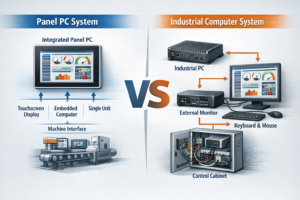
Introdução Na conceção de sistemas industriais, a seleção da arquitetura informática adequada afecta diretamente a fiabilidade e a complexidade da integração do sistema, ...
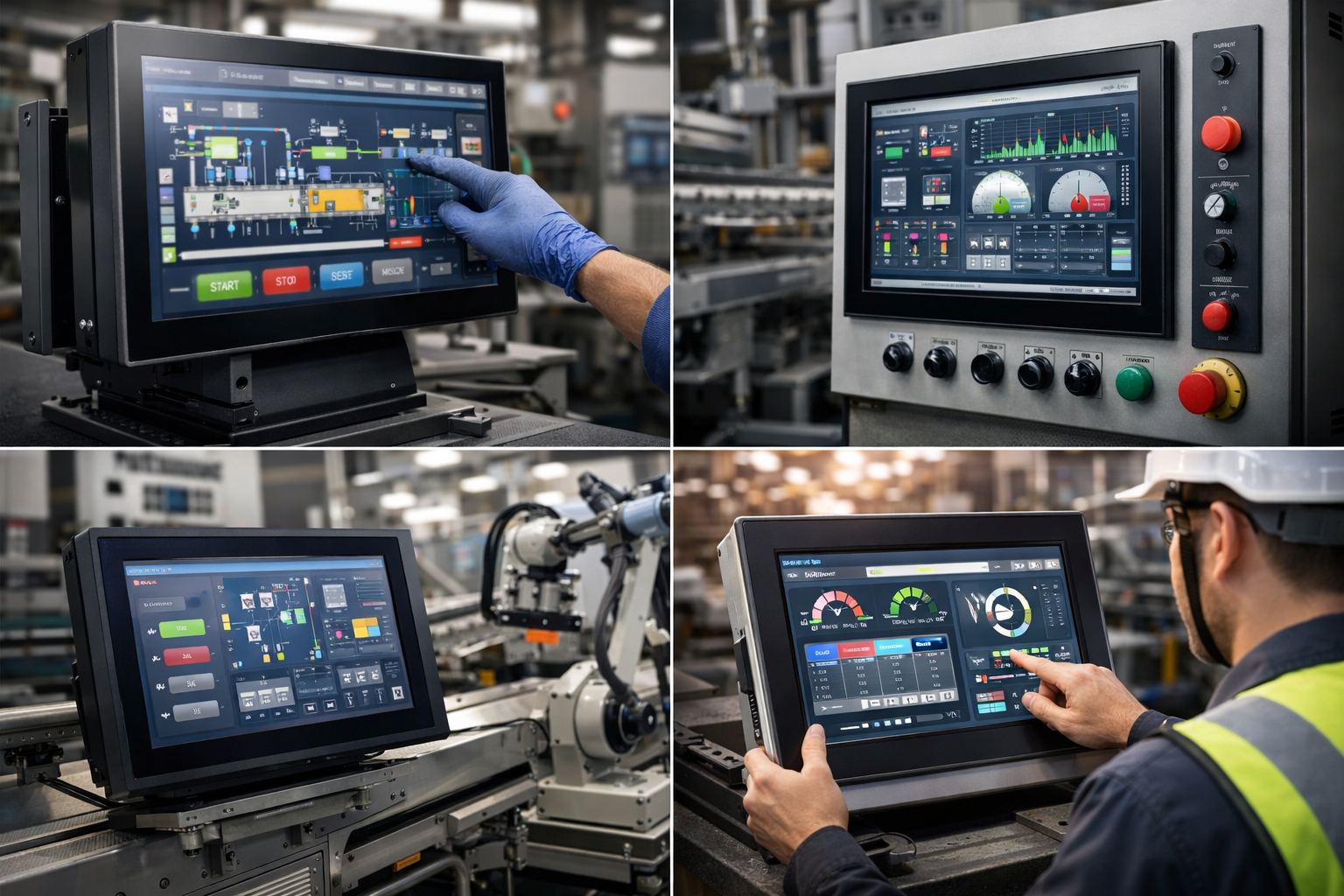
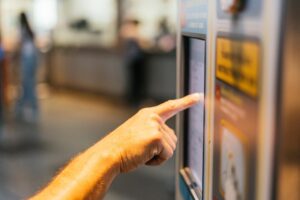
Os monitores de ecrã tátil tornaram-se um tecnologia de interface principal na automatização industrial moderna.
Desde painéis de controlo de chão de fábrica a IHMs de máquinas complexas, os ecrãs tácteis já não são opcionais - são fundamental para a eficiência, a fiabilidade e a facilidade de utilização do sistema.
Este artigo explica porquê monitores de ecrã tátil matéria de automatização industrial, A tecnologia de ponta é a mais avançada do mundo, como supera as interfaces tradicionais e o que os engenheiros devem considerar ao selecionar uma solução de nível industrial.
Um monitor industrial com ecrã tátil é um interface de ecrã robusto Concebido para um funcionamento contínuo em ambientes agressivos, tais como:
Ao contrário dos ecrãs de consumo, os monitores industriais com ecrã tátil são concebidos para..:
Normalmente, apoiam toque resistivo ou capacitivo projetado (PCAP), várias opções de montagem e interfaces industriais como HDMI, VGA, DP ou USB.
Os ecrãs tácteis reduzem drasticamente o tempo necessário para os operadores interagirem com as máquinas.
Em vez de navegarem por botões físicos ou teclados externos, os operadores podem:
Isto leva a tempos de resposta mais rápidos e menos erros operacionais, especialmente em ambientes de elevado rendimento.
Os painéis de controlo tradicionais requerem:
Monitores com ecrã tátil consolidar todas as interações numa única interface, simplificando a conceção do sistema e reduzindo os pontos de falha.
Para os integradores de sistemas, isto significa:
Os ambientes de automação industrial expõem o equipamento a..:
Os monitores industriais de ecrã tátil são concebidos com..:
Esta fiabilidade é essencial para Funcionamento industrial 24/7.
Os sistemas de automação modernos dependem fortemente do software de visualização e das plataformas SCADA.
Os monitores de ecrã tátil permitem:
Isto torna os sistemas mais intuitivo para os operadores e mais fácil de normalizar em todas as instalações.
Embora os monitores industriais com ecrã tátil possam ter um custo inicial mais elevado do que os monitores de consumo, oferecem poupanças significativas a longo prazo:
Para projectos de automatização industrial, custo total de propriedade (TCO) é mais importante do que o preço inicial.
Muitos projectos de automatização requerem especificações não normalizadas, tais como:
É por esta razão que os OEM e os integradores de sistemas trabalham frequentemente com fabricantes de ecrãs tácteis industriais em vez de produtos de consumo prontos a utilizar.
Uma abordagem personalizada reduz o risco de integração e garante a estabilidade do projeto a longo prazo.
Os monitores de ecrã tátil já não são apenas dispositivos de visualização - são um componente central dos sistemas de automação industrial.
Melhoram:
medida que a automação continua a evoluir, as interfaces de ecrã tátil continuarão a ser um tecnologia de fundações em todas as aplicações industriais.
Se está a trabalhar num projeto de automação industrial e precisa de um solução de ecrã tátil fiável e duradoura, Por isso, é fundamental avaliar os requisitos antecipadamente e trabalhar com um fabricante industrial experiente.
[Pedir um orçamento]. ou [Contacte-nos] para discutir os requisitos da sua aplicação.
Introdução Na conceção de sistemas industriais, a seleção da arquitetura informática adequada afecta diretamente a fiabilidade e a complexidade da integração do sistema, ...
Introdução Nos equipamentos industriais, o subsistema "ecrã" faz parte de uma interface homem-máquina (IHM) mais vasta e ...
Introdução Na conceção de equipamento industrial, a interface homem-máquina (HMI) afecta diretamente a facilidade de utilização, a fiabilidade e a manutenção do sistema ...
Introdução As interfaces homem-máquina (IHM) são atualmente componentes normais dos equipamentos industriais modernos. Os ecrãs permitem aos operadores ...
Envie os detalhes da sua aplicação. Responderemos com orientações de configuração e próximos passos.