工业平板电脑和显示器的 LCD 接口选择

Engineering Considerations Beyond Basic Signal Compatibility In industrial Panel PC and monitor projects, LCD interface selection …
Touchscreen monitors are a critical human–machine interface (HMI) in industrial environments. Unlike consumer displays, industrial touchscreen monitors must operate reliably under harsh conditions such as vibration, dust, temperature extremes, and long operating hours.
From an engineer’s perspective, choosing the right industrial touchscreen monitor is not about appearance or brand popularity—it is about reliability, compatibility, and long-term stability. This guide explains how to make the right choice.
Industrial touchscreen monitors are designed for environments where failure is not an option. Compared with commercial displays, they typically feature:
Selecting the wrong type can result in frequent downtime, integration issues, or costly redesigns.
The touch interface directly affects usability, durability, and compatibility.
Common industrial touch technologies include:
Engineering tip:
For most modern industrial HMIs, PCAP touchscreens are the preferred choice due to durability and user experience.
Industrial touchscreen monitors are commonly available from 7″ to 32″ and beyond.
When selecting size and resolution, consider:
Avoid over-specifying resolution—Full HD is sufficient for most industrial applications and offers better long-term component availability.
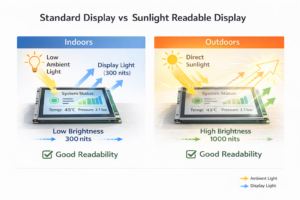
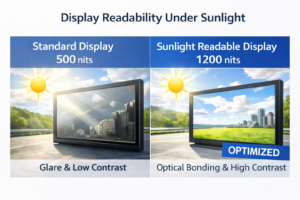
Industrial environments often involve strong ambient light.
Recommended brightness levels:
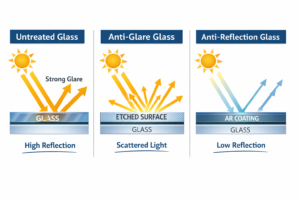
Optional features such as anti-glare coating 和 optical bonding further improve visibility.
Mounting is often overlooked but critical for integration.
Common mounting options include:
Engineering tip:
Ensure the monitor’s mechanical design aligns with enclosure tolerances before finalizing the specification.
Industrial touchscreen monitors typically support:
Always verify compatibility with the target industrial PC, PLC, or embedded controller.
Industrial monitors should be evaluated for:
These factors directly affect system uptime and maintenance cost.
One of the biggest risks in industrial projects is component obsolescence.
Engineers should confirm:
This is especially important for OEM and long-term industrial programs.
In many industrial systems, touchscreen monitors are integrated into industrial Panel PCs rather than used as standalone displays.
When planning a complete HMI solution, understanding how panel PCs are selected at the system level is equally important.
Many industrial projects require more than off-the-shelf solutions.
Customization may include:
For OEM projects, working with a manufacturer that supports custom industrial touchscreen monitors can significantly reduce integration risk.
Selecting the best touchscreen monitor for industrial use requires a balance between performance, durability, and long-term stability. Engineers should prioritize reliability, compatibility, and lifecycle support over short-term cost savings.
A well-chosen industrial touchscreen monitor can operate reliably for years, reducing downtime and total cost of ownership.

Engineering Considerations Beyond Basic Signal Compatibility In industrial Panel PC and monitor projects, LCD interface selection …

Why Higher Ingress Protection Does Not Always Mean Higher Reliability In industrial Panel PC projects, IP …

1. Understanding Capacitive Touchscreen Issues Capacitive touchscreens are widely used in industrial and commercial systems due …

1. Understanding “Non-Responsive” Touch Screens A non-responsive touch screen refers to a condition where touch input …
分享您的申请和关键要求 触摸显示器 或 面板式 PC. 我们的工程师将审查可行性和风险,并推荐正确的配置方向。.