Guide d'achat des fournisseurs d'écrans industriels pour les équipements OEM

Introduction Les interfaces homme-machine (IHM) sont désormais des composants standard des équipements industriels modernes. Les écrans permettent aux opérateurs de ...

Les écrans tactiles constituent une interface homme-machine (IHM) essentielle dans les environnements industriels. Contrairement aux écrans grand public, moniteurs industriels à écran tactile doivent fonctionner de manière fiable dans des conditions difficiles telles que les vibrations, la poussière, les températures extrêmes et les longues heures de fonctionnement.
Du point de vue de l'ingénieur, le choix d'un moniteur industriel à écran tactile n'est pas une question d'apparence ou de popularité de la marque, mais une question d'efficacité. fiabilité, compatibilité et stabilité à long terme. Ce guide explique comment faire le bon choix.
Les écrans tactiles industriels sont conçus pour les environnements où la défaillance n'est pas envisageable. Par rapport aux écrans commerciaux, ils présentent généralement les caractéristiques suivantes
Le choix d'un mauvais type peut entraîner des temps d'arrêt fréquents, des problèmes d'intégration ou des reconceptions coûteuses.
L'interface tactile a une incidence directe sur la facilité d'utilisation, la durabilité et la compatibilité.
Les technologies tactiles industrielles les plus courantes sont les suivantes
Conseil en ingénierie :
Pour la plupart des IHM industrielles modernes, Écrans tactiles PCAP sont le choix préféré en raison de leur durabilité et de l'expérience des utilisateurs.
Les écrans tactiles industriels sont généralement disponibles auprès de de 7″ à 32″ et au-delà.
Lors du choix de la taille et de la résolution, il convient de prendre en compte les éléments suivants :
Évitez de sur-spécifier la résolution : la HD intégrale est suffisante pour la plupart des applications industrielles et offre une meilleure disponibilité des composants à long terme.
Les environnements industriels sont souvent caractérisés par une forte lumière ambiante.
Niveaux de luminosité recommandés :
Les caractéristiques optionnelles telles que revêtement antireflet et liaison optique améliorer encore la visibilité.
Le montage est souvent négligé, mais il est essentiel pour l'intégration.
Les options de montage les plus courantes sont les suivantes
Conseil en ingénierie :
Assurez-vous que la conception mécanique du moniteur s'aligne sur les tolérances du boîtier avant de finaliser les spécifications.
Les moniteurs industriels à écran tactile prennent généralement en charge :
Vérifiez toujours la compatibilité avec le PC industriel, l'automate ou le contrôleur intégré cible.
Les moniteurs industriels doivent être évalués :
Ces facteurs ont une incidence directe sur la durée de fonctionnement du système et sur les coûts de maintenance.
L'un des plus grands risques dans les projets industriels est l'obsolescence des composants.
Les ingénieurs doivent confirmer :
Ceci est particulièrement important pour les OEM et les programmes industriels à long terme.
Dans de nombreux systèmes industriels, les moniteurs à écran tactile sont intégrés à Panel PC industriels plutôt que d'être utilisés en tant qu'écrans autonomes.
Lors de la planification d'une solution IHM complète, il est tout aussi important de comprendre comment les panels PC sont sélectionnés au niveau du système.
De nombreux projets industriels exigent plus que des solutions standard.
La personnalisation peut inclure :
Pour les projets OEM, il est préférable de travailler avec un fabricant qui soutient écrans tactiles industriels personnalisés peut réduire considérablement le risque d'intégration.
Le choix du meilleur moniteur à écran tactile pour une utilisation industrielle nécessite un équilibre entre performance, durabilité et stabilité à long terme. Les ingénieurs doivent donner la priorité à la fiabilité, à la compatibilité et au soutien du cycle de vie plutôt qu'aux économies à court terme.
Un écran tactile industriel bien choisi peut fonctionner de manière fiable pendant des années, réduisant ainsi les temps d'arrêt et le coût total de possession.
Introduction Les interfaces homme-machine (IHM) sont désormais des composants standard des équipements industriels modernes. Les écrans permettent aux opérateurs de ...
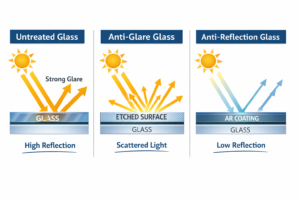
Introduction Les écrans industriels sont souvent déployés dans des environnements où les conditions d'éclairage sont difficiles à contrôler. L'équipement ...
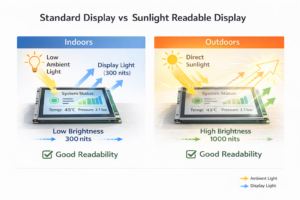
Introduction Les écrans sont des composants d'interface essentiels dans de nombreux types d'équipements industriels. Ils fournissent au système ...
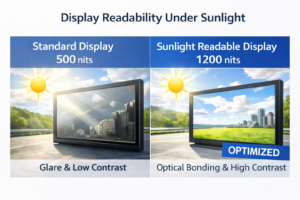
Introduction La visibilité de l'affichage est un paramètre essentiel de la conception des équipements industriels. Les opérateurs s'appuient sur des interfaces graphiques ...
Envoyez les détails de votre demande. Nous vous répondrons en vous indiquant la configuration à suivre et les prochaines étapes.