Guide d'achat des fournisseurs d'écrans industriels pour les équipements OEM

Introduction Les interfaces homme-machine (IHM) sont désormais des composants standard des équipements industriels modernes. Les écrans permettent aux opérateurs de ...
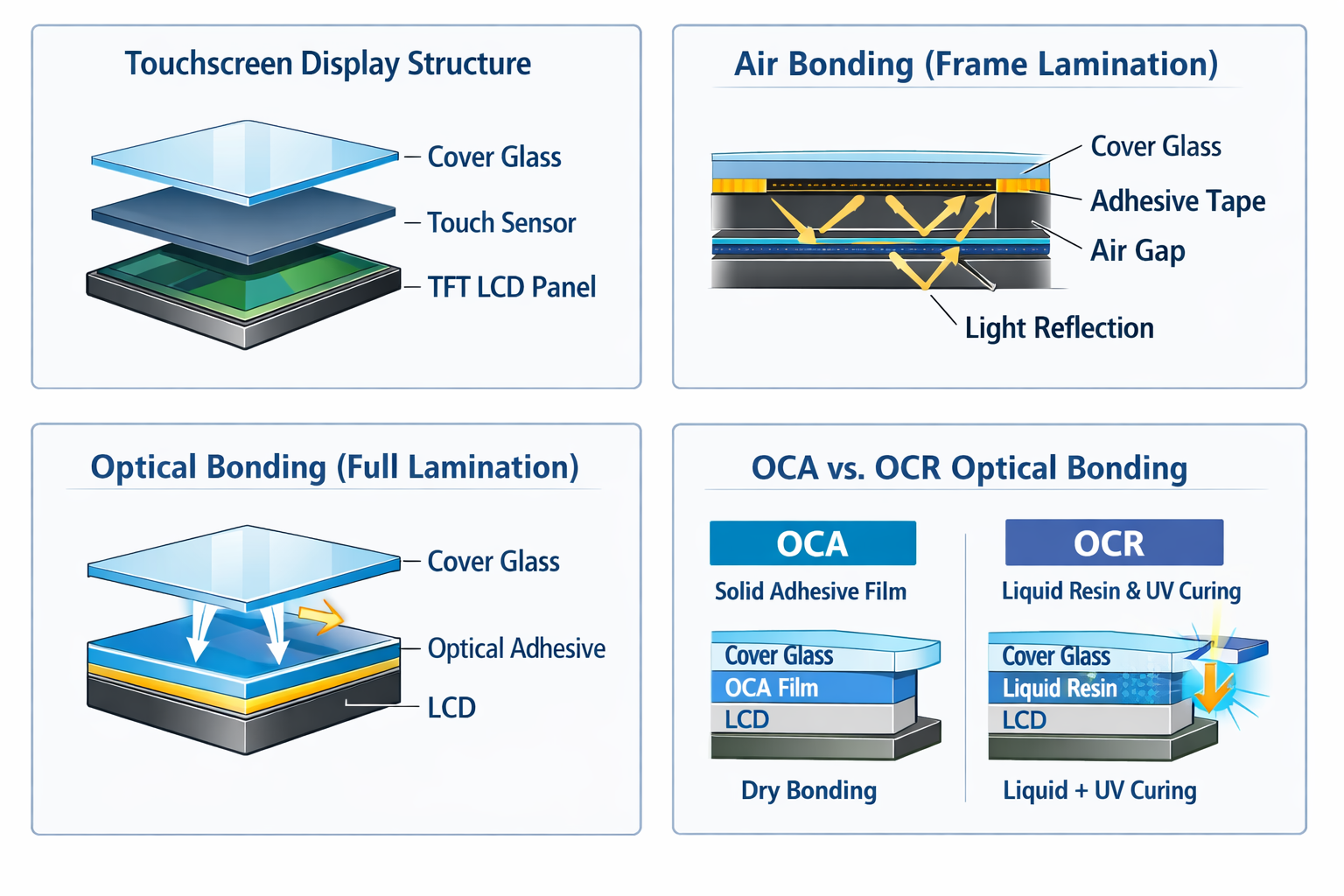
Dans la fabrication moderne d'écrans tactiles, technologie de collage d'écran joue un rôle essentiel dans la détermination de la clarté de l'affichage, de la durabilité, des performances tactiles et de la résistance à l'environnement.
Deux méthodes de collage sont aujourd'hui largement utilisées : Collage à l'air (laminage du cadre) et Collage optique (pelliculage intégral).
Cet article propose une comparaison claire, axée sur l'ingénierie, pour vous aider à comprendre le fonctionnement de ces technologies, leurs différences et la solution la mieux adaptée aux applications industrielles et commerciales.
Un exemple typique module d'affichage tactile se compose de trois couches principales :
Ces couches doivent être laminées ensemble pour former un affichage complet.
En fonction de la manière dont les couches sont collées, le collage d'écran peut être divisé en deux catégories : le collage d'écran et le collage d'écran :
La méthode de collage a une incidence directe sur performance optique, durabilité, sensibilité tactile et fiabilité, surtout dans les environnements industriels ou extérieurs.
Collage à l'air, également connu sous le nom de laminage du cadre, La méthode de collage traditionnelle consiste à coller l'écran tactile et l'écran LCD uniquement sur les bords à l'aide d'un ruban adhésif.
Un l'entrefer demeure entre l'écran tactile et l'écran.
Le collage à l'air est couramment utilisé dans appareils d'entrée de gamme ou d'intérieur lorsque le coût est la principale préoccupation et que l'exposition environnementale est limitée.
Liaison optique, également appelé laminage complet ou collage direct, Le collage de la vitre du couvercle ou de l'écran tactile est nécessaire. directement sur l'écran à l'aide d'un adhésif optiquement transparent.
Ce processus élimine complètement l'espace d'air.
En supprimant l'interface aérienne, le collage optique améliore considérablement les performances optiques et mécaniques, ce qui en fait la solution privilégiée pour les applications suivantes affichages industriels, extérieurs et critiques.
Le collage optique est largement utilisé dans les domaines suivants équipements industriels, appareils médicaux, écrans automobiles, kiosques et terminaux extérieurs.
| Fonctionnalité | Collage optique (pelliculage intégral) | Collage à l'air (laminage du cadre) |
|---|---|---|
| Entrefer | Aucun | Présent |
| Clarté de l'affichage | Contraste élevé, faible réflexion | Réduction due aux réflexions |
| Sensibilité au toucher | Haut | Modéré |
| Durabilité | Liaison structurelle forte | Affaiblissement au fil du temps |
| Résistance à la poussière et à l'humidité | Excellent | Limitée |
| Lisibilité à l'extérieur | Excellent | Pauvre |
| Complexité des réparations | Plus élevé | Plus facile |
Pour les applications industrielles et extérieures, le collage optique est fortement recommandé.
Le collage optique peut être classé en fonction de l'adhésif utilisé dans le processus de collage.
L'OCA est un film adhésif solide et précuit utilisé dans le collage optique à sec.
Caractéristiques principales :
L'OCA est couramment utilisé dans smartphones, tablettes et écrans tactiles compacts où la précision est essentielle.
L'OCR est un colle liquide appliqué entre les couches, puis durci à l'aide d'un UV ou chaleur.
Caractéristiques principales :
L'OCR est largement utilisé dans écrans grand format, moniteurs industriels et équipements robustes.
Le collage optique offre plusieurs avantages en termes de performances et de fiabilité :
Choisissez Optical Bonding si :
Choisissez Air Bonding si :
La technologie de collage des écrans influe directement sur la performance, fiabilité et durée de vie d'un écran.
Le collage à l'air reste une solution rentable pour les applications de base, le collage optique est devenu la norme industrielle pour les écrans industriels, extérieurs et à haute performance.
Si vous concevez ou sélectionnez un écran pour des environnements exigeants, le collage optique n'est plus une amélioration, c'est une nécessité.
Vous avez besoin d'aide pour choisir la technologie de collage adaptée à votre projet ?
Notre équipe d'ingénieurs peut vous aider à évaluer les exigences de votre application et vous recommander la solution la plus adaptée.
Introduction Les interfaces homme-machine (IHM) sont désormais des composants standard des équipements industriels modernes. Les écrans permettent aux opérateurs de ...
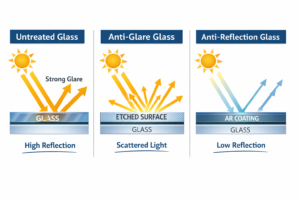
Introduction Les écrans industriels sont souvent déployés dans des environnements où les conditions d'éclairage sont difficiles à contrôler. L'équipement ...
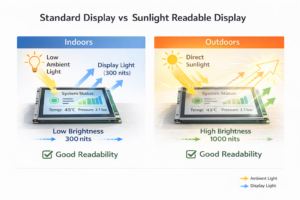
Introduction Les écrans sont des composants d'interface essentiels dans de nombreux types d'équipements industriels. Ils fournissent au système ...
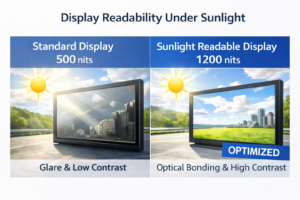
Introduction La visibilité de l'affichage est un paramètre essentiel de la conception des équipements industriels. Les opérateurs s'appuient sur des interfaces graphiques ...
Envoyez les détails de votre demande. Nous vous répondrons en vous indiquant la configuration à suivre et les prochaines étapes.