Les écrans tactiles résistifs restent l'une des technologies tactiles les plus fiables et les plus utilisées dans les applications industrielles et professionnelles. Contrairement aux écrans tactiles capacitifs destinés au grand public, les écrans tactiles résistifs sont activés par la pression et fonctionnent avec les doigts, les gants, les stylets ou tout autre objet solide.
En raison de leur stabilité, de leur prévisibilité et de leur résistance à l'environnement, les écrans tactiles résistifs continuent d'être une solution privilégiée pour les systèmes de contrôle industriels, les équipements médicaux et les projets OEM nécessitant une disponibilité à long terme.
Ce guide explique :
Qu'est-ce qu'un écran tactile résistif ?
Comment cela fonctionne-t-il ?
Principaux avantages et limites
Cas d'utilisation industriels typiques
Comment déterminer s'il est adapté à votre projet ?
Qu'est-ce qu'un écran tactile résistif ?
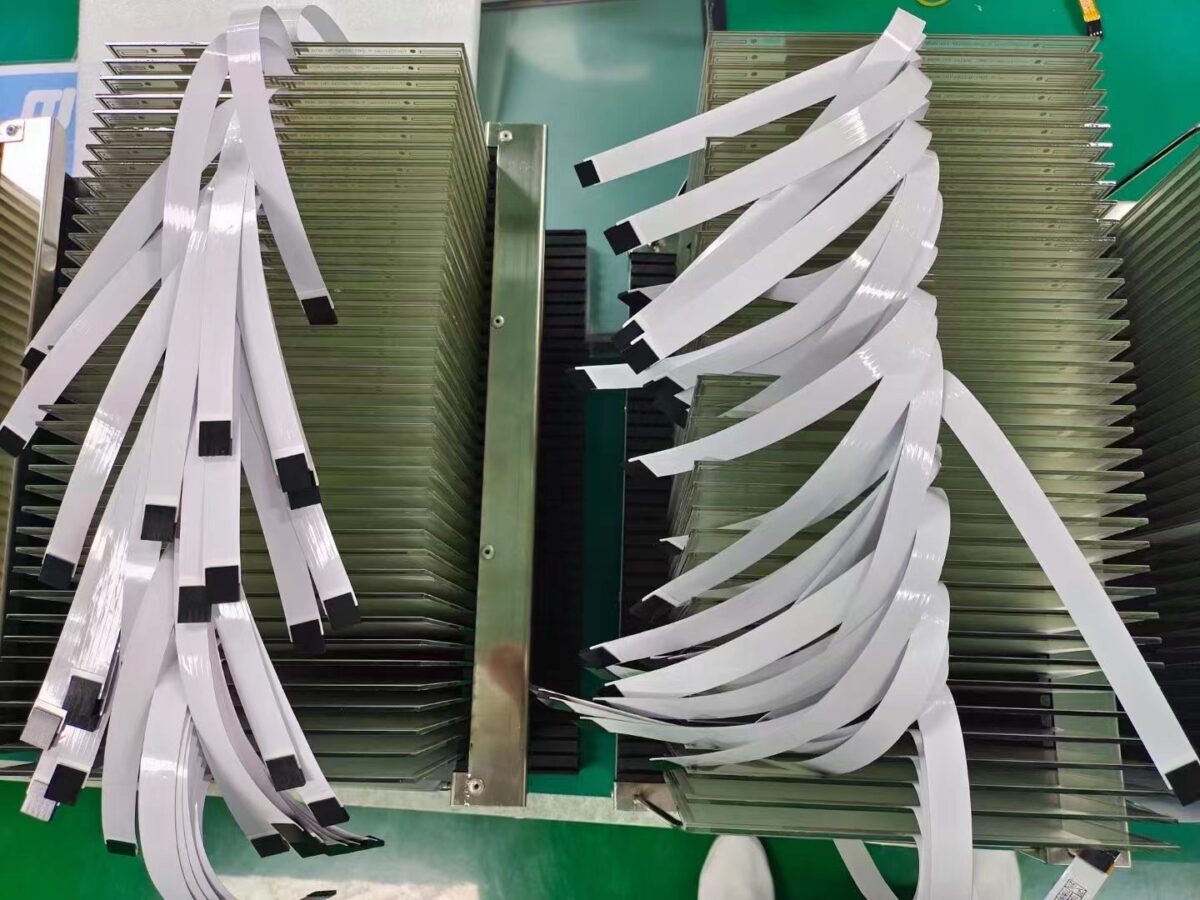
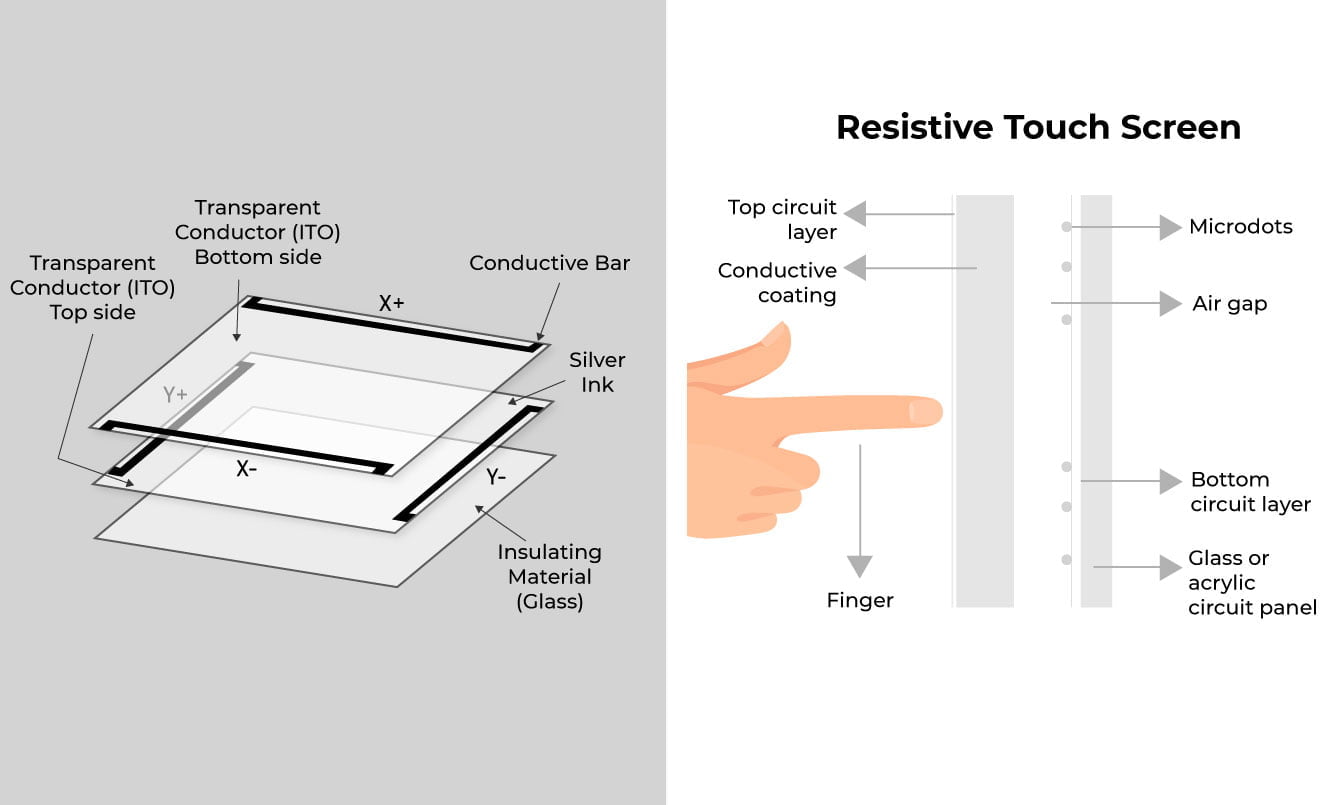
A écran tactile résistif est un dispositif d'entrée sensible à la pression, composé de deux couches conductrices transparentes séparées par un mince espace. Lorsqu'une pression est exercée, les couches entrent en contact et le contrôleur détecte l'emplacement du contact.
Les principales caractéristiques sont les suivantes
Entrée basée sur la pression (ne dépend pas de la conductivité de la peau)
Travailler avec des gants, un stylet ou des outils
Performances stables dans les environnements difficiles
La technologie résistive est donc particulièrement adaptée pour applications industrielles, médicales et extérieures.
Comment fonctionne un écran tactile résistif ?
Lorsqu'une pression est exercée sur l'écran :
La couche supérieure flexible se plie
Il entre en contact avec la couche conductrice inférieure
Les variations de tension sont détectées par le contrôleur
Les coordonnées exactes du toucher sont calculées
Comme le système repose sur la pression physique plutôt que sur la conductivité électrique, les écrans tactiles résistifs fonctionnent de manière fiable dans des environnements poussiéreux, humides ou électriquement bruyants.
Types d'écrans tactiles résistifs
Écran tactile résistif à 4 fils
Une solution rentable
Convient aux interfaces industrielles de base
Durée de vie plus courte que les modèles à 5 fils
Écran tactile résistif à 5 fils (norme industrielle)
Durabilité et précision accrues
La saisie tactile reste stable même lorsque la surface s'use
Choix privilégié pour les projets industriels et OEM à long terme
Pour les applications nécessitant une durée de vie prolongée et des performances stables, La technologie résistive à 5 fils est généralement recommandée.
Écran tactile résistif ou capacitif
Fonctionnalité
Écran tactile résistif
Écran tactile capacitif
Méthode d'entrée
Basé sur la pression
Basé sur la conductivité
Fonctionnement des gants
✅ Oui
❌ Limitée
Support de stylet
✅ Oui
❌ Limitée
Résistance à l'eau
Haut
⚠️ Modéré
Multi-touch
❌ Non
✅ Oui
Stabilité industrielle
✅ Excellent
⚠️ Moyenne
Contrôle des coûts
Plus facile
❌ Plus élevé
Les écrans tactiles résistifs sont axés sur les applications, tandis que les écrans tactiles capacitifs sont plus courants dans les appareils grand public.
Avantages des écrans tactiles résistifs
Les écrans tactiles résistifs offrent plusieurs avantages pour une utilisation industrielle et professionnelle :
Fonctionnement fiable avec des gants ou des outils
Excellente résistance à la poussière et à l'humidité
Précision d'entrée stable sur de longues périodes
Rentable pour la fabrication par projet
Intégration simple dans les systèmes embarqués
Ces avantages font de la technologie résistive la solution idéale pour interfaces critiques.
Limites à prendre en compte
Bien que les écrans tactiles résistifs soient très fiables, ils ont des limites :
Pas de véritable fonctionnalité multi-touch
Clarté optique légèrement inférieure à celle des écrans capacitifs
Nécessite une pression physique pour la saisie
Pour les applications où les gestes multi-touch ou une grande clarté visuelle sont essentiels, la technologie capacitive peut s'avérer plus appropriée.
Applications industrielles typiques
Les écrans tactiles résistifs sont couramment utilisés :
Panneaux de contrôle industriels
Équipement de diagnostic médical
Terminaux de paiement
Kiosques extérieurs
Systèmes d'automatisation des usines
Dispositifs de transport et de logistique
Ces environnements donnent la priorité la fiabilité, la prévisibilité et la durabilité par rapport à l'interaction de type consommateur.
Pourquoi les projets OEM choisissent-ils encore les écrans tactiles résistifs ?
Les projets OEM et industriels requièrent souvent :
Des spécifications stables pendant de nombreuses années
Continuité contrôlée de l'approvisionnement
Interaction prévisible avec l'utilisateur
Résistance aux interférences environnementales
Les écrans tactiles résistifs répondent à ces exigences en offrant une disponibilité à long terme et des performances constantes, ce qui est essentiel pour les programmes industriels.
Solutions tactiles résistives personnalisées par Eagle Touch
Introduction Dans la conception des systèmes industriels, le choix de l'architecture informatique appropriée affecte directement la fiabilité du système, la complexité de l'intégration, ...
Introduction Dans les équipements industriels, le sous-système d'affichage fait partie d'une interface homme-machine (IHM) plus large et d'un sous-système d'affichage. ...
Introduction Dans la conception des équipements industriels, l'interface homme-machine (IHM) a une incidence directe sur la facilité d'utilisation, la fiabilité et la maintenance du système ...
Introduction Les interfaces homme-machine (IHM) sont désormais des composants standard des équipements industriels modernes. Les écrans permettent aux opérateurs de ...
CONTACT
Examen de l'ingénierie
Envoyez les détails de votre demande. Nous vous répondrons en vous indiquant la configuration à suivre et les prochaines étapes.
Idéal pour les projets OEM/ODM et les projets d'intégration. Réponse type : dans un délai d'un jour ouvrable (GMT+8).
Pour l'appel d'offres, veuillez indiquer la taille/luminosité, les interfaces, le montage, la température de fonctionnement et la date de livraison prévue.