블로그

Why are Touchscreen Monitors a Big Deal in Industrial Automation

게시됨: 1월 15, 2026
산업용 선택 가이드 통합 참고 사항
Industrial Touchscreen Monitors in Automation | Eagle Touch

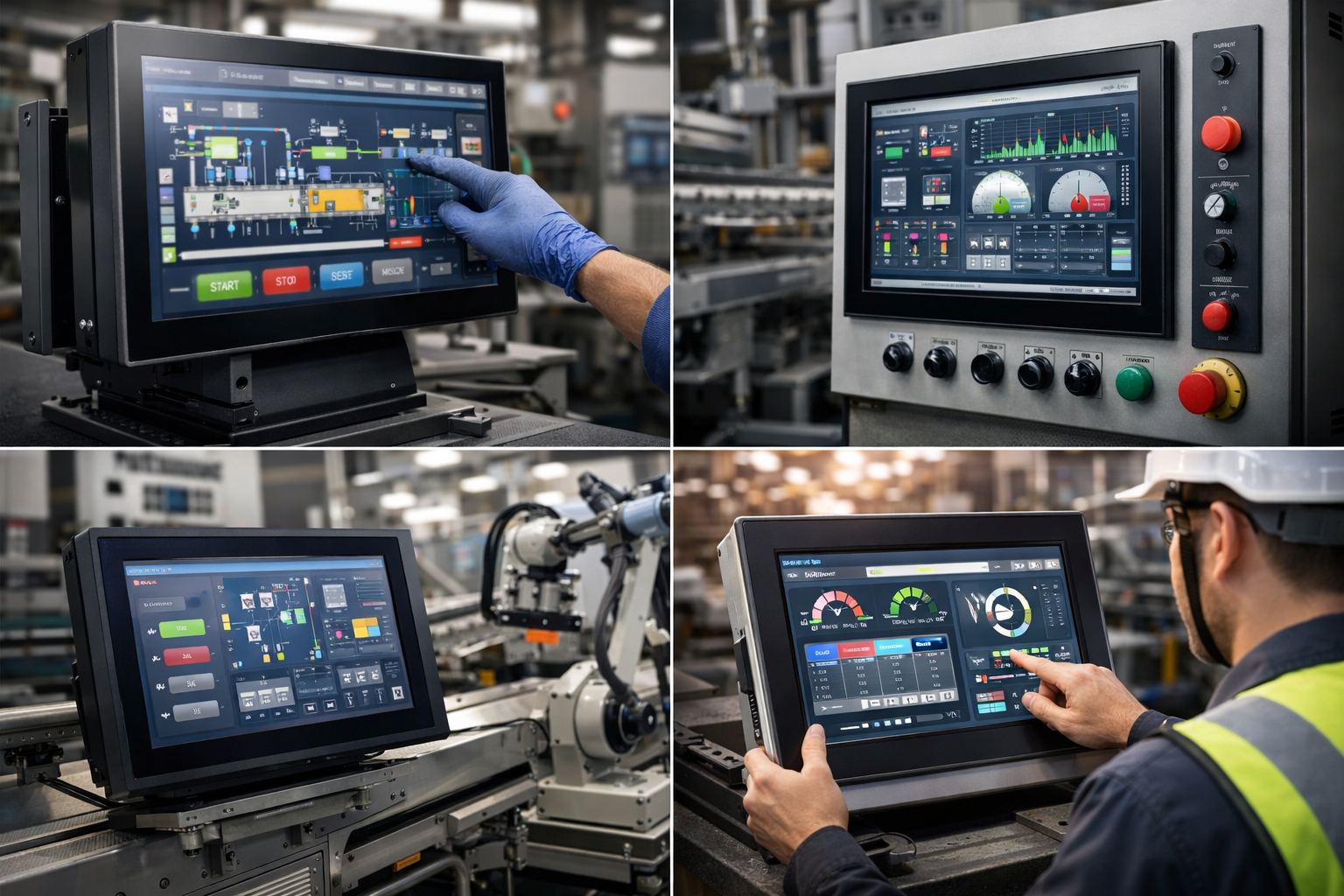
Touchscreen monitors have become a core interface technology in modern industrial automation.
From factory floor control panels to complex machine HMIs, touchscreens are no longer optional—they are critical to efficiency, reliability, and system usability.

This article explains why touchscreen monitors matter in industrial automation, how they outperform traditional interfaces, and what engineers should consider when selecting an industrial-grade solution.


What Is an Industrial Touchscreen Monitor?

An industrial touchscreen monitor is a ruggedized display interface designed for continuous operation in harsh environments such as:

  • Manufacturing plants
  • Automated production lines
  • Process control systems
  • Industrial machinery and equipment

Unlike consumer displays, industrial touchscreen monitors are built for:

  • Long-term availability
  • Electrical and mechanical stability
  • Integration with PLCs, IPCs, and control systems

They typically support resistive or projected capacitive (PCAP) touch, multiple mounting options, and industrial interfaces like HDMI, VGA, DP, or USB.


Why Touchscreen Monitors Are Transforming Industrial Automation

1. Faster Human–Machine Interaction (HMI)

Touchscreens dramatically reduce the time required for operators to interact with machines.

Instead of navigating physical buttons or external keyboards, operators can:

  • Access menus instantly
  • Adjust parameters directly on-screen
  • Visualize machine status in real time

This leads to faster response times and fewer operational errors, especially in high-throughput environments.


2. Reduced System Complexity

Traditional control panels require:

  • Separate displays
  • Mechanical buttons or switches
  • Complex wiring and I/O mapping

Touchscreen monitors consolidate all interactions into a single interface, simplifying system design and reducing points of failure.

For system integrators, this means:

  • Cleaner panel layouts
  • Faster installation
  • Easier maintenance

3. Improved Reliability in Industrial Environments

Industrial automation environments expose equipment to:

  • Dust and oil
  • Moisture and cleaning chemicals
  • Vibration and temperature variation

Industrial touchscreen monitors are engineered with:

  • Sealed front panels (often IP65 or higher)
  • Industrial-grade components
  • Long-life backlights and controllers

This reliability is essential for 24/7 industrial operation.


4. Better Support for Modern Automation Software

Modern automation systems rely heavily on visualization software and SCADA platforms.

Touchscreen monitors enable:

  • Graphical dashboards
  • Alarm visualization
  • Gesture-based navigation
  • Multi-language operator interfaces

This makes systems more intuitive for operators and easier to standardize across facilities.


5. Long-Term Cost Efficiency

Although industrial touchscreen monitors may have a higher upfront cost than consumer displays, they offer significant long-term savings:

  • Fewer mechanical failures
  • Lower downtime
  • Longer product life cycles
  • Stable supply for multi-year projects

For industrial automation projects, total cost of ownership (TCO) matters more than initial price.


Key Considerations When Choosing an Industrial Touchscreen Monitor

터치 기술

  • Resistive: Works with gloves, suitable for simple control tasks
  • PCAP: Multi-touch, higher clarity, better for modern HMIs

Mechanical Integration

  • Panel mount, open frame, VESA mount, or custom enclosure
  • Front bezel design and sealing level

광학 성능

  • Brightness for factory lighting conditions
  • Anti-glare or optical bonding for readability

Electrical & Interface Compatibility

  • Display interfaces (HDMI, VGA, DP)
  • Touch interface (USB, RS232)
  • EMC and industrial compliance

Why Industrial Automation Projects Prefer Custom Touch Solutions

Many automation projects require non-standard specifications, such as:

  • Custom screen sizes
  • Specific glass thickness or surface treatment
  • Long-term availability guarantees
  • Matching existing machine designs

This is why OEMs and system integrators often work with industrial touchscreen manufacturers rather than off-the-shelf consumer products.

A custom approach reduces integration risk and ensures long-term project stability.


Conclusion: Touchscreen Monitors Are Now Essential in Industrial Automation

Touchscreen monitors are no longer just display devices—they are a core component of industrial automation systems.

They improve:

  • 운영 효율성
  • System reliability
  • Operator experience
  • Long-term project sustainability

As automation continues to evolve, touchscreen interfaces will remain a foundation technology across industrial applications.


Ready to Select the Right Industrial Touchscreen?

If you are working on an industrial automation project and need a reliable, long-term touchscreen solution, it’s critical to evaluate requirements early and work with an experienced industrial manufacturer.

[Request a Quote] 또는 [Contact Us] to discuss your application requirements.

관련 게시물

연락처

엔지니어링 검토를 받을 준비가 되셨나요?

애플리케이션 및 주요 요구 사항 공유 터치 모니터 또는 패널 PC. 엔지니어가 타당성과 위험성을 검토하고 올바른 구성 방향을 추천해 드립니다.

OEM/ODM 및 통합 프로젝트에 가장 적합합니다. 일반적으로 영업일 기준 1일(GMT+8) 이내에 응답합니다.
RFQ에는 크기/밝기, 인터페이스 목록, 장착, 작동 온도, 목표 배송 날짜(긴급한 경우)를 포함해 주세요.