Guide d'achat des fournisseurs d'écrans industriels pour les équipements OEM

Introduction Les interfaces homme-machine (IHM) sont désormais des composants standard des équipements industriels modernes. Les écrans permettent aux opérateurs de ...
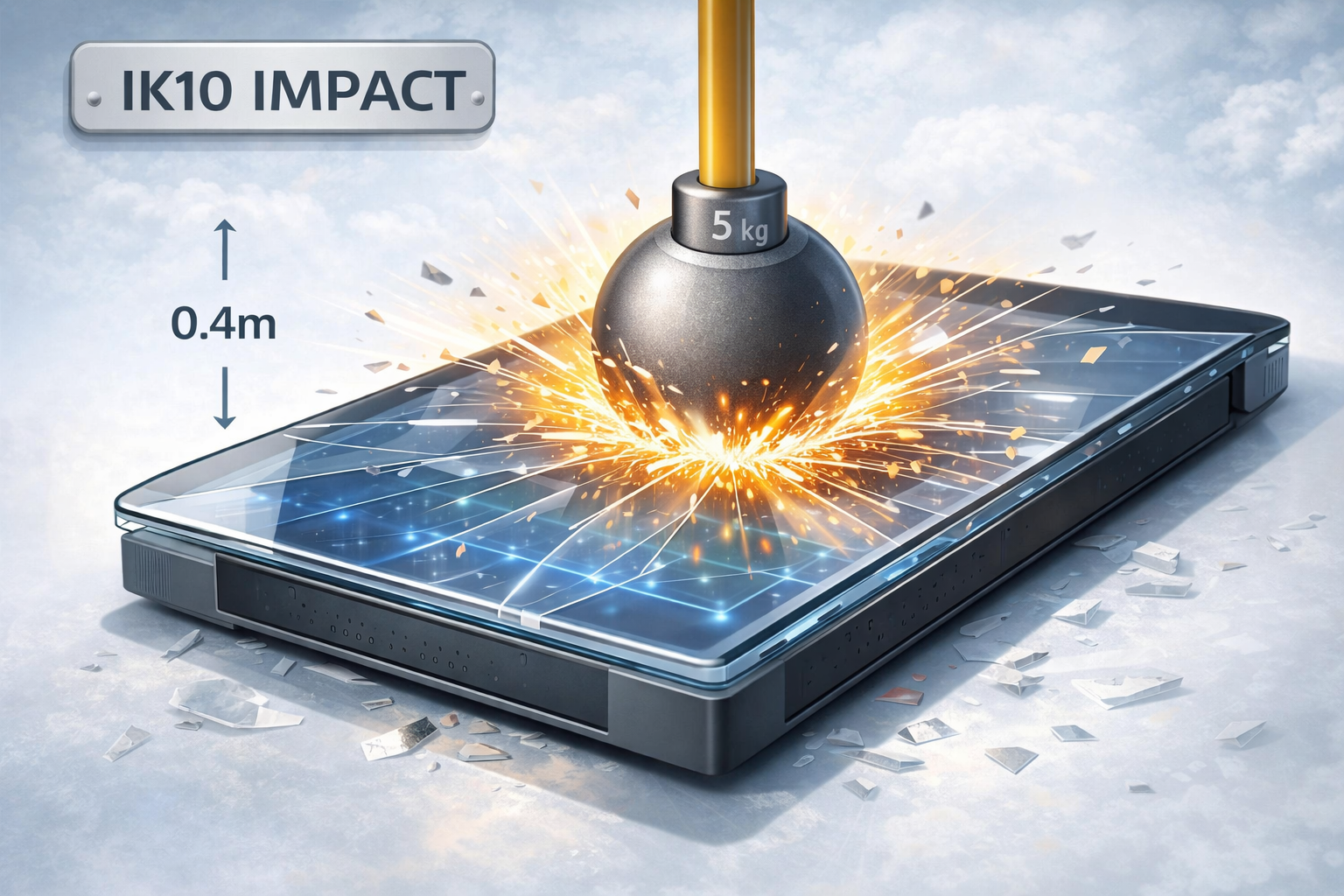
Un Écran tactile IK10 est conçu pour résister impact mécanique sévère dans les environnements industriels et publics où la fiabilité et la durabilité sont essentielles.
En 2026, les écrans tactiles classés IK10 sont largement utilisés dans les domaines suivants les systèmes de contrôle industriel, les kiosques extérieurs, les équipements de transport, les infrastructures énergétiques et les terminaux d'accès public., où les écrans doivent résister au vandalisme, aux chocs accidentels et aux contraintes physiques à long terme.
Ce guide explique :
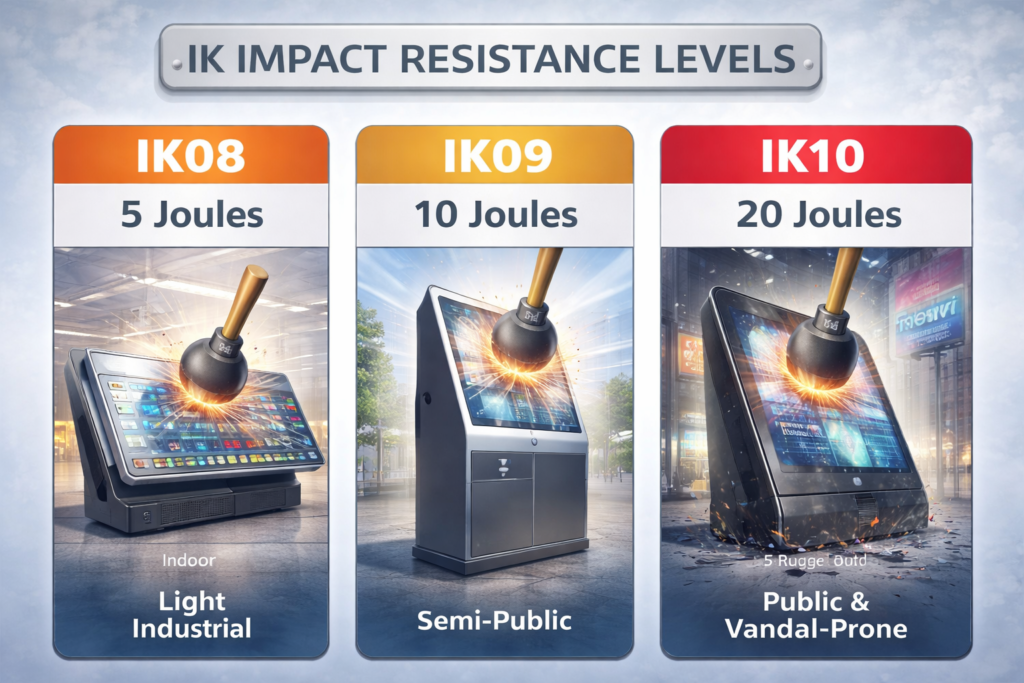
Un Écran tactile IK10 se réfère à un écran tactile qui répond à la norme Niveau de résistance aux chocs IK10, la note la plus élevée définie par IEC / EN 62262.
Le système d'évaluation IK mesure résistance aux chocs mécaniques, La protection contre l'eau et la poussière (qui fait l'objet d'une classification IP) n'est pas assurée.
Pour les systèmes industriels et publics, la protection IK10 signifie :
Dans les environnements réels, les écrans tactiles conformes à la norme IK10 sont conçus pour tolérer les éléments suivants interaction physique incontrôlée.
Les scénarios typiques sont les suivants :
Ce niveau de protection est particulièrement important pour les systèmes d'accès public, les terminaux de transport et les équipements industriels, où le comportement de l'utilisateur ne peut être entièrement contrôlé et où l'accès à la maintenance peut être limité.
Un malentendu courant dans les projets industriels consiste à confondre Notations IK avec Indices IP.
| Evaluation | Ce qu'il mesure | Préoccupation typique |
|---|---|---|
| Classement IK | Résistance aux chocs | Dommages physiques, vandalisme |
| Indice IP | Protection contre les agressions | Poussière, eau, humidité |
Un écran tactile IK10 ne garantit pas automatiquement protection contre la poussière ou l'eau.
Dans de nombreuses applications, La résistance aux chocs IK10 est combinée à une protection contre les intrusions IP65 ou supérieure. afin de garantir une durabilité environnementale totale.
Les indices IK sont définis par IEC / EN 62262, L'évaluation de l'impact mécanique est réalisée à l'aide d'essais d'impact mécanique normalisés.
Pour IK10 :
Pour les projets industriels, la conformité vérifiée à la norme IK10 garantit que l'écran tactile a été conçu pour être utilisé dans des conditions optimales. validée dans des conditions d'essai normalisées, réduisant ainsi les risques lors du déploiement.
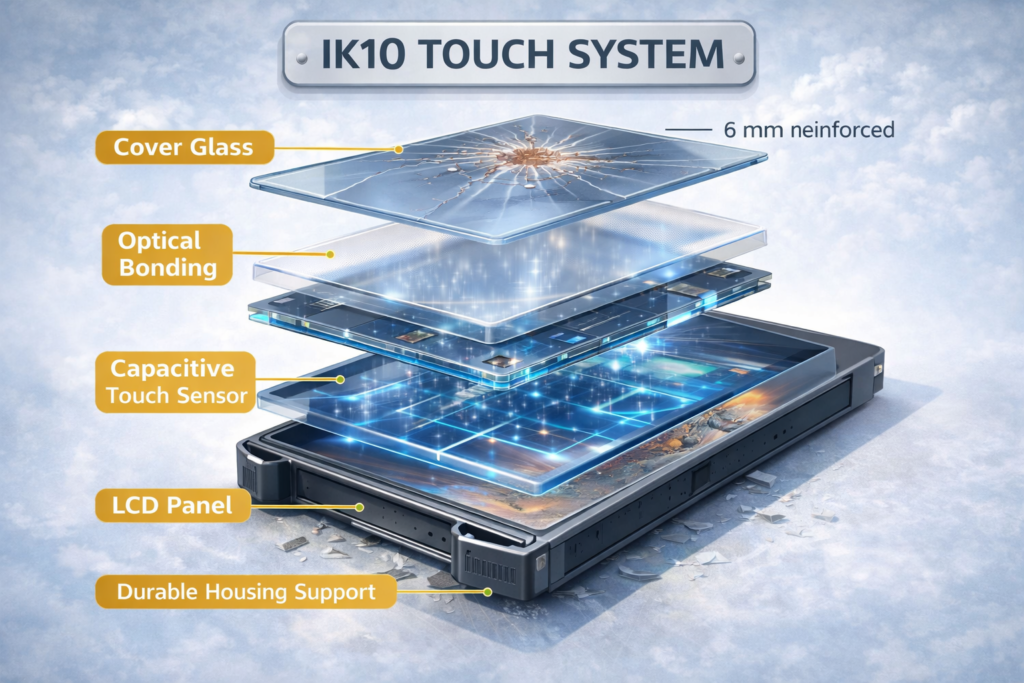
Tous les écrans tactiles IK10 n'ont pas les mêmes performances dans les applications réelles. Une conception correcte ne se limite pas à l'utilisation d'un verre plus épais.
La plupart des écrans tactiles IK10 utilisent :
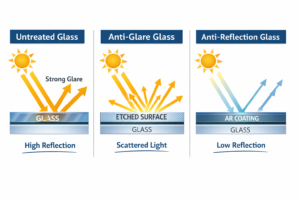
Pour l'extérieur, antireflet (AG) ou antireflet (AR) des traitements de surface sont souvent appliqués pour maintenir la lisibilité sous une forte lumière ambiante.
La protection IK10 peut être combinée avec différentes technologies tactiles :
La résistance aux chocs est principalement assurée par la conception mécanique ; le choix de la technologie tactile doit être basé sur les exigences d'interaction, et non la seule note IK.
Les performances de l'IK10 dépendent fortement la façon dont l'écran tactile est monté:
Un écran renforcé peut toujours être défaillant si la conception de l'intégration n'est pas étudiée avec soin.
Les écrans tactiles IK10 sont souvent associés à :
La résistance aux chocs est plus efficace lorsqu'elle est intégrée dans un conception d'un système entièrement robuste, L'article 2 de la directive sur la protection de l'environnement n'est pas traité comme un élément autonome.
Les écrans tactiles classés IK10 sont largement utilisés dans les environnements où la durabilité n'est pas négociable :
Dans ces applications, la défaillance de l'écran tactile entraîne souvent les temps d'arrêt des systèmes, les coûts de maintenance et les perturbations opérationnelles.
| Fonctionnalité | Standard Industrial Touch | Écran tactile IK10 |
|---|---|---|
| Résistance aux chocs | Modéré | Maximum (IK10) |
| Protection contre le vandalisme | Limitée | Haut |
| Épaisseur du verre | Standard | Renforcé (6 mm+) |
| Aptitude à l'utilisation publique | Limitée | Excellent |
| Risque lié à la maintenance | Moyen | Faible |
Pour les déploiements industriels ou publics à long terme, les solutions classées IK10 réduisent considérablement le risque de dommages et de remplacement.
Les projets OEM et industriels requièrent souvent :
Les écrans tactiles IK10 permettent de répondre à ces exigences en offrant robustesse mécanique sans compromettre la précision du toucher, Le système de contrôle de la qualité de l'eau permet de garantir un fonctionnement fiable à long terme.
Eagle Touch fournit solutions personnalisées pour écrans tactiles IK10 pour les applications industrielles et OEM, y compris
Notre approche axée sur l'ingénierie garantit que résistance aux chocs, facilité d'utilisation et fiabilité à long terme sont équilibrés en fonction des exigences du projet dans le monde réel.
Un écran tactile IK10 est fortement recommandé si votre système :
Le choix du bon indice IK dès le début de la phase de conception permet d'éviter des remaniements coûteux et des problèmes opérationnels plus tard.
Les écrans tactiles IK10 représentent la le plus haut niveau de résistance aux chocs disponibles pour les interfaces tactiles.
En combinant la résistance mécanique, une conception de qualité industrielle et des performances tactiles fiables, les solutions classées IK10 assurent un fonctionnement fiable dans des environnements exigeants.
Le choix d'un écran tactile IK10 n'est pas seulement une question de protection, c'est aussi une question de sécurité. continuité du système, réduction des risques et confiance opérationnelle à long terme.
🚀 Vous prévoyez un projet de toucher résistant aux chocs ?
Si vous développez un système industriel ou public et que vous avez besoin d'une solution tactile IK10 fiable, une spécification précoce et une sélection adéquate de la conception peuvent réduire considérablement les risques.
👉 Contacter Eagle Touch pour discuter de vos besoins en matière d'applications.
Introduction Les interfaces homme-machine (IHM) sont désormais des composants standard des équipements industriels modernes. Les écrans permettent aux opérateurs de ...
Introduction Les écrans industriels sont souvent déployés dans des environnements où les conditions d'éclairage sont difficiles à contrôler. L'équipement ...
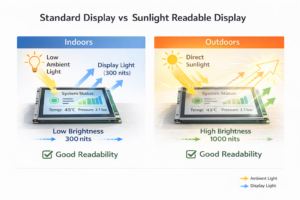
Introduction Les écrans sont des composants d'interface essentiels dans de nombreux types d'équipements industriels. Ils fournissent au système ...
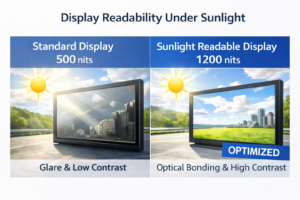
Introduction La visibilité de l'affichage est un paramètre essentiel de la conception des équipements industriels. Les opérateurs s'appuient sur des interfaces graphiques ...
Envoyez les détails de votre demande. Nous vous répondrons en vous indiquant la configuration à suivre et les prochaines étapes.