What Is an Industrial Panel PC? Components, Types and Applications
An industrial panel PC is a computer with a built-in display, usually a touchscreen, designed for …
Eagle Touch Engineering Team
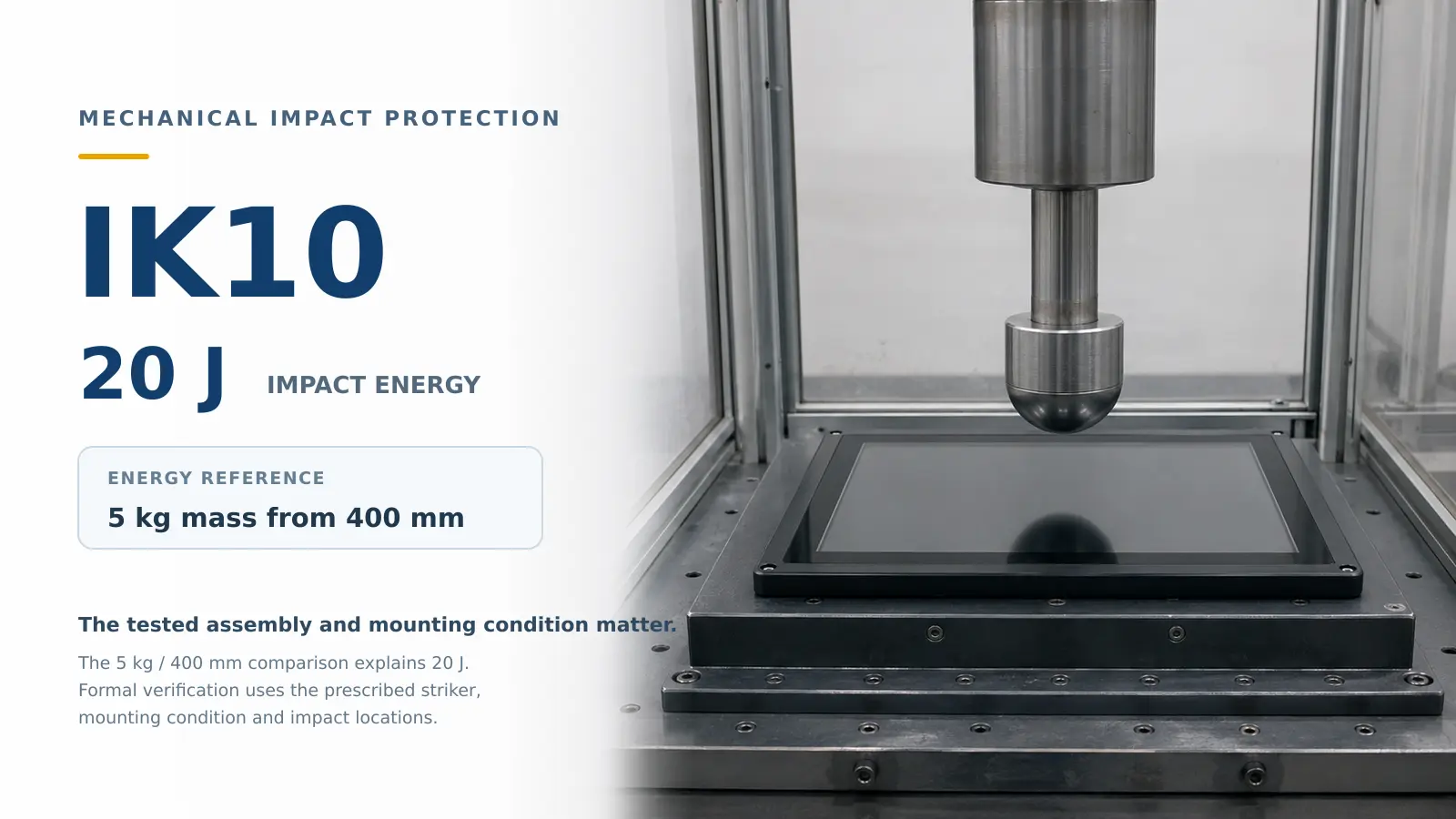
An IK10 touch screen is designed for equipment whose front surface may face serious accidental impact, rough public use or deliberate damage. IK10 corresponds to 20 joules of external mechanical impact under IEC 62262—commonly illustrated as a 5 kg mass falling from 400 mm.
That number is useful, but it is not the whole specification.
For a touchscreen, IK10 should be treated as a result achieved by a tested assembly in a defined mounting condition. It is not a label created by choosing a particular cover-glass thickness. The glass, touch sensor, bonding, gasket, supporting frame and final enclosure all influence what happens when the surface is struck.
The practical question is therefore not only whether the glass survives. It is whether the tested structure remains safe and whether the display and touch functions meet the agreed post-test requirements.
IEC 62262 classifies the protection provided by an enclosure against external mechanical impacts. Each IK code corresponds to a defined impact energy.
IK10 represents 20 J. The familiar “5 kg from 400 mm” description is an energy reference that makes 20 J easier to understand. Formal testing does not consist of dropping any convenient 5 kg object onto a screen. It uses prescribed impact equipment, directions, locations and mounting conditions under the applicable test plan. The hammer methods are defined in IEC 60068-2-75.
The 2021 amendment to IEC 62262 added IK11 at 50 J. In industrial touchscreen projects, however, IK10 remains the high-impact level most commonly requested for vandal-resistant public equipment.
| IK Rating | Impact Energy | Common Energy Reference | Practical Risk Level |
|---|---|---|---|
| IK08 | 5 J | Approximately 1.7 kg from 300 mm | Occasional impact in protected or partly controlled equipment |
| IK09 | 10 J | Approximately 5 kg from 200 mm | Stronger accidental impact or moderate misuse risk |
| IK10 | 20 J | Approximately 5 kg from 400 mm | Heavy impact, deliberate damage or costly field failure |
A higher number is not automatically the better specification. It adds weight, cost and design constraints. The correct level should follow a credible impact risk or a stated customer, tender or regulatory requirement.
An outdoor location alone does not make IK10 necessary. A locked outdoor control cabinet with restricted access may face less impact risk than an indoor ticketing terminal used by the public all day.
The IK code defines an impact severity, while IEC 60068-2-75 provides standardized hammer-test methods. For a meaningful touchscreen test, the test plan must identify the specimen, its support and what counts as an acceptable result.
At minimum, the project should make the following points clear:
This distinction matters. A supplier may show that a sheet of glass resisted a 20 J impact, while the customer actually needs an assembled monitor to pass after it has been installed in a cabinet. Those are not equivalent claims.
The report should match the product being purchased. If the glass outline, openings, frame, bonding stack or mounting method changes, the earlier result may no longer represent the new assembly.
No.
Six-millimetre strengthened cover glass is a common starting point for many IK10-target touchscreen projects, including projects developed by Eagle Touch. But thickness alone does not guarantee an IK10 result, and thinner or differently constructed glass systems cannot be judged by thickness alone either.
Impact performance also depends on:
Glass is particularly vulnerable at damaged or poorly supported edges. A strong central area cannot compensate for a chipped edge, a sharp internal corner or uneven clamping pressure.
This is why a statement such as “6 mm glass, therefore IK10” is incomplete. A responsible specification should identify what was tested and in which assembled condition.
During an impact, energy travels beyond the point where the striking element contacts the glass. The cover glass bends, the supporting structure reacts, the gasket compresses and force may reach the touch sensor, bonding layer, LCD and enclosure.
| Design Variable | Why It Matters |
| Edge support | Insufficient or uneven support increases bending and edge stress |
| Gasket compression | Excessive compression may preload the glass or create LCD pressure marks |
| Adhesive area | A narrow or interrupted adhesive path can concentrate stress or separate after impact |
| Frame rigidity | A flexible frame may deform even when the cover glass remains intact |
| Glass openings | Cut-outs and sharp internal corners can become stress concentrators |
| Bonding stack | Air bonding and optical bonding transfer impact differently and must be evaluated in the final structure |
| Mounting method | A test fixture that does not represent the actual enclosure can produce a result that does not transfer to the installed product |
Optical bonding should not be presented as an automatic route to IK10. It may be selected for sunlight readability, condensation control or mechanical integration, but it also changes how force is transmitted to the LCD. Its effect on impact performance must be validated with the actual assembly.
An impact test is not only about dramatic glass breakage. In practice, a structure may show other failures:
These are the failures that make a thick-glass claim look good on paper but unreliable in the field.
Projected-capacitive touch works by detecting a small change in an electric field. Increasing the distance between the user’s finger and the sensor weakens that signal. A PCAP design that works behind 2 or 3 mm glass may not remain stable when the cover glass becomes 6 mm thick.
The final design may require a suitable industrial touch controller, sensor pattern and firmware tuning. It must then be checked with the actual LCD, power supply, grounding and cable routing—not only on a workbench with the touch panel separated from the display.
The required operating modes also matter. Stable finger touch through thick glass does not automatically prove reliable glove operation or water rejection. Greater glove sensitivity can increase the risk of false activation from water or electrical noise. These functions should be tuned and validated against the project’s real priorities.
For a broader explanation of these variables, see our industrial PCAP touch screen guide.
These specifications describe different forms of protection and should not be used interchangeably.
| Specification | What It Evaluates | What It Does Not Prove |
| IK10 | Resistance to 20 J external mechanical impact | Waterproofing or surface scratch resistance |
| IP65 | Protection against dust ingress and water jets | Resistance to a 20 J impact |
| 7H surface hardness | Resistance to surface scratching under the stated hardness test | Resistance to heavy mechanical impact |
When a supplier specifies 7H, the test method should also be stated. “H” commonly refers to pencil hardness, while the Mohs mineral-hardness scale uses numbers without the H suffix. The two systems should not be mixed.
A touchscreen can have 7H surface hardness and still fail an IK10 impact test. It can also achieve the required impact performance without having an IP65-sealed front. For outdoor equipment, impact, water, dust, sunlight, UV exposure and temperature must be specified separately.
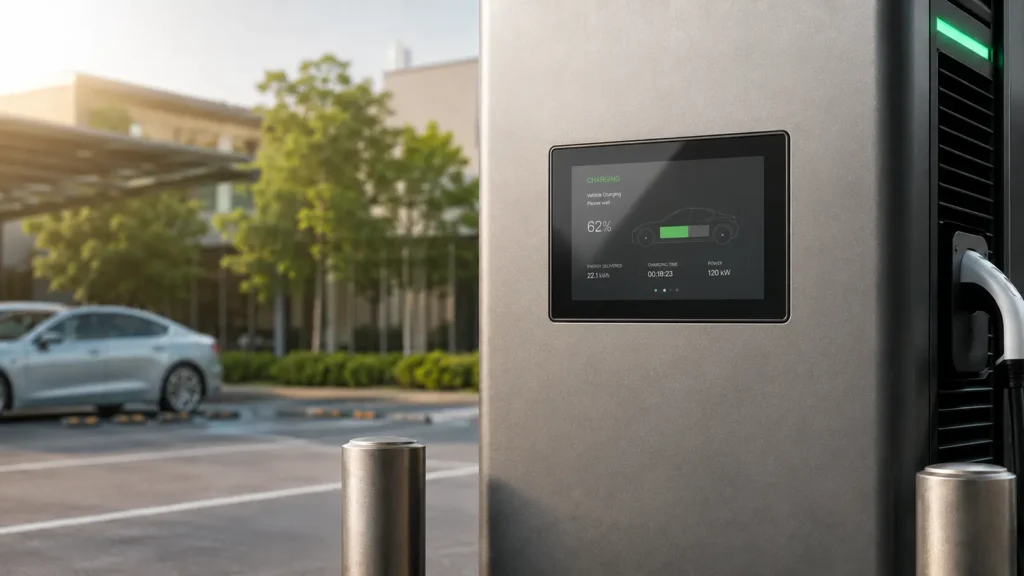
IK10 is worth considering when the risk and cost of impact justify the stronger construction.
| Project Condition | Is IK10 Worth Checking? |
| Unattended equipment accessible to the public | Usually yes |
| Credible vandalism or heavy-impact risk | Yes |
| Tools or hard objects may strike the screen | Yes |
| IK10 is required by the customer or tender | Yes, with an agreed test plan |
| Indoor equipment in a controlled operator area | Not automatically |
| The only concern is rain or dust | No; start with the required IP protection |
| Low-impact project with strict cost and weight limits | Often no |
Typical IK10 applications include payment terminals, ticketing machines, parking systems, EV chargers and other public equipment. But the application name is not the requirement. The real deciding factors are access, likely impact, consequences of failure and the specification the finished equipment must meet.
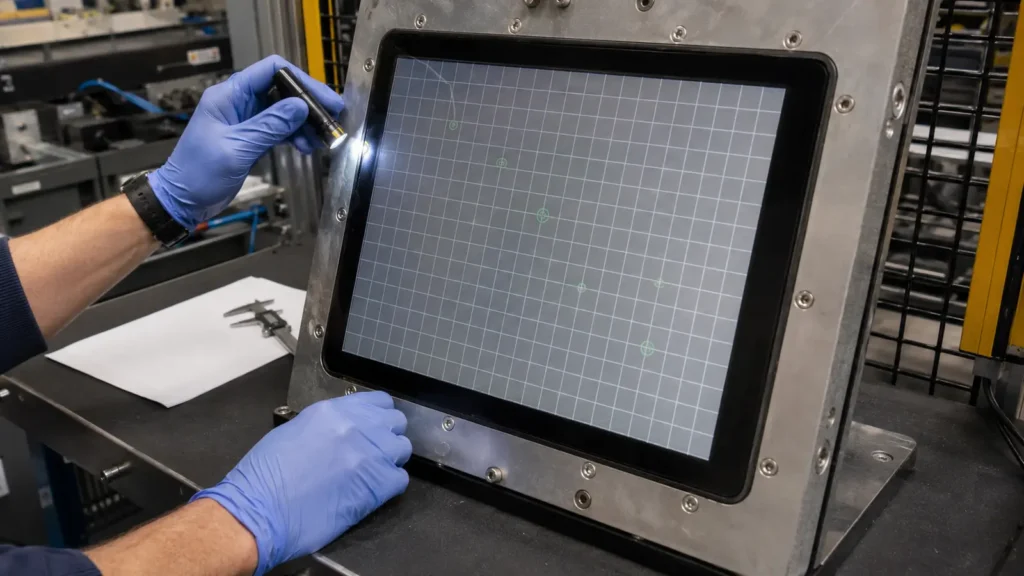
Before approving a supplier or sample, ask for precise answers to these questions:
This review protects both buyer and supplier. It turns “IK10” from a marketing phrase into a testable project requirement.
An IK10 touch screen is not simply a standard PCAP panel covered by thicker glass. It is an impact-resistant assembly designed around a 20 J requirement and verified in a defined test condition.
Six-millimetre strengthened glass is common in this type of project, but it is not a certificate. The final result depends on the glass, edges, touch stack, adhesive, gasket, frame and enclosure working together. Touch and display performance after impact should also be included when the application requires continued operation.
Eagle Touch develops custom IK10 touchscreen solutions for OEM equipment, including PCAP touch panels, LCD touch modules and complete touch monitors. To review a project properly, send us the screen size, enclosure drawing, mounting method, required test standard, operating environment and estimated quantity. We can then confirm what should be sampled and tested before production.
No. IK10 concerns external mechanical impact. Waterproof and dust protection are described by IP ratings such as IP65 or IP66. A product can have one rating without the other.
No. IK10 means the tested structure met a defined 20 J impact requirement under stated conditions. It does not guarantee survival under every object, angle, mounting condition or repeated act of vandalism.
It is commonly used in IK10-target touchscreen structures, but thickness alone is not proof. The glass treatment, dimensions, edges, openings, support and final assembly must be considered and tested.
Yes, with a suitable sensor, controller, firmware and electrical design. The final assembly should be tested for the required finger, glove and water conditions because these modes do not tune themselves automatically.
Test the level that corresponds to the claim and the real requirement. If the finished equipment must resist impact and remain operational, testing only a loose cover-glass sample is not enough.
No. Outdoor equipment may need high brightness, UV resistance, wide-temperature components and IP sealing without facing a serious impact risk. IK10 should be selected because of a credible mechanical-impact requirement, not simply because the product is outdoors.
An industrial panel PC is a computer with a built-in display, usually a touchscreen, designed for …
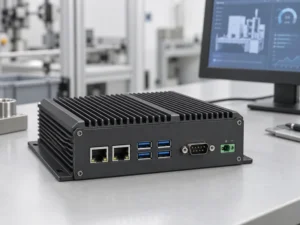
An embedded PC is a computer configured to work as part of a machine or larger …
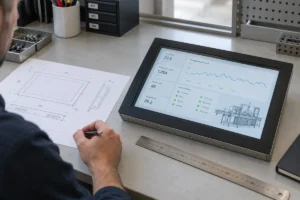
Start with the software the panel PC must run and the conditions it must fit. Then …
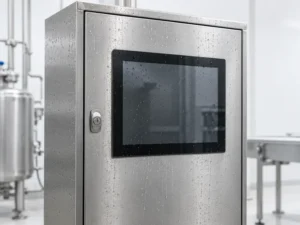
Choosing an industrial panel PC IP rating starts with two questions: what dust and water exposure …
Share your application, requirements, or current challenge. Our team will review the details and recommend a practical way forward.