産業用ディスプレイOEM機器サプライヤーバイヤガイド

はじめに ヒューマン・マシン・インターフェース(HMI)は、現代の産業機器の標準的な構成要素となっている。ディスプレイにより、オペレーターは以下のことが可能になる。 ...
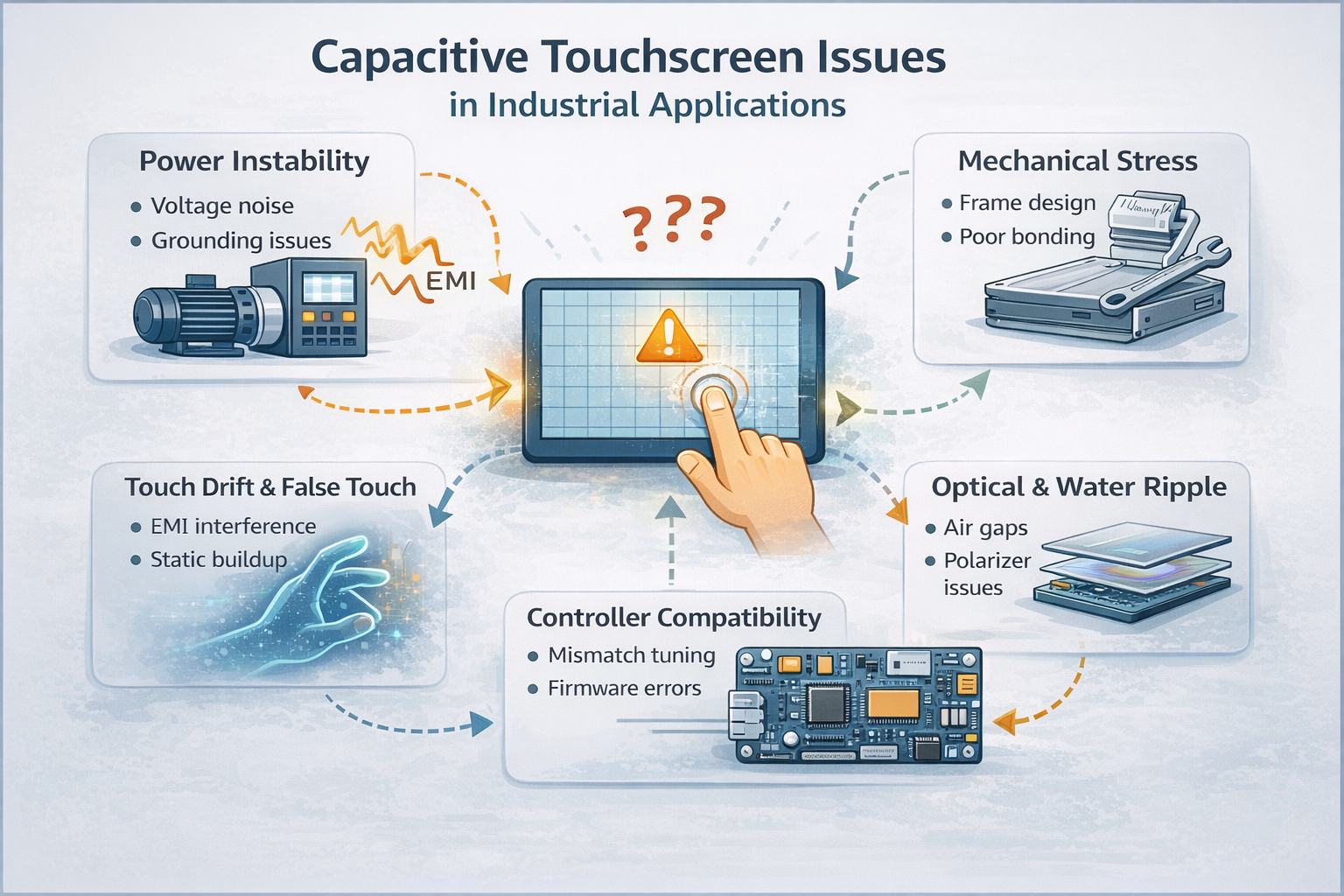
静電容量式タッチスクリーンは、その高い感度とマルチタッチ機能により、産業用および商業用システムで広く使用されている。.
しかし、実際の配備では、タッチ関連の問題は 多くの場合、システムレベルの相互作用の結果である, 部品単体の欠陥というよりも。.
産業環境では、静電容量式タッチの動作は次のような影響を受ける。 電気設計、機械的統合、ファームウェア・チューニング、アプリケーション条件.
これらの要因を理解することは、適切な選択、統合、そして長期的な信頼性を得るために不可欠である。.
エンジニアリングの観点から見ると、静電容量式タッチスクリーンの問題の多くは以下のカテゴリーに分類される。.
典型的な症状
一般的な要因
多くの場合、タッチセンサー自体は機能しているが、システムの状態によって安定した信号検出ができない。.
典型的な症状
エンジニアリングの原因
これらの挙動は、統合段階やパイロット段階で一般的に観察されるものであり、実際の運用条件下で評価されるべきである。.
典型的な症状
エンジニアリングの原因
感受性の問題は通常、次のような方法で対処される。 スタックアップ設計とファームウェアの最適化, ハードウェアの交換よりも。.
ゴーストタッチとは、物理的な接触なしにタッチイベントが登録されることを指す。.
共通の貢献者
ゴーストタッチの問題は環境に強く依存するため、以下の方法で軽減するのが最善である。 システムレベルの電気・機械設計の改善.
LCMと静電容量式タッチパネルの間に隙間があると、水の波紋やニュートン・リングのような視覚効果が現れることがある。.
要因
用途によっては、フルラミネーション、代替偏光板の選択、機械的間隔の最適化などのソリューションがある。.
静電容量式タッチの問題に対処する際によくある間違いは、観測された問題がタッチセンサーやコントローラーの不良を示すものだと思い込むことです。.
産業システムでは、タッチに関連する多くの問題がある:
早期のシステムレベル評価により、繰り返される不具合と再設計サイクルが大幅に削減される。.
タッチ関連の問題を最小限に抑えるため、産業用プロジェクトでは通常、以下のような評価を行う:
これらの考慮事項には、以下のように対処するのが最善である。 量産前, 試作と検証の段階で。.
もし、あなたの申請がこれに該当するのであれば:
配備の前に、適合性とリスクを評価するためのエンジニアリング・レビューが推奨される。.
この記事は、産業用アプリケーションにおける静電容量式タッチスクリーンの動作と故障モードを理解するための技術的な参考資料として作成されたものです。.
段階的な修理手順よりも、工学的な評価に重点を置いている。.
はじめに ヒューマン・マシン・インターフェース(HMI)は、現代の産業機器の標準的な構成要素となっている。ディスプレイにより、オペレーターは以下のことが可能になる。 ...
はじめに 産業用ディスプレイは、照明条件の制御が困難な環境に設置されることが多い。設備 ...
はじめに ディスプレイは、多くの種類の産業機器において重要なインターフェース・コンポーネントである。システム ...
はじめに ディスプレイの視認性は、産業機器において非常に重要な設計パラメータである。オペレータはグラフィカル・インターフェース ...
アプリケーションの詳細をお送りください。構成の方向性と次のステップを返信します。.