平板电脑与工业计算机:架构和集成差异
导言 在工业系统设计中,选择合适的计算架构直接影响到系统的可靠性和集成复杂性、, ...
能效已成为工业设备中一个日益重要的设计参数。许多系统在有限的维护范围内长时间连续运行,因此功耗、热稳定性和元件寿命成为系统设计的重要考虑因素。.
工业显示器在系统总功耗中占有相当大的比例。户外设备、工业人机界面和基础设施终端使用的高亮度液晶面板依赖于 LED 背光系统,而 LED 背光系统可能会消耗显示器的大量电能。.
在密封或无风扇机箱中,显示屏背光消耗的大部分电能会直接转化为热量。因此,显示器亮度不仅会影响能耗,还会影响机箱温度和长期可靠性。.
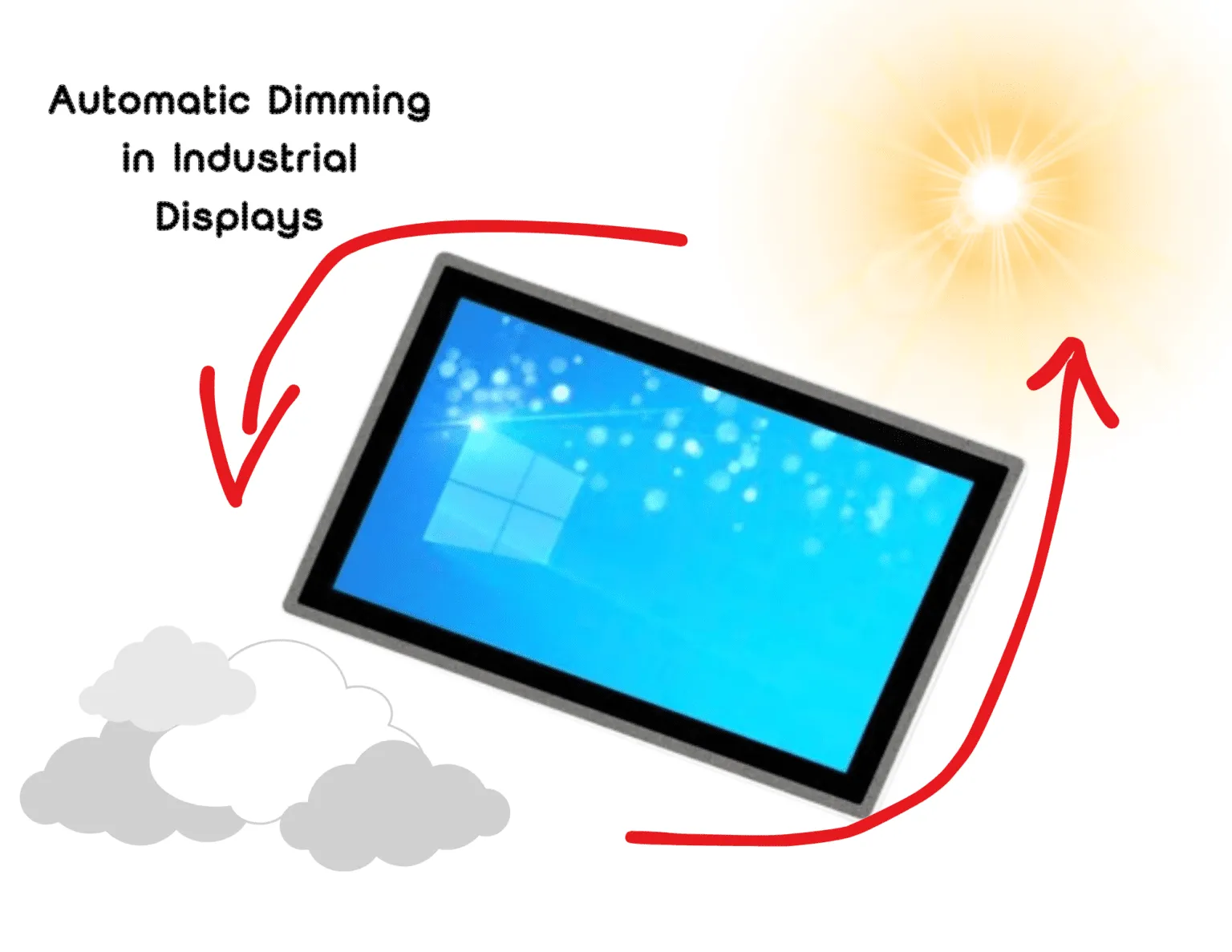
为了应对这些挑战,许多工业显示器都采用了 自动调光和省电模式. .这些功能可降低显示屏的平均功耗,同时在不同的环境照明条件下保持可读性。.
然而,对工业系统中的亮度行为进行评估时,应注意以下几点 系统架构级. .自动亮度控制可能会影响操作员的可见度、系统响应时间和人机界面验证假设。.
了解这些机制的工作原理有助于 OEM 设计人员将工业显示器更可靠地集成到设备中。.
自动调光 工业显示器 是一种亮度控制机制,可根据环境照明条件或系统运行状态调整 LED 背光强度。.
在较暗的环境中或不活动期间,自动调光可以降低亮度:
这种自适应亮度行为对于暴露在不断变化的照明条件下的工业系统尤其有用,例如户外装置或公共基础设施设备。.
自动调光功能可根据环境照明条件动态调整亮度。.
大多数实施都依赖于 环境光传感器 测量周围的照明度。然后,显示控制器会调整 LED 背光强度,以保持足够的对比度,而不会产生不必要的亮度。.
例如
这种自适应亮度行为可减少 能耗和热负荷.
省电模式通过引入额外的能源管理功能来扩展亮度控制。.
典型的机制包括
在使用嵌入式电脑或面板电脑的系统中,显示屏电源管理通常由 主机操作系统 而不仅仅是显示硬件。.
工业液晶显示器依靠恒流驱动器驱动的 LED 背光组件。亮度调节通常采用两种主要技术。.
脉宽调制 (PWM)
PWM 通过高频率开关 LED 来控制亮度,同时在有效周期内保持恒定电流。这使得亮度范围更广,同时保持稳定的 LED 颜色特性。.
模拟电流控制
模拟调光可调整提供给 LED 背光的电流。这可以实现平滑的亮度过渡,但在亮度很低时可能会降低效率。.
许多工业显示器将这两种方法结合在一起 混合调光结构 以在较宽的工作范围内提供稳定的亮度控制。.
PWM 频率的选择非常重要。如果频率过低,可能会出现明显的闪烁或电磁干扰。.
自动亮度控制取决于对环境照明条件的精确测量。.
环境光传感器以勒克斯为单位测量周围的照度,并向显示控制器或系统软件提供输入。.
传感器的位置对性能有很大影响。如果传感器检测到显示屏表面或局部光源的反射光,亮度调节可能与操作员的观察条件不匹配。.
在使用 工业触摸屏显示器, 传感器通常安装在前挡板或盖板玻璃附近,以接近操作员的观察环境。.
传感器的原始测量值必须经过亮度控制算法处理后才能进行调整。.
典型的实施方法包括
如果没有这些机制,环境光线的微小变化就会导致亮度快速波动。.
适当的算法调整可确保亮度变化保持渐进性和可预测性。.
在许多 OEM 设计中,亮度行为是由主机系统而非显示固件单独协调的。.
例如,机器控制器可在运行期间保持全亮度,而在系统进入闲置状态时降低亮度。.
这种方法常见于以下情况 工业液晶显示器 与嵌入式计算机或机器控制器相连。.
主机级控制可使显示亮度行为与机器状态、用户交互模式和电源管理策略保持一致。.
自动调光需要依赖传感器输入。因此,工业设计中包含了明确的后备机制。.
环境光传感器可能会受到以下因素的影响:
典型的备用策略包括
即使传感器输入变得不可靠,这些保障措施也有助于保持可预测的显示行为。.
工业人机界面必须在任何操作条件下都能保持可读性。.
亮度的突然变化可能会影响操作员的识别或降低对比度的可视性。.
在与安全相关的界面中,亮度水平通常在系统测试期间进行验证。自动亮度调节可能会与这些验证条件发生冲突。.
因此,安全关键型人机界面通常使用固定亮度级别。.
工业设施中的照明条件可能瞬息万变。.
例子包括
如果亮度算法反应过于激烈,显示屏可能会反复改变亮度。需要适当的滞后和延迟逻辑来稳定亮度行为。.
背光功耗直接导致密封机箱内部发热。.
降低亮度可降低 LED 电流,并可降低内部温度和显示元件的热应力。.
然而,在许多工业系统中,处理器或电力电子设备产生的热量比显示器本身还要多。.
因此,建议在将降低亮度作为主要热缓解策略之前,先进行系统级热分析。.
在高亮度工业显示器中,LED 背光占显示器总功耗的最大部分。.
例如 1000-1500 nit 工业 LCD 显示屏 所需的背光功率可能是以中等亮度运行的显示器的数倍。.
因此,在设计时通常会考虑亮度控制策略。 高能效工业人机界面系统和 户外展示 设备.
在夜间运行或闲置期间降低亮度,可大大降低系统的平均功耗。.
OEM 设备制造商在指定工业显示模块时,通常需要可配置的亮度控制。.
亮度控制可能需要通过系统接口进行整合,例如
提供灵活的亮度控制选项可使显示子系统与机器运行、用户交互模式和能源管理策略保持一致。.
自动调光和省电模式在照明条件变化或操作员互动时断时续的系统中最为有用。.
典型应用包括
这些系统得益于自适应亮度行为和更低的平均能耗。.
在下列情况下,自动调光性能良好
报刊亭、电动汽车充电站和基础设施终端等应用通常都能满足这些条件。.
某些工业系统需要可预测的亮度行为。.
例子包括
在这些环境中,固定亮度设置可以提供更可靠的运行。.
自动调光和省电模式可提高工业显示系统的能效,尤其是在照明条件多变或连续运行的环境中。.
然而,亮度行为必须在完整的系统架构背景下进行评估。显示屏亮度会影响操作员的可用性、机箱散热条件和系统可预测性。.
对于许多原始设备制造商和系统集成商来说,最可靠的方法是 受控系统集成. .亮度调节包括硬件支持,而亮度行为则通过系统级控制逻辑进行管理。.
在设计过程中尽早考虑显示器电源管理,可让工程师在能效、可靠性和可预测的系统行为之间取得平衡。.
是的。如果经常降低亮度,平均功耗会降低。降低的幅度取决于显示屏亮度范围和使用模式。.
在较低电流水平下运行 LED 可减少热应力,并可延长使用寿命,具体取决于使用较低亮度水平的频率。.
与安全相关的界面通常需要一致的亮度,以确保警报和指示灯在所有操作条件下都清晰可见。.
大多数工业显示器都定义了后备亮度级别,并允许手动调节,因此即使传感器变得不可靠,显示器也能继续使用。.
LED 背光通常是工业 LCD 显示器中最大的耗电设备。在高亮度户外显示屏中,背光可占显示屏功耗的大部分。.
因此,在夜间运行或闲置期间降低亮度可以大大减少平均能耗。.
导言 在工业系统设计中,选择合适的计算架构直接影响到系统的可靠性和集成复杂性、, ...
导言 在工业设备中,显示子系统是更广泛的人机界面(HMI)的一部分,也是人机界面的重要组成部分。 ...
导言 在工业设备设计中,人机界面(HMI)直接影响到系统的可用性、可靠性和维护性。 ...

导言 人机界面(HMI)现已成为现代工业设备的标准组件。通过显示器,操作员可以 ...
发送您的申请详细信息。我们会回复您配置方向和下一步计划。.