Guide d'achat des fournisseurs d'écrans industriels pour les équipements OEM

Introduction Les interfaces homme-machine (IHM) sont désormais des composants standard des équipements industriels modernes. Les écrans permettent aux opérateurs de ...
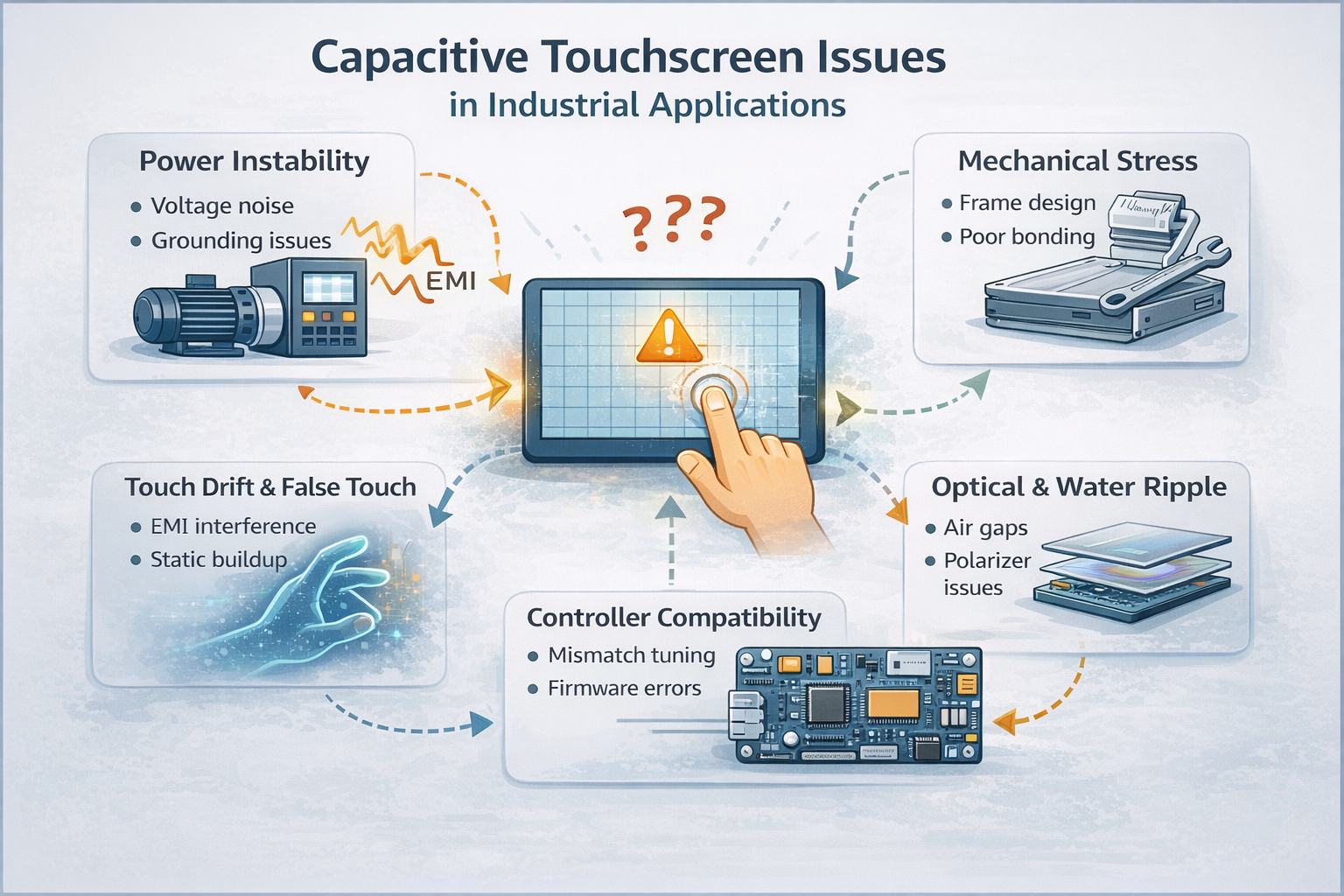
Les écrans tactiles capacitifs sont largement utilisés dans les systèmes industriels et commerciaux en raison de leur haute sensibilité et de leur capacité multi-touch.
Cependant, dans le monde réel, les problèmes liés au toucher sont les suivants souvent le résultat d'interactions au niveau du système, plutôt que des défauts de composants isolés.
Dans les environnements industriels, le comportement du toucher capacitif est influencé par la conception électrique, l'intégration mécanique, la mise au point du microprogramme et les conditions d'application.
La compréhension de ces facteurs est essentielle pour une sélection, une intégration et une fiabilité à long terme adéquates.
D'un point de vue technique, la plupart des problèmes liés aux écrans tactiles capacitifs relèvent des catégories suivantes.
Manifestations typiques
Facteurs contributifs communs
Dans de nombreux cas, le capteur tactile lui-même reste fonctionnel, alors que les conditions du système empêchent la détection d'un signal stable.
Manifestations typiques
Causes d'ingénierie
Ces comportements sont couramment observés lors des phases d'intégration et de pilotage et doivent être évalués dans des conditions réelles d'utilisation.
Manifestations typiques
Causes d'ingénierie
Les questions de sensibilité sont généralement abordées de la manière suivante conception d'empilages et optimisation des microprogrammes, plutôt que de remplacer le matériel.
Le toucher fantôme fait référence à des événements tactiles enregistrés sans contact physique.
Les contributeurs communs
Les problèmes de contact avec les fantômes dépendent fortement de l'environnement et la meilleure façon de les atténuer est d'adopter les mesures suivantes amélioration de la conception électrique et mécanique au niveau du système.
Certains artefacts visuels, tels que des ondulations d'eau ou des effets de type anneau de Newton, peuvent apparaître lorsque des espaces existent entre le LCM et le panneau tactile capacitif.
Facteurs contributifs
En fonction de l'application, les solutions peuvent inclure une stratification complète, une sélection de polariseurs alternatifs ou une optimisation de l'espacement mécanique.
Une erreur fréquente dans le traitement des problèmes liés au toucher capacitif consiste à supposer que les problèmes observés sont dus à des capteurs ou des contrôleurs tactiles défectueux.
Dans les systèmes industriels, de nombreuses questions liées au toucher se posent :
L'évaluation précoce au niveau du système réduit considérablement les défaillances répétées et les cycles de reconception.
Pour minimiser les problèmes liés au toucher, les projets industriels évaluent généralement :
Ces considérations sont mieux prises en compte avant la production de masse, Les résultats de l'étude sont présentés dans un document de synthèse, pendant les phases de prototypage et de validation.
Si votre demande implique :
il est recommandé de procéder à un examen technique afin d'évaluer l'adéquation et les risques avant le déploiement.
Cet article est destiné à servir de référence technique pour comprendre le comportement et les modes de défaillance des écrans tactiles capacitifs dans les applications industrielles.
Il met l'accent sur l'évaluation technique plutôt que sur les procédures de réparation étape par étape.
Introduction Les interfaces homme-machine (IHM) sont désormais des composants standard des équipements industriels modernes. Les écrans permettent aux opérateurs de ...
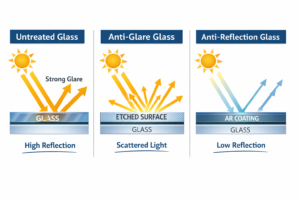
Introduction Les écrans industriels sont souvent déployés dans des environnements où les conditions d'éclairage sont difficiles à contrôler. L'équipement ...
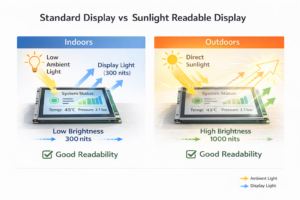
Introduction Les écrans sont des composants d'interface essentiels dans de nombreux types d'équipements industriels. Ils fournissent au système ...
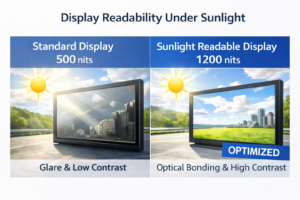
Introduction La visibilité de l'affichage est un paramètre essentiel de la conception des équipements industriels. Les opérateurs s'appuient sur des interfaces graphiques ...
Envoyez les détails de votre demande. Nous vous répondrons en vous indiquant la configuration à suivre et les prochaines étapes.