Guide d'achat des fournisseurs d'écrans industriels pour les équipements OEM

Introduction Les interfaces homme-machine (IHM) sont désormais des composants standard des équipements industriels modernes. Les écrans permettent aux opérateurs de ...
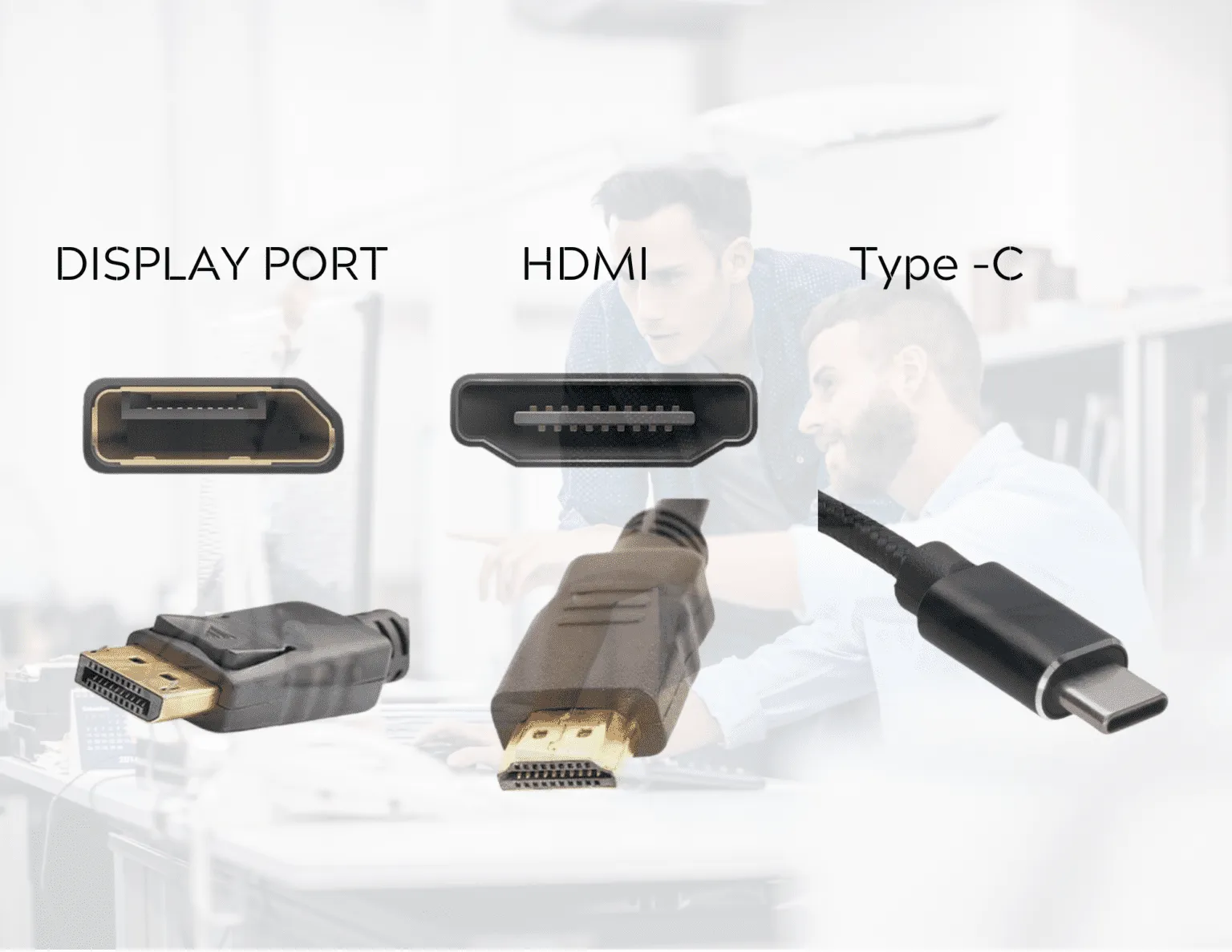
Les interfaces d'affichage sont un élément fondamental de la conception des systèmes d'affichage industriels.
Dans de nombreux systèmes embarqués, l'interface d'affichage détermine la manière dont le contrôleur graphique communique avec le panneau d'affichage et la fiabilité de cette connexion pendant toute la durée de vie de l'équipement.
Historiquement, le choix d'une interface d'affichage était principalement une décision de compatibilité. L'interface choisie devait simplement correspondre à la sortie vidéo fournie par le contrôleur hôte ou l'ordinateur embarqué.
Les équipements industriels modernes ont modifié cette hypothèse.
Les écrans industriels sont désormais intégrés dans des systèmes tels que :
Ces systèmes fonctionnent dans des environnements très différents de ceux de l'électronique grand public. Les interfaces d'affichage industrielles doivent fonctionner de manière fiable dans des conditions qui peuvent inclure le bruit électrique, de longs cycles de vie des produits et des plates-formes de production qui restent inchangées pendant de nombreuses années.
Par conséquent, le choix entre HDMI, DisplayPort (DP) et USB-C nécessite plus qu'une comparaison de la résolution supportée ou de la disponibilité des connecteurs.
Les concepteurs de systèmes doivent également prendre en compte
La compréhension du comportement de ces interfaces dans les environnements industriels aide les ingénieurs à réduire les risques d'intégration et à maintenir la fiabilité du système tout au long du cycle de vie du produit.
Le tableau ci-dessous résume les principales caractéristiques de ces interfaces lorsqu'elles sont utilisées dans des systèmes d'affichage industriels.
| Interface | Utilisation industrielle typique | Avantages | Considérations d'ordre technique |
|---|---|---|---|
| HDMI | Moniteurs industriels, kiosques, systèmes embarqués | Large compatibilité, composants largement disponibles | En général, il n'y a pas de connecteur de verrouillage |
| DisplayPort | Postes de contrôle, postes de travail multi-écrans | Largeur de bande élevée et transport d'affichage structuré | Distance de câble plus courte |
| USB-C (mode DP Alt) | Panel PC, plates-formes intégrées compactes | Un seul câble pour la vidéo, l'USB et l'alimentation | Nécessite une validation stricte de la compatibilité |
Dans de nombreux systèmes industriels, le choix de l'interface est davantage influencé par stabilité de l'intégration et considérations relatives au cycle de vie que par la largeur de bande brute.
Bien que HDMI, DisplayPort et USB-C connectent tous les trois les sources graphiques aux écrans, ils proviennent d'objectifs de conception et d'architectures techniques différents.
L'interface HDMI (High-Definition Multimedia Interface) a été développée à l'origine pour la transmission vidéo et audio numérique dans l'électronique grand public.
Au fil du temps, il est devenu largement soutenu par un vaste écosystème qui comprend :
En raison de cette compatibilité étendue, la technologie HDMI est fréquemment utilisée dans les domaines suivants moniteurs industriels et écrans tactiles industriels où la disponibilité des composants et l'interopérabilité des systèmes sont importantes.
De nombreux écrans industriels intègrent l'interface HDMI comme interface standard, car les câbles et les adaptateurs sont faciles à trouver.
DisplayPort a été conçu principalement pour les systèmes d'affichage d'ordinateurs et les environnements de postes de travail.
Contrairement à HDMI, qui est issu de l'électronique grand public, DisplayPort a été conçu spécifiquement pour les systèmes de traitement graphique. Il offre une large bande passante et une architecture de transport de données par paquets.
Dans les environnements industriels, DisplayPort est souvent utilisé dans des applications nécessitant :
DisplayPort est couramment utilisé dans PC industriels et les systèmes PC à écran tactile, surtout lorsque plusieurs écrans sont nécessaires.
L'USB-C diffère de l'HDMI et du DisplayPort parce qu'il s'agit avant tout d'une technologie de pointe. spécifications du connecteur, et non un protocole d'affichage.
La transmission vidéo sur USB-C est généralement mise en œuvre à l'aide de Mode alternatif DisplayPort (DP Alt Mode). Cela permet au connecteur USB-C de transporter les signaux DisplayPort en même temps que les données USB et la fourniture d'énergie.
Dans certains systèmes, un seul câble USB-C peut fournir :
Si cette architecture peut simplifier la conception du matériel, elle introduit également une complexité supplémentaire dans l'intégration du système et la gestion de la compatibilité.
Bien que ces interfaces remplissent une fonction similaire, leurs technologies sous-jacentes influencent leur comportement dans les déploiements industriels.
Utilisations HDMI Signalisation différentielle à transition minimale (TMDS) pour transmettre de la vidéo numérique.
Au fil du temps, plusieurs versions de HDMI ont augmenté la bande passante disponible et les résolutions prises en charge.
L'un des principaux avantages du HDMI dans les systèmes industriels est la maturité de l'écosystème. Un large éventail de composants, de câbles, de convertisseurs et de contrôleurs intégrés prennent en charge la sortie HDMI.
Toutefois, les différences d'implémentation entre les chipsets peuvent parfois avoir une incidence :
Dans les équipements industriels dont le cycle de production est long, ces variations peuvent nécessiter une validation supplémentaire en cas de révision du matériel.
DisplayPort utilise une transmission de données par paquets plutôt qu'un flux vidéo continu.
Cette architecture présente plusieurs avantages pour les systèmes graphiques :
Pour les systèmes industriels où les câbles d'affichage sont installés de manière permanente et où l'architecture du système reste fixe, DisplayPort offre souvent un comportement stable du signal.
Un autre avantage pratique est la disponibilité des connecteurs de verrouillage, qui peut améliorer la fiabilité mécanique des équipements exposés aux vibrations.
L'USB-C introduit une architecture flexible où plusieurs types de signaux peuvent être négociés via le même connecteur physique.
Ces fonctions sont les suivantes
Le système doit négocier ces capacités lors de l'établissement de la connexion.
D'un point de vue technique, cela signifie que le comportement de l'écran USB-C dépend de plusieurs facteurs :
Deux ports USB-C peuvent sembler identiques à l'extérieur tout en prenant en charge des capacités différentes en interne.
Pour les équipements industriels à long cycle de vie, cette variabilité doit être gérée avec soin.
La sélection d'une interface d'affichage pour les systèmes industriels nécessite l'évaluation de plusieurs facteurs d'ingénierie pratiques au-delà des spécifications de la bande passante.
Les équipements industriels restent souvent en production ou en service pendant de nombreuses années.
Pendant cette période, des révisions de matériel, des changements de fournisseurs et des substitutions de composants peuvent avoir lieu. Les interfaces au comportement plus simple et plus prévisible peuvent réduire le risque d'intégration entre les différentes révisions de produits.
Les caractéristiques typiques sont les suivantes
Les environnements industriels comprennent souvent des équipements tels que
Ces appareils génèrent des interférences électromagnétiques qui peuvent affecter l'intégrité du signal.
La fiabilité de l'affichage dépend de plusieurs facteurs, notamment
Bien que les trois interfaces utilisent une signalisation différentielle, les systèmes USB-C peuvent être plus sensibles à la conformité aux spécifications des câbles, car plusieurs protocoles partagent la même connexion.
L'acheminement des câbles à l'intérieur des équipements industriels est souvent limité par l'espace des boîtiers, les assemblages de charnières ou les bras mécaniques mobiles.
Les gammes typiques de câbles passifs utilisés dans les systèmes industriels sont approximativement les suivantes :
| Interface | Gamme typique de câbles passifs |
|---|---|
| HDMI | 3-10 mètres |
| DisplayPort | 2-5 mètres |
| USB-C (mode DP Alt) | 1-2 mètres |
Les distances plus longues nécessitent généralement câbles actifs ou matériel d'extension des signaux.
La fiabilité mécanique est une considération importante dans les environnements industriels où les équipements peuvent subir des vibrations, des interventions ou des mouvements de câbles.
Les caractéristiques typiques sont les suivantes
Les ingénieurs ajoutent parfois décharge de traction ou serre-câbles pour améliorer la stabilité de la connexion.
Dans de nombreux systèmes d'affichage tactile industriels, l'interface d'affichage n'est qu'une partie de l'architecture de connexion globale.
Les contrôleurs tactiles communiquent généralement par USB.
C'est pourquoi de nombreux écrans tactiles industriels utilisent deux connexions :
L'USB-C peut potentiellement combiner ces fonctions en un seul câble lorsqu'il est correctement mis en œuvre. Toutefois, cela nécessite un soutien cohérent de l'hôte et des configurations de câble validées.
Certains Solutions d'affichage OEM personnalisées intègrent des concentrateurs USB internes ou des contrôleurs intégrés pour simplifier les connexions du système.
Différentes interfaces d'affichage tendent à s'adapter à différentes catégories d'équipements industriels.
Le HDMI est couramment utilisé dans :
Ses principaux avantages sont la compatibilité et la disponibilité des composants.
DisplayPort est souvent choisi pour :
Ces installations bénéficient de la largeur de bande de DisplayPort et du transport structuré de l'affichage.
L'USB-C est de plus en plus utilisé dans :
La possibilité de combiner les signaux d'alimentation, de données et de vidéo peut simplifier l'architecture du système lorsque la compatibilité du matériel est bien contrôlée.
Avant de choisir une interface d'affichage, les ingénieurs doivent évaluer les facteurs suivants :
La prise en compte de ces facteurs dès la conception du système peut réduire l'effort d'intégration et améliorer la fiabilité à long terme.
Le HDMI fonctionne bien lorsque
DisplayPort fonctionne bien lorsque
L'USB-C fonctionne bien lorsque
HDMI, DisplayPort et USB-C offrent tous des solutions viables pour connecter les écrans industriels, mais ils reflètent des priorités de conception différentes.
HDMI offre une large compatibilité et un approvisionnement facile.
DisplayPort offre des performances stables dans les installations industrielles fixes.
L'USB-C permet une connectivité multifonction compacte, mais nécessite une validation de compatibilité minutieuse.
Pour les fabricants OEM et les concepteurs de systèmes, le choix de l'interface la plus fiable est généralement celui qui introduit le plus d'informations. moins d'incertitude dans l'architecture du système.
Oui. Le HDMI est largement utilisé dans les systèmes industriels en raison de sa compatibilité et de l'appui de l'écosystème.
DisplayPort fournit souvent une sortie haute résolution stable et prend en charge les configurations multi-écrans.
Dans certains systèmes contrôlés, il peut le faire. L'USB-C avec le mode alternatif DisplayPort peut combiner la vidéo et la communication USB.
La plupart le font. Les contrôleurs tactiles communiquent généralement par USB.
Introduction Les interfaces homme-machine (IHM) sont désormais des composants standard des équipements industriels modernes. Les écrans permettent aux opérateurs de ...
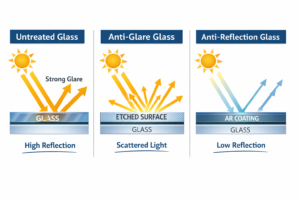
Introduction Les écrans industriels sont souvent déployés dans des environnements où les conditions d'éclairage sont difficiles à contrôler. L'équipement ...
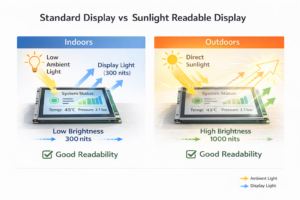
Introduction Les écrans sont des composants d'interface essentiels dans de nombreux types d'équipements industriels. Ils fournissent au système ...
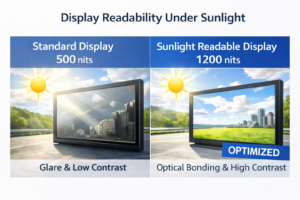
Introduction La visibilité de l'affichage est un paramètre essentiel de la conception des équipements industriels. Les opérateurs s'appuient sur des interfaces graphiques ...
Envoyez les détails de votre demande. Nous vous répondrons en vous indiquant la configuration à suivre et les prochaines étapes.