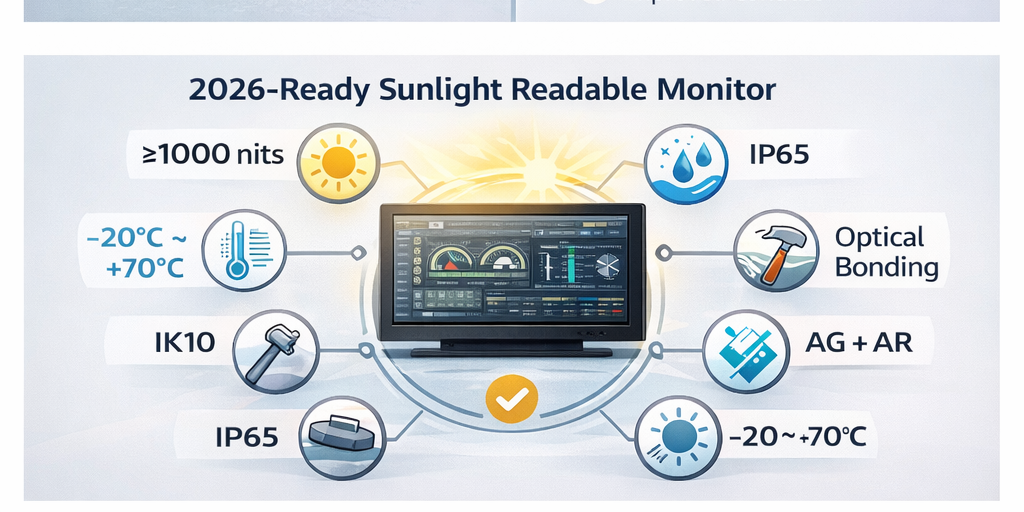
A écran lisible en plein soleil reste clairement visible dans des environnements extérieurs à forte luminosité où les écrans standard ne fonctionnent pas. En 2026, les principales spécifications à prendre en compte sont les suivantes Luminosité ≥1000 nits, liaison optique, Revêtements antireflet et antialphabétisme, protection robuste IP65/IK10, et large tolérance à la température.
Ce guide explique chaque facteur en termes pratiques, pour vous aider à choisir la bonne solution. écran de qualité industrielle et d'éviter des erreurs coûteuses dans les projets d'aménagement extérieur.
Pourquoi la visibilité échoue toujours en plein air
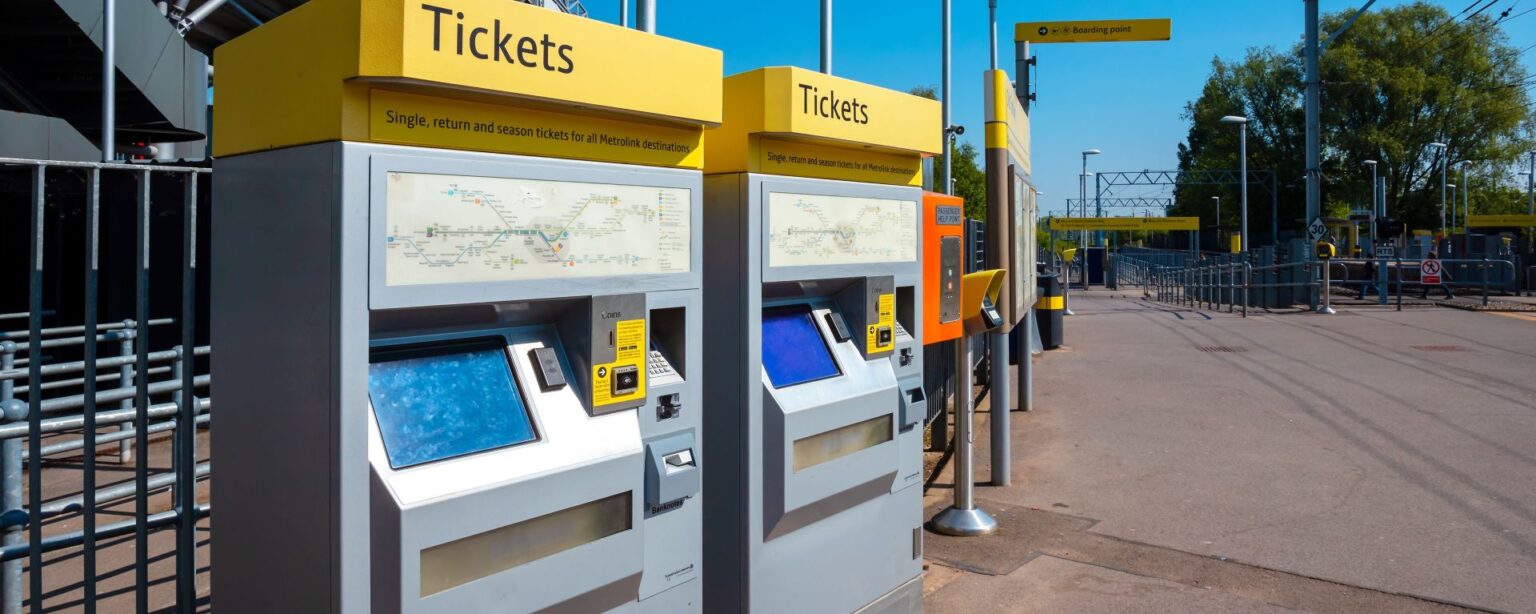
En 2026, les systèmes numériques extérieurs seront omniprésents : chargeurs de véhicules électriques, kiosques intelligents, IHM industrielles, consoles marines et équipements de transport. Pourtant, un problème n'a pas disparu :
Sous la lumière directe du soleil, de nombreux écrans se décolorent, deviennent illisibles ou tombent en panne à cause de la chaleur.
Une mauvaise visibilité n'est pas seulement gênante. Elle est à l'origine de :
Erreurs de l'opérateur et risques pour la sécurité
Frustration et abandon de l'utilisateur
Surchauffe du système et réduction de la durée de vie
Échec des inspections et retards dans les projets
Le choix d'un moniteur lisible en plein soleil est donc une étape importante. décision au niveau du système, Il ne s'agit pas d'une simple mise à jour de l'écran.
✅ 1. Quel niveau de luminosité est considéré comme “lisible à la lumière du soleil” ?
La luminosité est la base de la lisibilité en extérieur.
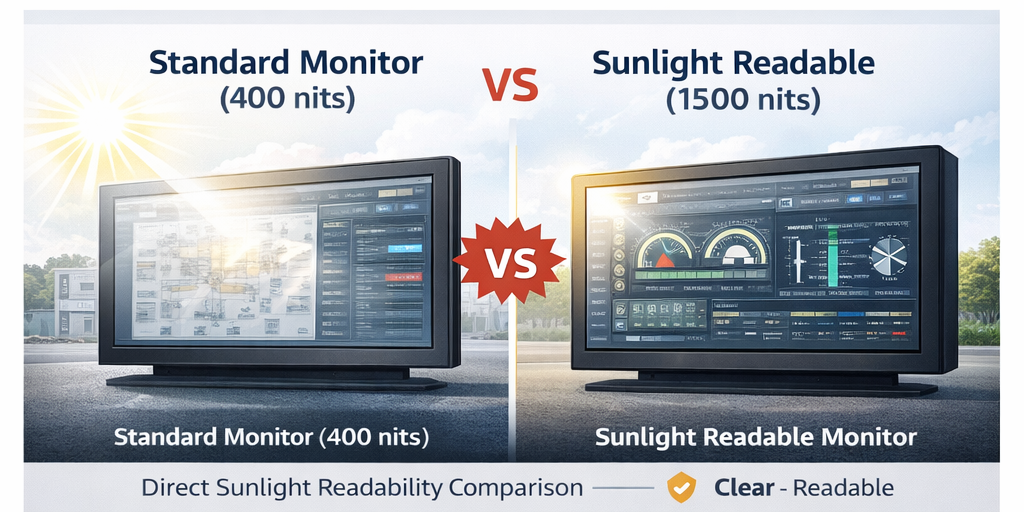
Les écrans d'intérieur standard (300-400 nits) ne conviennent pas à l'extérieur. En 2026, les critères de référence pratiques sont les suivants
≥1000 nits - minimum pour une utilisation extérieure à l'ombre
1500-2500 nits - recommandé pour la lumière directe du soleil
2500+ nits - la lumière solaire extrême ou les environnements réfléchissants
La luminosité élevée garantit la lisibilité pendant les heures de clarté, en particulier pour les kiosques, les systèmes de transport, les équipements marins et les machines industrielles.
Conseil bonus : Choisissez des moniteurs avec réglage automatique de la luminosité pour réduire la consommation d'énergie pendant la nuit et prolonger la durée de vie des panneaux.
✅ 2. Pourquoi la liaison optique est incontournable en 2026
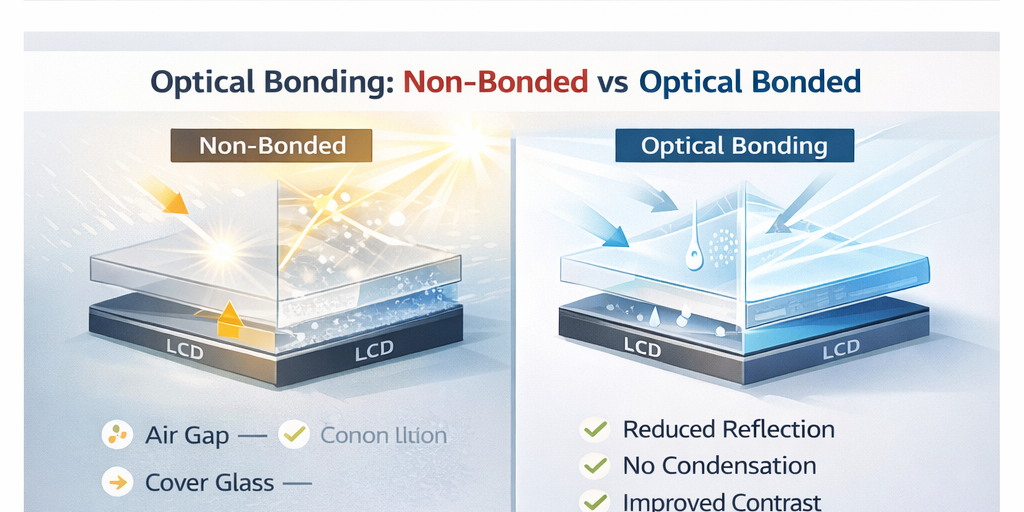
Sans collage optique, il existe un espace d'air entre l'écran LCD et la vitre de couverture. Cet espace est à l'origine de :
Réflexions internes
Condensation et buée
Réduction de la résistance aux chocs
Liaison optique élimine cette lacune à l'aide d'un adhésif optique :
Contraste plus élevé à la lumière du soleil
Amélioration de la résistance structurelle
Meilleure résistance aux vibrations et aux chocs
Performance fiable dans les environnements humides ou brumeux
Dans les systèmes extérieurs modernes, la liaison optique n'est plus optionnelle, elle est attendue.
✅ 3. L'importance des revêtements antireflet et anti-éblouissement
La luminosité seule ne permet pas de surmonter les reflets de la lumière du soleil, du verre ou des phares des véhicules.
C'est là que les traitements de surface jouent un rôle essentiel :
Anti-glace (AG) les revêtements diffusent la lumière ambiante, réduisant ainsi les reflets gênants
Antireflet (AR) les revêtements minimisent la réflectance de la surface et améliorent le contraste
En 2026, de nombreux écrans robustes combinent Revêtements AG + AR avec verre résistant aux rayures (7H+), Le système d'identification de l'entreprise est un élément essentiel de la sécurité, garantissant une lisibilité à long terme dans les environnements publics et industriels.
✅ 4. Quelles sont les caractéristiques de la robustesse industrielle auxquelles vous pouvez vous attendre ?
Un écran conçu pour être utilisé à l'intérieur peut tomber en panne au bout de quelques semaines à l'extérieur. Pour garantir une fiabilité à long terme, confirmez les caractéristiques de robustesse suivantes :
IP65 ou supérieur - protection contre la poussière et les jets d'eau
IK08-IK10 - résistance aux chocs contre le vandalisme ou les accidents
Température de fonctionnement : -20°C à +70°C (ou plus)
Conception thermique sans ventilateur pour une durabilité et un fonctionnement silencieux
La lisibilité extérieure et la durabilité doivent être conçues ensemble.
✅ 5. Choisir la bonne technologie d'écran tactile
La visibilité n'est que la moitié de l'équation.les performances tactiles sont tout aussi importantes.
Type de contact
Meilleur pour
Capacitif projeté (PCAP)
Multi-touch, gestes, utilisation de gants
Touches résistives
Touche unique, environnements humides ou poussiéreux
Touche imperméable à l'eau
Systèmes marins, kiosques extérieurs, utilisation critique du point de vue de l'hygiène
En 2026, PCAP avec gant et réglage par contact humide est le choix le plus courant pour les applications industrielles et extérieures.
✔️ Liste de contrôle des moniteurs lisibles à la lumière du soleil prêts pour le 2026
Veillez à ce que votre stand comprenne
✔ Luminosité ≥ 1000 nits
✔ Liaison optique
✔ Traitements anti-reflets et anti-éblouissement
✔ Protection robuste : IP65, IK10
✔ Température de fonctionnement -20°C à +70°C
PCAP ou tactile résistif en fonction de l'application
Le respect de ces critères garantit des performances fiables dans environnements à forte luminosité et environnements extérieurs difficiles.
Les erreurs courantes à éviter
Choix de la luminosité sans collage optique
Ignorer la conception thermique des écrans à forte luminosité
Utilisation de panneaux intérieurs dans des boîtiers extérieurs
Sous-estimation de l'exposition environnementale
La lisibilité à la lumière du soleil n'est pas définie par une seule spécification - elle est le résultat des éléments suivants décisions de conception intégrées.
Conclusion : Construire pour le soleil, pas contre lui
Un moniteur lisible en plein soleil correctement conçu ne lutte pas contre l'environnement, il l'intègre.
En établissant des priorités :
Haute luminosité
Liaison optique
Traitements de surface avancés
Résilience thermique et environnementale
Technologie tactile appropriée
vous assurez la lisibilité, la durabilité et la fiabilité de votre affichage extérieur, quelle que soit l'intensité de la lumière du soleil.
Introduction Dans la conception des systèmes industriels, le choix de l'architecture informatique appropriée affecte directement la fiabilité du système, la complexité de l'intégration, ...
Introduction Dans les équipements industriels, le sous-système d'affichage fait partie d'une interface homme-machine (IHM) plus large et d'un sous-système d'affichage. ...
Introduction Dans la conception des équipements industriels, l'interface homme-machine (IHM) a une incidence directe sur la facilité d'utilisation, la fiabilité et la maintenance du système ...
Introduction Les interfaces homme-machine (IHM) sont désormais des composants standard des équipements industriels modernes. Les écrans permettent aux opérateurs de ...
CONTACT
Examen de l'ingénierie
Envoyez les détails de votre demande. Nous vous répondrons en vous indiquant la configuration à suivre et les prochaines étapes.
Idéal pour les projets OEM/ODM et les projets d'intégration. Réponse type : dans un délai d'un jour ouvrable (GMT+8).
Pour l'appel d'offres, veuillez indiquer la taille/luminosité, les interfaces, le montage, la température de fonctionnement et la date de livraison prévue.