パネルPCと産業用コンピュータ:アーキテクチャと統合の違い
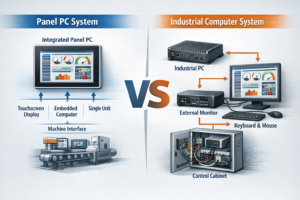
はじめに 産業用システムの設計において、適切なコンピューティング・アーキテクチャを選択することは、システムの信頼性や統合の複雑性に直接影響する、, ...
エネルギー効率は、産業機器においてますます重要な設計パラメータとなっています。多くのシステムは、メンテナンスへのアクセスが制限された状態で長時間連続運転されるため、消費電力、熱安定性、およびコンポーネントの寿命が、システム設計において重要な考慮事項となっています。.
産業用ディスプレイは、システム全体の消費電力に占める割合が計り知れない。屋外機器、産業用HMI、およびインフラストラクチャー端末に使用される高輝度LCDパネルは、LEDバックライトシステムに依存しており、ディスプレイの消費電力の大部分を占める可能性がある。.
密閉型筐体やファンレス筐体では、ディスプレイのバックライトで消費される電力のほとんどが直接熱に変換される。その結果、ディスプレイの輝度はエネルギー消費だけでなく、筐体温度や長期信頼性にも影響する。.
このような課題に対処するため、多くの産業用ディスプレイには 自動調光および省電力モード. .これらの機能により、ディスプレイの平均消費電力を削減すると同時に、さまざまな環境照明条件下でも読みやすさを維持することができる。.
しかし、産業システムにおける明るさの挙動は、次のように評価されるべきである。 システムアーキテクチャレベル. .自動輝度制御は、オペレータの視認性、システムの応答時間、HMI検証の前提に影響を与える可能性がある。.
これらのメカニズムがどのように機能するかを理解することは、OEM設計者が産業用ディスプレイをより確実に機器に組み込むのに役立つ。.
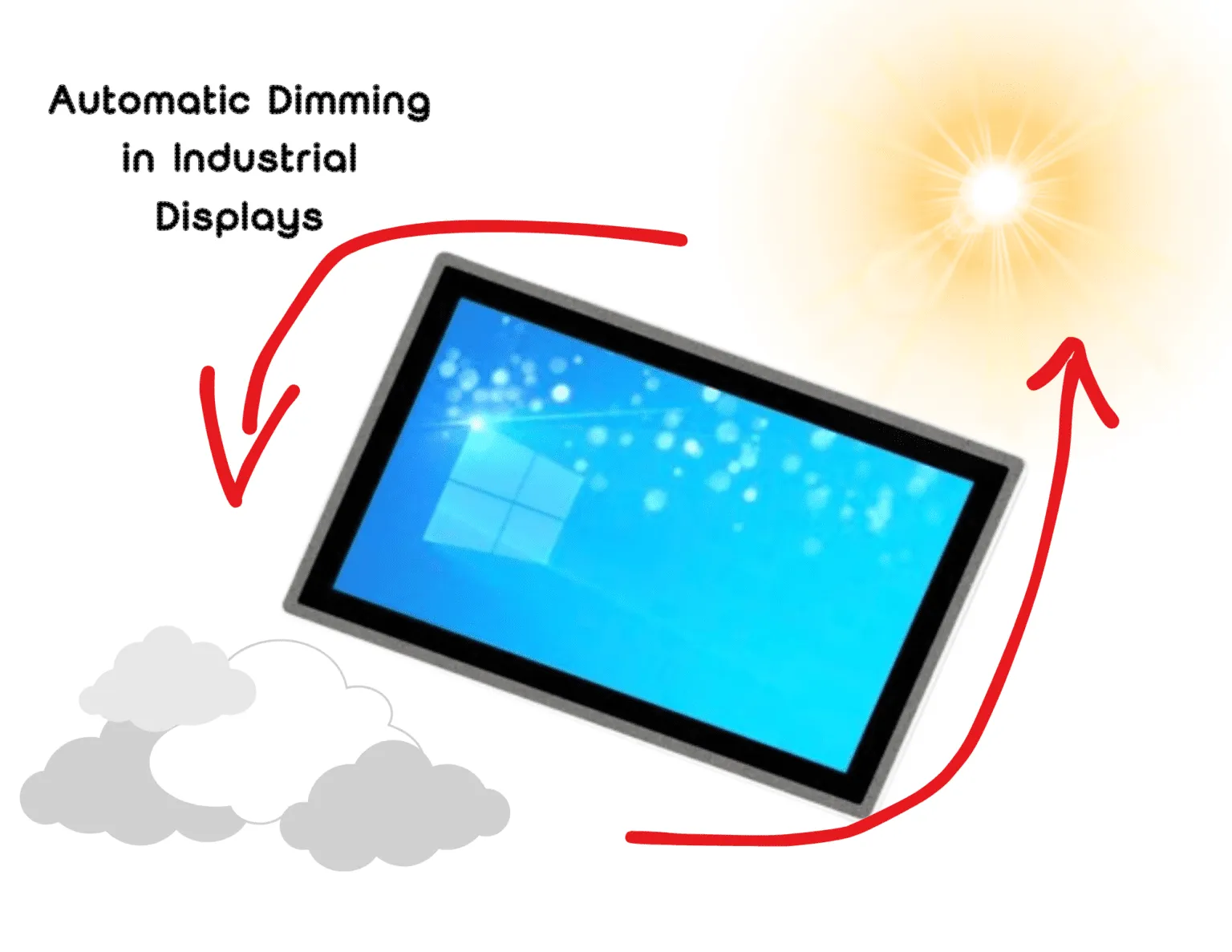
自動調光 産業用ディスプレイ は、周囲の照明条件やシステムの動作状態に応じてLEDバックライトの輝度を調整する輝度調整機構です。.
自動調光は、暗い環境や活動していない時間帯の明るさを下げることで、可能です:
この適応的な輝度動作は、屋外設備や公共インフラ設備など、変化する照明条件にさらされる産業システムで特に有用である。.
自動調光機能により、周囲の明るさに応じてダイナミックに明るさを調整。.
ほとんどの実装は 環境光センサー が周囲の照度を測定します。その後、ディスプレイ・コントローラーがLEDバックライトの強度を調整し、不必要な明るさを加えることなく十分なコントラストを維持する。.
例えば、こうだ:
この適応的な明るさの動作は、明るさの両方を減少させる。 エネルギー消費と熱負荷.
省電力モードは、エネルギー管理機能を追加することで、輝度制御を拡張します。.
代表的なメカニズムには以下のようなものがある:
組込みコンピュータやパネルPCを使用するシステムでは、ディスプレイの電源管理は、多くの場合、以下のように調整される。 ホストオペレーティングシステム ディスプレイのハードウェア単体よりも。.
産業用LCDディスプレイは、定電流ドライバーで駆動されるLEDバックライト・アセンブリに依存している。輝度調整は通常、主に2つの手法で行われる。.
パルス幅変調(PWM)
PWMは、アクティブ・サイクル中の電流を一定に保ちながら、LEDを高周波でオン/オフすることで輝度を制御する。これにより、安定したLEDの色特性を維持しながら、広い輝度範囲を実現します。.
アナログ電流制御
アナログ調光は、LEDバックライトに供給される電流を調整します。これにより、スムーズな輝度遷移が可能になりますが、非常に低い輝度レベルでは効率が低下する可能性があります。.
多くの産業用ディスプレイは、この2つのアプローチを組み合わせている。 ハイブリッド調光アーキテクチャ 広い動作範囲で安定した輝度制御を実現する。.
PWM周波数の選択は重要である。周波数が低すぎると、目に見えるちらつきや電磁干渉が発生する可能性があります。.
自動輝度制御は、環境照明条件の正確な測定に依存する。.
環境光センサーは、周囲の照度をルクスで測定し、ディスプレイ・コントローラーまたはシステム・ソフトウェアに入力を提供する。.
センサーの配置は性能に大きく影響します。センサーがディスプレイ表面からの反射光や局所的な照明光源を検出する場合、輝度調整がオペレーターの視認条件と一致しないことがあります。.
を使用するシステムでは、次のようになる。 産業用タッチスクリーンディスプレイ, センサーは通常、フロントベゼルまたはカバーガラスの近くに配置され、オペレーターの視認環境を近似させる。.
生センサーの測定値は、調整が行われる前に輝度制御アルゴリズムで処理されなければならない。.
代表的な実装には以下のようなものがある:
このようなメカニズムがなければ、わずかな環境光の変動が急激な明るさの変動を引き起こす可能性がある。.
適切なアルゴリズムチューニングにより、明るさの変化が緩やかで予測可能なものになる。.
多くのOEM設計では、輝度動作はディスプレイ・ファームウェア単独ではなく、ホスト・システムによって調整される。.
例えば、マシンコントローラは、アクティブ動作中は輝度をフルに維持し、システムがアイドル状態になると輝度を下げることができる。.
この方法は、以下のような場合によく使われる。 産業用LCDモニター は、組み込みコンピュータやマシンコントローラに接続されている。.
ホストレベルの制御により、ディスプレイの輝度動作をマシン状態、ユーザー操作パターン、および電源管理ポリシーに合わせることができる。.
自動調光はセンサー入力に依存する。そのため、工業用設計には、フォールバックメカニズムが定義されています。.
環境光センサーは、以下の影響を受ける可能性がある:
典型的なフォールバック戦略には以下のようなものがある:
これらのセーフガードは、センサー入力が信頼できなくなった場合でも、予測可能な表示動作を維持するのに役立つ。.
産業用HMIは、あらゆる動作条件下で読み取り可能でなければならない。.
急激な明るさの変化は、オペレーターの認識を妨げたり、コントラストの視認性を低下させる可能性があります。.
安全関連のインターフェースでは、輝度レベルはシステムテスト中に検証されることが多い。自動輝度調整は、これらの検証された条件と衝突する可能性があります。.
このため、セーフティ・クリティカルなHMIでは、固定された輝度レベルを使用することが多い。.
産業施設の照明条件は急速に変化する可能性がある。.
例を挙げよう:
輝度アルゴリズムがあまりにアグレッシブに反応すると、ディスプレイが繰り返し輝度を変える可能性がある。輝度動作を安定させるには、十分なヒステリシスと遅延ロジックが必要である。.
バックライトの消費電力は、密閉筐体内の発熱に直接寄与する。.
輝度を下げるとLEDの電流が減り、内部温度が下がってディスプレイ部品の熱ストレスが減る可能性がある。.
しかし、多くの産業システムでは、プロセッサーやパワーエレクトロニクスがディスプレイ本体よりも多くの熱を発生する。.
従って、熱緩和策として輝度低減に頼る前に、システムレベルの熱解析を行うことが推奨される。.
高輝度産業用ディスプレイでは、LEDバックライトがディスプレイ全体の消費電力の大部分を占めることがある。.
例えば 1000-1500 nit 産業用LCDディスプレイ は、中程度の輝度レベルで動作するディスプレイの数倍のバックライト電力を必要とするかもしれない。.
このため、設計の際には輝度制御戦略がしばしば考慮される。 エネルギー効率の高い産業用HMIシステムと 屋外ディスプレイ 設備.
夜間動作時やアイドル時に輝度を下げることで、システムの平均消費電力を大幅に下げることができる。.
OEM機器メーカーは、産業用ディスプレイモジュールを指定する際に、設定可能な輝度制御を要求することが多い。.
輝度制御は、以下のようなシステム・インターフェースを通じて統合する必要があるかもしれない:
柔軟な輝度制御オプションを提供することで、ディスプレイ・サブシステムを機械の操作、ユーザーとのインタラクション・パターン、エネルギー管理戦略に合わせることができる。.
自動調光モードと省電力モードは、照明条件が変化したり、オペレーターの操作が断続的に行われたりするシステムで最も有効です。.
代表的な用途は以下の通り:
これらのシステムは、適応的な輝度動作と平均エネルギー消費量の削減という利点がある。.
自動調光は、次のような場合にうまく機能する:
キオスク端末、EV充電ステーション、インフラ端末などのアプリケーションは、一般的にこれらの条件を満たしている。.
産業システムの中には、予測可能な輝度動作を必要とするものがある。.
例を挙げよう:
このような環境では、固定された輝度設定がより信頼性の高い動作を提供する可能性がある。.
自動調光モードと省電力モードは、特に照明条件が変化しやすい環境や連続運転において、産業用ディスプレイシステムのエネルギー効率を向上させます。.
しかし、輝度動作は、完全なシステムアーキテクチャの中で評価されなければならない。ディスプレイの輝度は、オペレーターの使いやすさ、エンクロージャの温度条件、システムの予測可能性に影響します。.
多くのOEMメーカーやシステムインテグレーターにとって、最も信頼できるアプローチは次のようなものだ。 制御システム統合. .輝度調整のハードウェアサポートが含まれ、輝度動作はシステムレベルの制御ロジックで管理される。.
設計プロセスの早い段階でディスプレイの電源管理を考慮することで、エンジニアはエネルギー効率、信頼性、および予測可能なシステム動作のバランスをとることができます。.
はい。輝度レベルを頻繁に下げると、平均消費電力は低下します。削減量は、ディスプレイの輝度範囲と使用パターンによって異なります。.
LEDを低電流レベルで動作させることで、熱ストレスが軽減され、低輝度レベルの使用頻度にもよるが、寿命が延びる可能性がある。.
安全関連のインターフェースでは、どのような動作条件下でもアラームやインジケータがはっきりと見えるように、一貫した明るさが要求されることがよくあります。.
ほとんどの産業用ディスプレイは、フォールバック輝度レベルを定義し、センサーが信頼できなくなった場合でもディスプレイが使用できるように手動で調整できるようになっている。.
LEDバックライトは、通常、産業用LCDディスプレイにおいて最大の消費電力である。高輝度の屋外用ディスプレイでは、バックライトがディスプレイの消費電力の大半を占めることもある。.
そのため、夜間運転時やアイドル時に輝度を下げることで、平均エネルギー使用量を大幅に削減することができる。.
はじめに 産業用システムの設計において、適切なコンピューティング・アーキテクチャを選択することは、システムの信頼性や統合の複雑性に直接影響する、, ...
はじめに 産業用機器では、ディスプレイ・サブシステムは、より広範なヒューマン・マシン・インターフェイス(HMI)の一部であり ...
はじめに 産業機器の設計において、ヒューマン・マシン・インターフェース(HMI)は、システムの使いやすさ、信頼性、メンテナンスに直接影響する。 ...

はじめに ヒューマン・マシン・インターフェース(HMI)は、現代の産業機器の標準的な構成要素となっている。ディスプレイにより、オペレーターは以下のことが可能になる。 ...
アプリケーションの詳細をお送りください。構成の方向性と次のステップを返信します。.