دليل مشتري موردي شاشات العرض الصناعية لمعدات تصنيع المعدات الأصلية

مقدمة أصبحت الواجهات بين الإنسان والآلة (HMIs) الآن مكونات قياسية في المعدات الصناعية الحديثة. تتيح شاشات العرض للمشغلين ...
في الأنظمة الصناعية والأنظمة المدمجة، يعد اختيار الواجهة قرار تصميم حاسم.
يطرح العديد من المهندسين وخبراء تكامل الأنظمة سؤالاً شائعاً:
هل يمكن لمنفذ USB أن يعمل كمدخل فيديو لـ مراقب صناعي؟
الإجابة المختصرة هي: في بعض الأحيان - ولكن ليس بالطريقة التي يتوقعها معظم الناس.
تشرح هذه المقالة متى يمكن استخدام USB للفيديو، ومتى لا يمكن استخدامه، وأي البدائل أكثر ملاءمة للشاشات الصناعية.
تم تصميم منفذ USB (الناقل التسلسلي العالمي) بشكل أساسي من أجل:
تتضمن حالات استخدام USB الشائعة لوحات المفاتيح والماوسات وأجهزة التخزين والمستشعرات.
لم يكن USB مصممًا في الأصل كواجهة نقل فيديو أصلية مثل HDMI أو DisplayPort.
فهم هذا التمييز ضروري عند تصميم أنظمة العرض الصناعية.
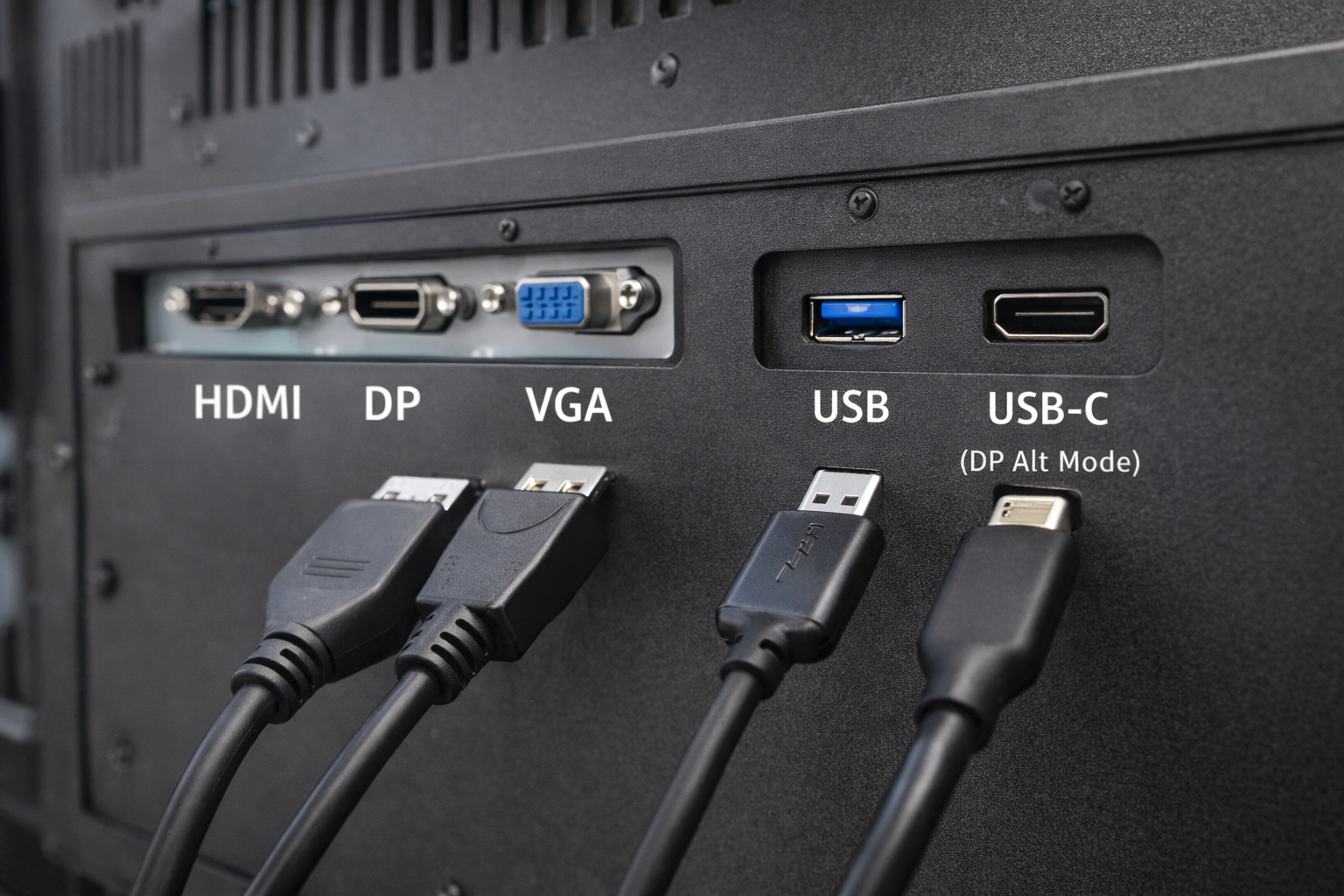
منفذ USB قياسي لا يمكن نقل إشارات الفيديو أصلاً بنفس طريقة HDMI أو VGA أو DisplayPort.
ومع ذلك، فإن الفيديو عبر USB ممكن فقط من خلال تقنيات وشروط محددة, والتي غالبًا ما يُساء فهمها.
DisplayLink هو حل قائم على الضغط يسمح بإخراج الفيديو عبر USB.
كيف يعمل:
القيود المفروضة على الاستخدام الصناعي:
غالباً ما يتم الخلط بين USB-C وUSB-C القياسي.
عندما يدعم USB-C وضع DisplayPort Alt Mode, ، يمكنه نقل إشارات الفيديو الأصلية.
توضيحات مهمة:
بالنسبة للشاشات الصناعية، يجب أن يكون دعم فيديو USB-C تم تحديدها والتحقق من صحتها بشكل صريح.
| الواجهة | فيديو أصلي | مطلوب سائق | الموثوقية الصناعية |
|---|---|---|---|
| USB (قياسي) | ❌ لا | نعم | منخفضة |
| USB + DisplayLink | ⚠️ القائم على البرمجيات | نعم | محدودة |
| USB-C (وضع DP Alt Mode) | ✅ نعم | لا يوجد | معتدل |
| HDMI / DP / VGA | ✅ نعم | لا يوجد | عالية |
لمعظم التطبيقات الصناعية, تظل واجهات الفيديو المخصصة هي الخيار المفضل.
تحدد أولويات المراقبين الصناعيين:
غالبًا ما تقدم حلول الفيديو المستندة إلى USB:
ونتيجة لذلك, لا تزال واجهات HDMI و DisplayPort و VGA هي الواجهات القياسية في أنظمة العرض الصناعية.
يتم تقييم الفيديو المستند إلى USB في بعض الأحيان من أجل:
حتى في هذه الحالات, التحقق الهندسي أمر بالغ الأهمية لتجنب مشاكل الموثوقية.
قبل اختيار USB كواجهة فيديو، اسأل:
بالنسبة لمعظم المشاريع الصناعية، تعود الإجابة إلى واجهات فيديو أصلية.
لا، لا يمكن أن تحل منافذ USB القياسية محل واجهات الفيديو الأصلية مباشرةً.
لا، يمكن فقط لمنافذ USB-C التي تدعم وضع DisplayPort Alt Mode إخراج الفيديو.
قد تعمل في حالات محدودة، ولكن لا يوصى بها عمومًا للنشر الصناعي طويل الأجل.
بينما تطورت تقنية USB, ليست بديلاً عالميًا لواجهات الفيديو التقليدية في الشاشات الصناعية.
تعتمد حلول الفيديو المستندة إلى USB على برامج أو برامج تشغيل أو تكوينات منافذ محددة، مما يؤدي إلى التعقيد والمخاطر.
للتطبيقات الصناعية المستقرة وطويلة الأجل, تظل مدخلات الفيديو المخصصة مثل HDMI و DisplayPort الخيار الأكثر موثوقية.
مقدمة أصبحت الواجهات بين الإنسان والآلة (HMIs) الآن مكونات قياسية في المعدات الصناعية الحديثة. تتيح شاشات العرض للمشغلين ...
مقدمة كثيرًا ما يتم نشر شاشات العرض الصناعية في البيئات التي يصعب فيها التحكم في ظروف الإضاءة. المعدات ...
مقدمة تُعد شاشات العرض مكونًا هامًا للواجهة في العديد من أنواع المعدات الصناعية. فهي توفر النظام ...
مقدمة تعتبر رؤية الشاشة معلمة تصميم بالغة الأهمية في المعدات الصناعية. يعتمد المشغلون على الواجهات الرسومية ...
أرسل تفاصيل طلبك. نرد عليك بتوجيهات التكوين والخطوات التالية.