Qu'est-ce qu'un PC à écran tactile industriel ? Composants, types et applications
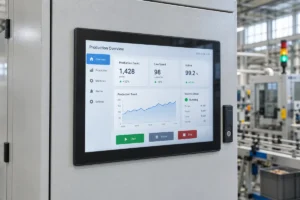
Un PC industriel à écran intégré est un ordinateur doté d'un écran intégré, généralement tactile, conçu pour ...
L'équipe d'ingénierie d'Eagle Touch
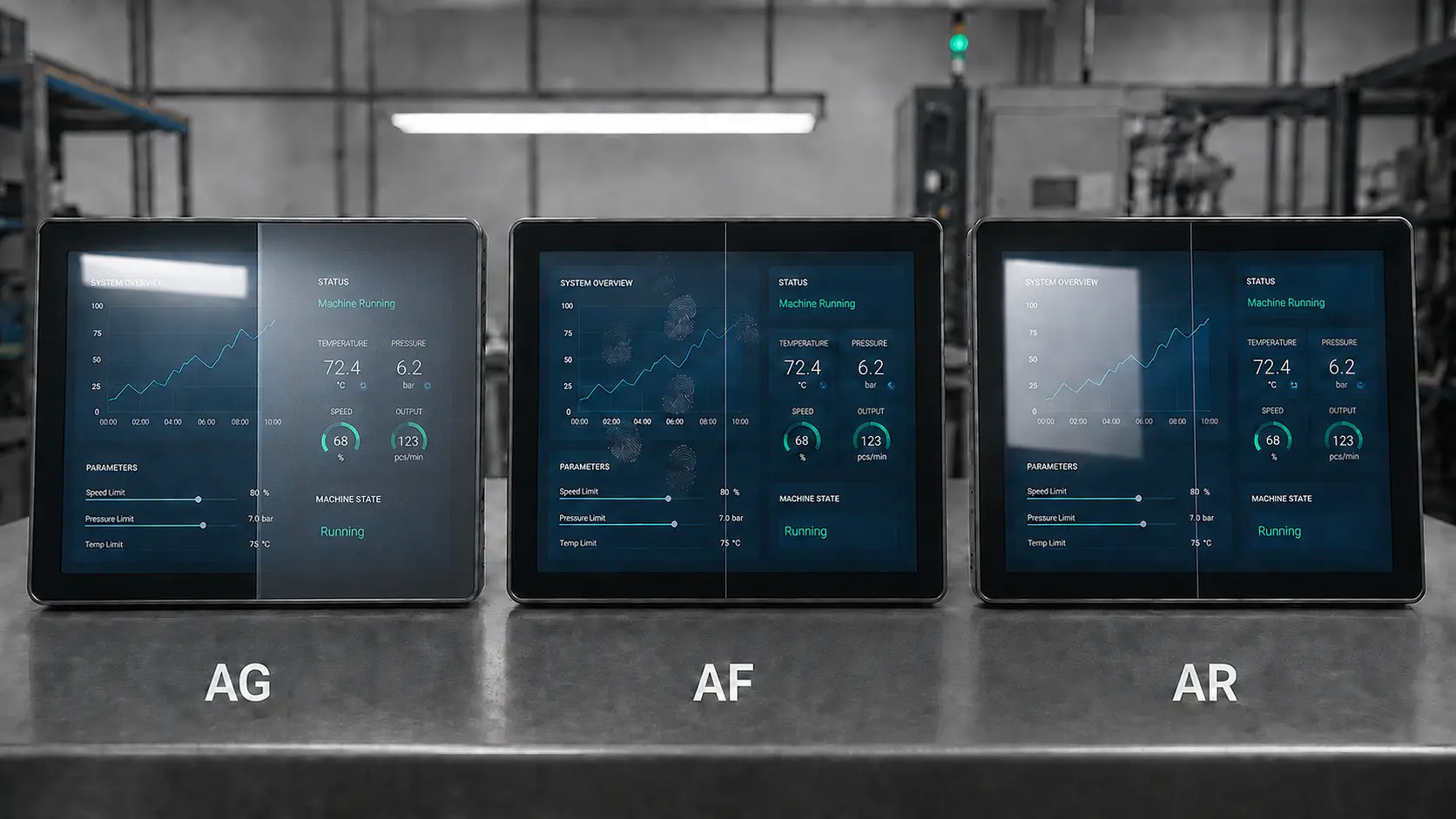
Les sigles AG, AF et AR apparaissent souvent ensemble dans les caractéristiques techniques d'une lamelle couvre-objet, mais ils remplissent des fonctions différentes.
Le traitement AG réduit les reflets gênants en diffusant la lumière réfléchie. Le traitement AF facilite l'élimination des traces de doigts et des taches de graisse. Le traitement AR réduit la quantité de lumière réfléchie par le verre. Aucun de ces traitements n'est systématiquement meilleur que les autres, et le fait de les combiner tous les trois ne garantit pas pour autant un meilleur affichage.
Pour un écran tactile industriel, commencez par définir le problème que l'équipement fini doit résoudre. Tenez compte de l'éclairage, de l'interface utilisateur, de la méthode de nettoyage, de la structure du verre de protection et de la durée de vie requise. Évaluez ensuite le traitement sur un échantillon représentatif.
| Traitement | Objectif principal | Un bon point de départ pour | Principal compromis |
|---|---|---|---|
| AG — Anti-éblouissement | Atténue les reflets éblouissants provenant des lampes, des fenêtres et des objets environnants | IHM, tableaux de commande et équipements industriels sous un éclairage directionnel | Un effet de flou excessif peut atténuer la netteté du texte et des graphiques |
| AF — Anti-empreintes digitales | Réduit l'adhérence de l'huile et facilite le nettoyage de la surface | Écrans tactiles publics, panneaux médicaux, bornes interactives et interfaces homme-machine (IHM) fréquemment touchées | Ne protège pas à lui seul contre les chocs ou les rayures |
| AR — Antireflet | Réduit la réflectance de la surface tout en préservant la netteté de l'image | Interfaces d'une grande netteté, écrans professionnels et systèmes d'extérieur sélectionnés | Des coûts plus élevés et des exigences plus strictes en matière de revêtement, de manipulation et de durabilité |
| AG + AF | Allie la réduction des reflets à un nettoyage plus facile | IHM industrielles, bornes interactives et terminaux publics | Il convient de vérifier à la fois la qualité optique et la durabilité de l'autofocus. |
| AR + AF | Allie une faible réflexion à un nettoyage plus facile | Écrans tactiles destinés au secteur médical, haut de gamme et à haute clarté | La réalisation de l'ensemble de la structure de revêtement nécessite un processus contrôlé et une validation |
En bref, c'est simple : AG pour l'éblouissement, AF pour les traces de doigts et AR pour les reflets. Les caractéristiques techniques définitives dépendent encore de l'affichage complet.
Le traitement AG (anti-éblouissement) confère au verre une surface finement texturée. Au lieu de renvoyer une image nette d'un plafonnier ou d'une fenêtre proche, la surface diffuse la lumière réfléchie sur une zone plus large. Le reflet devient ainsi moins net et moins gênant pour l'opérateur.
La fonction AG s'avère utile lorsqu'un reflet visible se déplace sur l'écran à mesure que l'opérateur change de position, en particulier sur les interfaces homme-machine (IHM) installées sous un éclairage intense.
Une diffusion plus importante n'est pas toujours préférable. Une surface diffusante plus puissante peut atténuer les reflets, mais elle peut également disperser la lumière provenant de l'écran LCD. Il peut en résulter un texte moins net, un contraste réduit, des reflets visibles ou une lisibilité moindre du code QR.
Le risque est plus élevé avec les écrans haute résolution, les petits caractères et les lignes fines. Au lieu de demander le niveau de voile le plus élevé disponible, comparez les échantillons en vous basant sur le contenu final à l'écran et à une distance de visionnage normale. Vérifiez également la brillance et les reflets, le cas échéant.
Le verre antireflet (AG) peut être obtenu par gravure du verre ou par application d'un revêtement de surface. Le choix du procédé dépend de l'objectif optique visé, du type de verre, du processus de nettoyage et de l'exposition à l'abrasion. Il convient d'identifier le procédé utilisé et de valider un échantillon représentatif de la production ; tous les produits commercialisés sous l'appellation “ verre antireflet ” ne présentent pas nécessairement le même aspect ni la même durée de vie.
« AF » signifie « anti-traces de doigts ». Il s'agit généralement d'un traitement de surface oléophobe qui réduit la tendance du sébum et des traces de doigts à s'étaler et à rester visibles. Des traces peuvent tout de même apparaître, mais elles s'effacent généralement plus facilement.
Ce critère est important pour les terminaux publics et les panneaux de commande qui sont nettoyés plusieurs fois par jour. L’angle de contact avec l’eau est souvent utilisé comme indicateur de contrôle qualité pour les écrans AF, mais une valeur initiale ne permet pas d’évaluer la durée de vie. Lorsque la durabilité est un critère essentiel, il convient de définir la méthode d’essai et le résultat requis après des cycles d’abrasion ou de nettoyage.
Le traitement AF ne rend pas le verre inrayable et n'augmente pas sa résistance aux chocs. Ces propriétés dépendent du matériau du verre, de son épaisseur, de son renforcement, du traitement des bords, de la fixation et du boîtier. Si le produit doit répondre à une norme IK, considérez-le comme un élément distinct. spécifications techniques relatives au verre de protection. Testez également le tissu et les produits de nettoyage utilisés ; la compatibilité des revêtements peut varier.
Le traitement AR (anti-reflet) utilise généralement de fines couches optiques pour que les ondes lumineuses réfléchies s’annulent partiellement les unes les autres. Une plus grande partie de la lumière émise par l’écran traverse ainsi la vitre de protection, et moins de lumière ambiante est renvoyée vers l’utilisateur.
À incidence normale, une interface air-verre non traitée réfléchit généralement environ 4% de la lumière visible. Une feuille de verre comportant plusieurs interfaces optiques, la réflexion totale dépend de la structure globale. Les performances antireflet doivent donc être indiquées en précisant les conditions de mesure.
La technologie AR s'avère utile lorsqu'un projet nécessite un faible niveau de réflexion sans l'adoucissement de l'image associé à une surface hautement diffusante, comme c'est le cas pour les équipements médicaux, les interfaces homme-machine (IHM) haute résolution et certains écrans d'extérieur.
“La mention ” revêtement AR » ne constitue pas une spécification complète. Demandez au fournisseur de préciser :
Une faible valeur à une longueur d'onde donnée ne signifie pas nécessairement une faible réflexion moyenne sur l'ensemble du spectre visible. Vérifiez l'aspect de la surface sous des angles de vision normaux. Si une surface traitée doit être collée, assurez-vous de la compatibilité entre le revêtement et l'adhésif.
L'AG et l'AR ne sont pas deux niveaux d'un même traitement.
Le traitement AG modifie l'aspect du reflet. L'image nette d'une lampe se transforme en une tache large et floue. Le traitement AR réduit l'intensité du reflet tout en conservant généralement une netteté apparente plus élevée.
| Facteur déterminant | Verre AG | Verre AR |
|---|---|---|
| Action optique principale | Diffuse la lumière réfléchie | Réduit la lumière réfléchie |
| Aspect de la surface | Mat ou satiné | Transparent, généralement brillant |
| Détails de l'image | Peut s'adoucir si le voile est plus important | En général, cela permet de mieux préserver la clarté |
| Lampe de plafond puissante | Souvent un choix pratique | Cela peut aider, mais le coût n'est peut-être pas justifié |
| Interface haute résolution | Utilisez un AG à faible opacité et à faible brillance, puis testez-le | Souvent préférable lorsque la clarté est essentielle |
| Utilisation en extérieur | Peut réduire les reflets gênants dans les miroirs | Permet d'améliorer le contraste en réduisant les reflets |
| Risque principal lié à la qualification | Voile, scintillement et perte de détails | Uniformité de la réflectance, couleur et durabilité du revêtement |
Pour les équipements destinés à une utilisation en extérieur, commencez par examiner l'ensemble du système optique. La luminosité de l'écran LCD, les reflets internes, liaison optique, le verre de protection, l'angle de vision et les variations de luminosité ont tous une incidence sur la lisibilité. La technologie AR ne peut pas compenser un rétroéclairage insuffisant, et la technologie AG à elle seule ne suffit pas à rendre un écran lisible en plein soleil.
Oui, mais cette combinaison doit avoir un objectif précis.
Les traitements peuvent être appliqués sur différentes surfaces ou disposés en couches de manière contrôlée. Vérifiez l’ordre d’application des revêtements, la compatibilité des procédés et les exigences en matière d’adhérence. L’ajout de traitements supplémentaires entraîne une augmentation des coûts et du travail de validation ; cela n’améliore pas automatiquement la qualité de l’affichage.
| Application | Un point de départ concret | Confirmer avant validation |
|---|---|---|
| IHM d'usine sous un éclairage en plafond | AG | Orientation de la lampe, voile, éclat, lisibilité du texte et utilisation de gants |
| Kiosque extérieur ou borne de recharge pour véhicules électriques | AG, AG + AF ou une solution AR validée | Luminosité de l'écran LCD, collage optique, orientation du soleil, ombrage du boîtier et nettoyage |
| Écran tactile en libre-service destiné au grand public | AF ou AG + AF | Fréquence de contact, empreintes digitales, méthode de nettoyage et résistance à l'abrasion |
| Écran tactile médical | AF ou AR + AF | Compatibilité avec les désinfectants, netteté de l'image et durée de vie du revêtement |
| IHM professionnelle haute résolution | AR ou AG à faible voile | Qualité du texte, couleur, réflectance et angle de vision |
| Écran tactile certifié IK | La conception mécanique avant tout | Épaisseur du verre, renforcement, soutien des bords, collage et réglage tactile |
| Écran d'extérieur sans contact | AG ou AR selon le problème de réflexion | Luminosité, ensemble optique, angle d'installation et conception thermique |
Deux appareils équipés du même écran LCD peuvent nécessiter des verres de protection différents, car l'un est orienté vers une fenêtre et l'autre vers un mur. Ce sont les conditions d'utilisation qui doivent déterminer le traitement à appliquer.
Ne vous contentez pas d'indiquer “ Verre AG requis ” ou “ Revêtement AR requis ”. Fournissez au fournisseur suffisamment d'informations pour qu'il puisse vous recommander la structure adaptée et vous proposer un devis correspondant.
Veuillez d'abord fournir les informations relatives à la demande :
Pour l'AG, précisez la gamme de finition (mate ou brillante), le type de procédé, les exigences en matière de faible brillance et les échantillons. Pour l'AF, indiquez la méthode d'essai de l'angle de contact, la compatibilité avec les procédés de nettoyage et la durabilité. Pour l'AR, précisez la réflectance cible, la gamme de longueurs d'onde, l'angle de mesure, la face traitée et si la valeur s'applique par surface ou à l'ensemble du verre.
Privilégiez les performances mesurables et un échantillon représentatif, et non pas uniquement l'étiquette.
Un morceau de verre traité isolé, placé sous l'éclairage d'un bureau, ne peut pas refléter le produit fini. Testez l'ensemble de la pile d'affichage lorsque cela est possible, en utilisant le même contenu d'écran et la même luminosité pour chaque échantillon. Vérifiez-le sous un éclairage normal, sous des lampes de plafond puissantes et à la lumière du jour le cas échéant, depuis la position de l'opérateur et sous des angles hors axe réalistes.
Utilisez des écrans sombres pour mettre en évidence les reflets, puis examinez les petits caractères, les lignes fines et les codes QR afin de détecter d'éventuels voiles ou reflets. Sur les échantillons AR, recherchez les résidus de couleur et les irrégularités de revêtement.
Si le produit nécessite l'utilisation de verre épais, de gants, un nettoyage à l'eau ou un contact avec les bords, testez ces conditions sur la structure finie. Enfin, utilisez le chiffon et les produits chimiques qui seront effectivement utilisés. Un revêtement qui semble parfait le premier jour peut tout de même s'abîmer après des nettoyages répétés.
Un niveau de voile plus élevé peut atténuer les reflets trop marqués, mais rend également plus difficiles à lire les petits caractères, les graphismes fins et les codes QR. Choisissez le niveau de voile en testant l'interface réelle.
La réalité augmentée (RA) permet de réduire les reflets de surface, mais la lisibilité en extérieur dépend toujours de la luminosité, du collage optique, des reflets internes et de l'installation. Consultez l'intégralité de l'article Guide de sélection des écrans lisibles en plein soleil avant de finaliser le verre.
L'AF facilite le nettoyage. Il ne remplace toutefois pas un verre renforcé, une épaisseur adaptée ou une conception résistante aux chocs mécaniques.
Le verre, le revêtement, le capteur tactile, le collage, l'écran LCD et le boîtier fonctionnent comme un seul et même système. Le durcissement prématuré d'un composant entraîne des risques inutiles sur les plans optique, mécanique et tactile.
Le traitement AG atténue les reflets gênants, le traitement AF réduit l'adhérence des traces de doigts et des taches de graisse, tandis que le traitement AR réduit la quantité de lumière réfléchie par le verre. Ces traitements répondent à des problèmes différents et doivent être précisés séparément.
Pas systématiquement. Le traitement AG s'avère souvent pratique lorsque l'éblouissement directionnel constitue le principal problème. Le traitement AR est utile lorsque la réduction des reflets et la clarté de l'image sont prioritaires. Comparez des échantillons complets d'écrans sous l'éclairage réel du lieu d'installation.
Oui. Les combinaisons AG + AF et AR + AF sont courantes, tandis que les combinaisons AG + AR et les empilements à trois traitements nécessitent une validation minutieuse tant sur le plan du procédé que sur le plan optique. N’utilisez une combinaison que si chaque traitement répond à une exigence bien définie.
Non. La technologie AR permet d'améliorer le contraste en extérieur en réduisant les reflets de surface, mais la lisibilité en plein soleil dépend également de la luminosité de l'écran LCD, du collage optique, des reflets internes, de l'ombrage et de la conception thermique.
Les traitements AG, AF et AR ne constituent pas des améliorations d'un même ordre. Le traitement AG limite les reflets gênants, le traitement AF facilite le nettoyage et le traitement AR réduit les reflets de surface. Le bon choix est celui qui permet de garantir la lisibilité, la fonctionnalité tactile et la facilité d'entretien de l'écran une fois celui-ci installé sur la machine.
Pour un projet OEM, veuillez communiquer à Eagle Touch les dimensions de l'écran, les conditions d'éclairage, la luminosité de l'écran LCD, l'épaisseur de la vitre de protection, la méthode de collage, le processus de nettoyage et la quantité prévue. Nous pourrons vous proposer une solution adaptée et vous fournir un échantillon représentatif à des fins d'évaluation avant le lancement de la production en série.
Un PC industriel à écran intégré est un ordinateur doté d'un écran intégré, généralement tactile, conçu pour ...
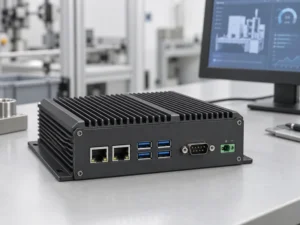
Un PC embarqué est un ordinateur configuré pour fonctionner au sein d'une machine ou d'un système plus vaste ...
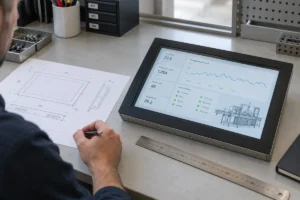
Commencez par déterminer le logiciel que le PC à écran tactile doit exécuter et les conditions auxquelles il doit répondre. Ensuite, ...
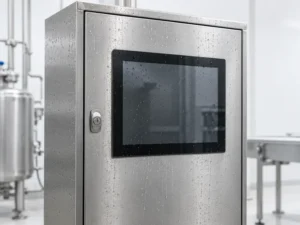
Pour choisir l'indice de protection IP d'un PC à écran tactile industriel, il faut commencer par se poser deux questions : à quel niveau d'exposition à la poussière et à l'eau ...
Faites-nous part de votre projet, de vos besoins ou du défi auquel vous êtes actuellement confronté. Notre équipe examinera les détails et vous proposera une solution concrète.