Panel Mount Touch Monitor for Industrial HMI & OEM Equipment
Custom panel mount touch monitors built to fit your equipment panel, mounting structure and host interface. Eagle Touch supports PCAP or resistive touch, HDMI/VGA input, USB/RS232 touch, IP65 front option and repeat production for OEM projects.
Custom Panel Mount Touch Monitors for OEM Equipment
Eagle Touch is a B2B manufacturer of industrial touch displays and monitors for OEM equipment. We supply custom panel mount touch monitors to machine builders, industrial automation companies, control cabinet manufacturers and system integrators.
A panel mount monitor is installed through a prepared cutout in a machine or control cabinet and secured from the rear, with the display visible from the front and the housing and cables kept inside the equipment.
Projects can start from an existing model or be adjusted for screen size, touch technology, brightness, front bezel, mounting structure, video input, touch interface and power connection.
We support drawing review, sample testing and repeat production. Once the sample is approved, the mechanical drawing and key configuration are recorded as the production reference for future orders.
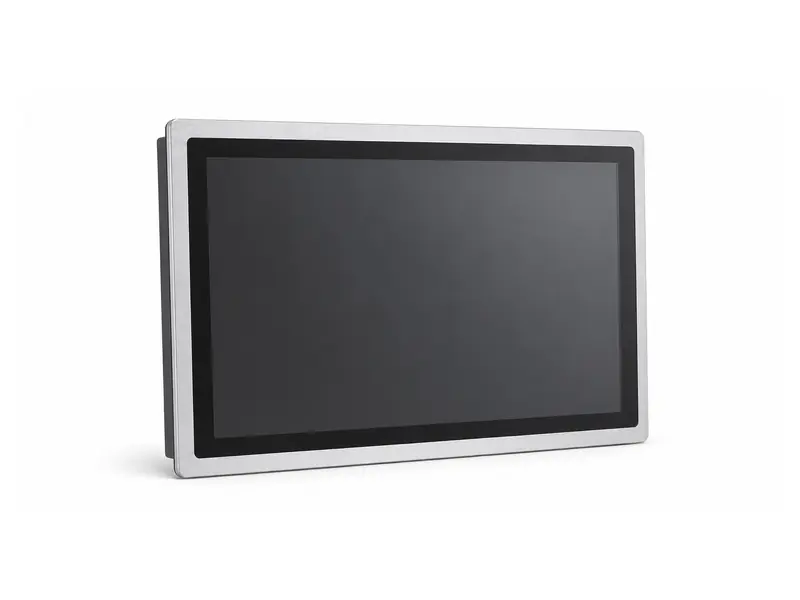
OEM Panel Mount Touch Monitor Options for Equipment Integration
The right panel mount touch monitor is not decided by LCD size alone. It must fit the panel opening, match the mounting structure, connect to the host system, work for the operator and stay consistent in repeat production.
Not sure which size or structure to start with? View our standard panel mount monitor models, then use the closest model as the baseline for OEM confirmation.
For replacement or embedded installation, send the panel cutout drawing first. The opening size, screw position, rear space and cable path usually decide the final configuration.
| Configuration Area | What Must Be Confirmed |
|---|---|
| LCD Platform | Size, resolution, aspect ratio, brightness, viewing distance and long-term LCD availability |
| Touch & Front Design | PCAP or resistive touch, cover glass, AG / AR / AF options, sealed front design and IP65 front protection |
| Panel Fit | Panel cutout, visible area, bezel coverage, screw position, tolerance and drawing match |
| Mounting Structure | Front installation, rear fixing, flush mounting, rear housing depth, cable exit and service access |
| Interface & Power | HDMI, VGA, DVI, DisplayPort, USB touch, RS232 touch, 12V / 24V input and connector layout |
| Environment & Production | Temperature, humidity, vibration, dust, water exposure, cleaning method, usage hours and repeat production baseline |
Final configuration is confirmed after drawing review, interface check, sample testing and production approval.
Panel Cutout, Mounting and Rear Space Review
A panel mount touch monitor must fit the equipment structure before it can be installed correctly. Cutout size, bezel coverage, rear depth, fixing points and cable direction should be checked before sample approval.
What We Check Before Sampling
- Panel cutout: opening size, visible area, bezel coverage, screw position and tolerance
- Mounting structure: front installation, rear fixing, flush structure, cabinet depth and service access
- Cable access: connector position, cable exit direction, internal clearance and wiring route
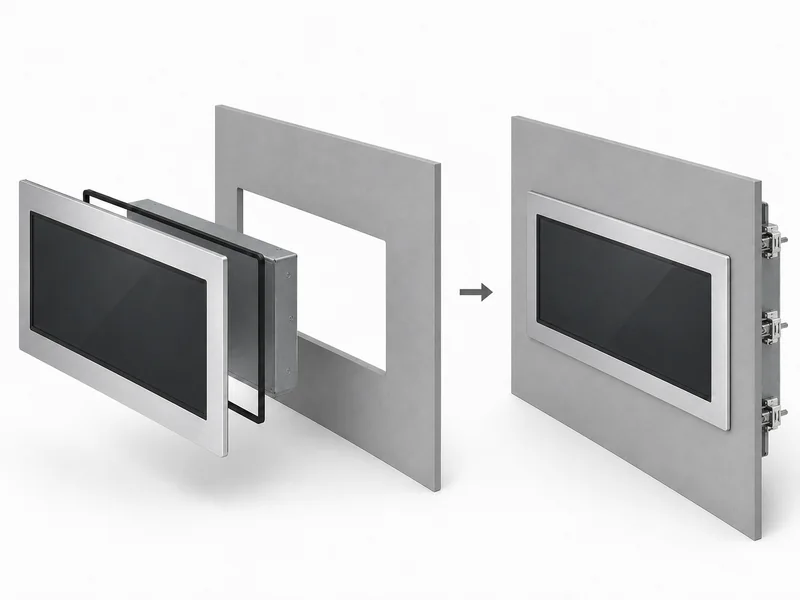
The drawing decides more than the screen size. Front opening, rear clearance, screw position and cable path must match the final equipment structure.
Touch and Non-Touch Options for Panel Mount Monitors
The touch type should match the way operators actually use the machine: gloves, moisture, cleaning method, HMI software, input style and whether the screen is used for control or display only.
For glass-front HMI control
- Clean front glass and good optical clarity
- Smooth response for graphical HMI interfaces
- Multi-touch support, with glove or moisture tuning reviewed by project
For gloves, stylus and firm-press input
- Works with gloves, stylus or pressure input
- Reliable for single-touch commands and fixed buttons
- Suitable for legacy HMI software or simple menu control
For display-only equipment panels
- Used when control is handled by buttons, PLC or external input
- Reduces unnecessary touch layer cost and complexity
- Suitable for status display, monitoring and fixed information screens
Need a separate touch panel or cover glass instead? Review our industrial touch screen solutions.
Connect the Monitor to Your IPC, Controller or Host System
A panel mount touch monitor usually works with an industrial PC, embedded board, HMI controller, cabinet-mounted control system or existing machine system. The monitor must match the host video output, touch interface, power input, connector direction and cable route.
This is especially important for replacement projects, cabinet retrofits and OEM machines where the wiring layout is already fixed.
What We Confirm for System Connection
Video Input
HDMI, VGA, DVI, DisplayPort or project-based input matched to the host output.
Touch Interface
USB touch, RS232 touch, PCAP controller or resistive controller options.
Power Input
12V, 24V or project-based power input reviewed with the cabinet power design.
Cable Route
Connector position, cable length, exit direction and service access checked early.
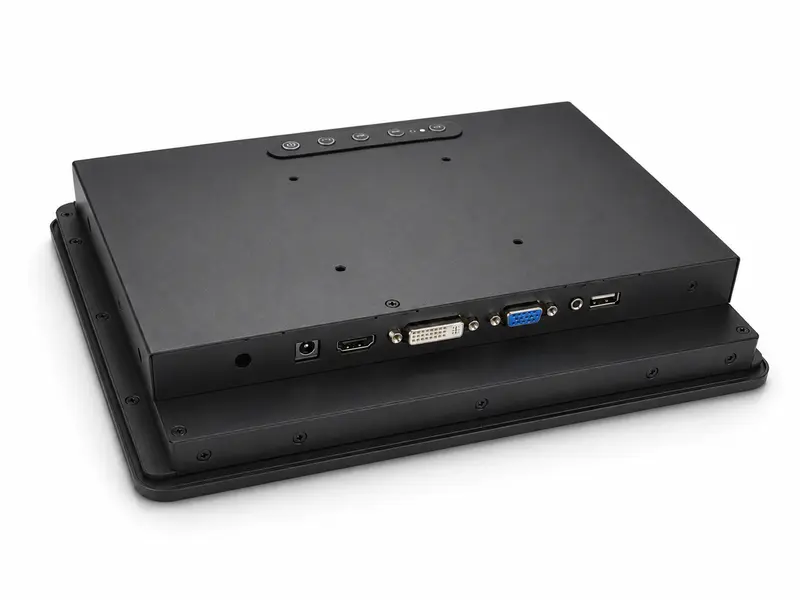
Rear interface layout affects more than connection type. Port position, cable exit direction and service access should match the IPC, controller and cabinet wiring layout.
Front Protection for Exposed Panel Mount Installations
Outdoor-facing equipment, washable panels, front-panel terminals and public operator interfaces may need more than a standard front frame.
Front sealing, cover glass, touch stability and visibility should be confirmed before sampling.
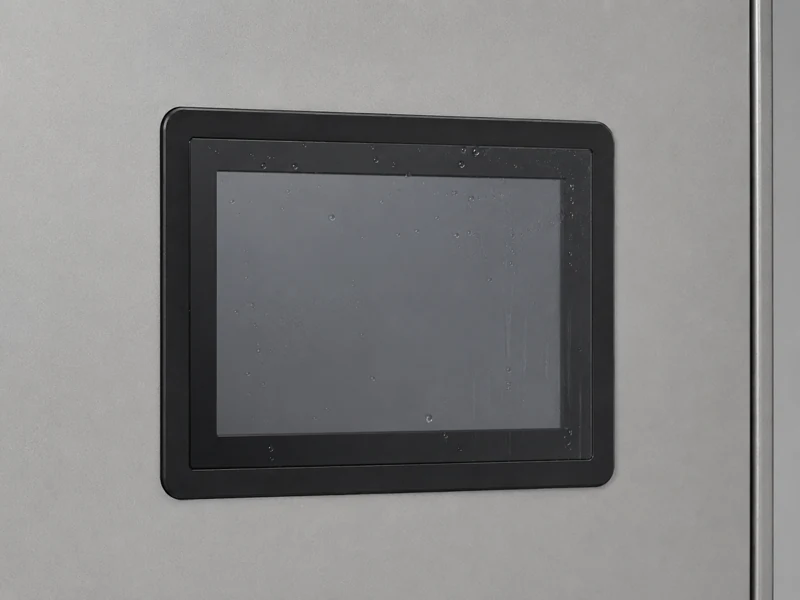
Front-side details we confirm
IP65 Front OptionFor dust, splash and cleaning exposure on the installed front side. Front IP65 does not mean the full monitor is waterproof.
Cover GlassStrengthened glass, AG, AR or AF surface options for reflection, cleaning, touch feel and impact requirements.
Touch StabilityPCAP touch can be reviewed for cover glass thickness, moisture, glove use, grounding and front sealing.
Sunlight ReadabilityFor outdoor-facing panels, brightness, optical bonding and anti-glare glass can be reviewed together.
For indoor control cabinets, a standard front structure is often enough. For exposed panels, send the installation location, cleaning method, sunlight exposure and panel drawing before sampling.
View Sunlight Readable Monitor OptionsPanel Mount Touch Monitor, Open Frame Monitor or Panel PC?
These products can all be used in industrial equipment, but they solve different installation problems. The key difference is how the display is installed into the machine structure and whether the computer is separate or built in.
Front-to-back panel installation
Choose this structure when the monitor needs to be inserted from the front side of a prepared panel cutout, then secured from the rear side or mounting brackets of the equipment panel.
Best when the equipment already has a separate IPC, embedded computer, HMI controller or PLC-based control system.
Rear-to-front embedded installation
Choose this structure when the display is mounted from inside the customer enclosure, with the screen positioned behind the front opening of the housing.
For embedded housing designs, see our open frame touch monitor solutions.
Display and computer in one unit
Choose this structure when the equipment needs the display, touch screen and computer board integrated in one industrial unit.
For systems that require integrated computing, see our industrial panel PC solutions.
Need size references first? View our panel mount touch monitor models.
Common Applications for Panel Mount Touch Monitors
Panel mount touch monitors are commonly used when the display must be fixed into an equipment panel, support daily operator input and connect to a separate IPC, embedded computer, HMI controller or PLC-based control system.
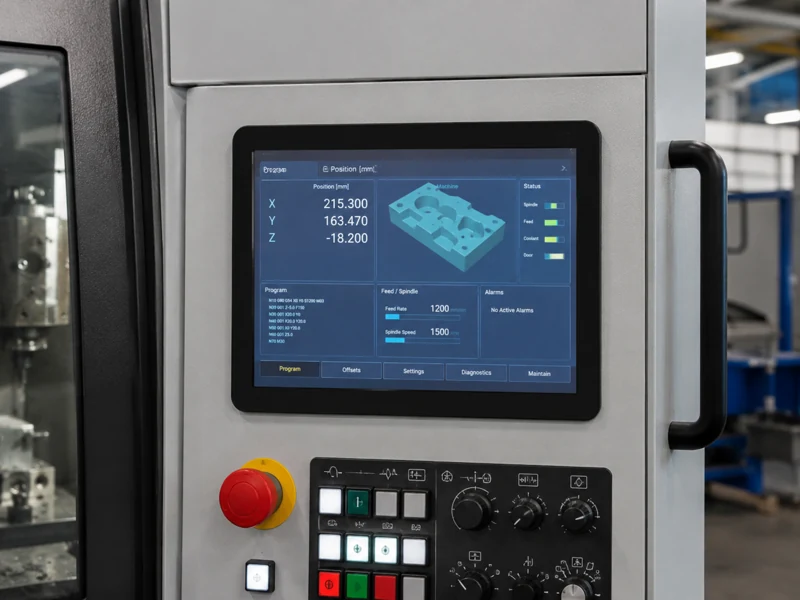
Industrial Automation, CNC & Machine HMI
Panel-mounted operator displays for CNC machines, automation equipment, process monitoring, SCADA dashboards, alarms, parameter settings and external IPC or controller connection.
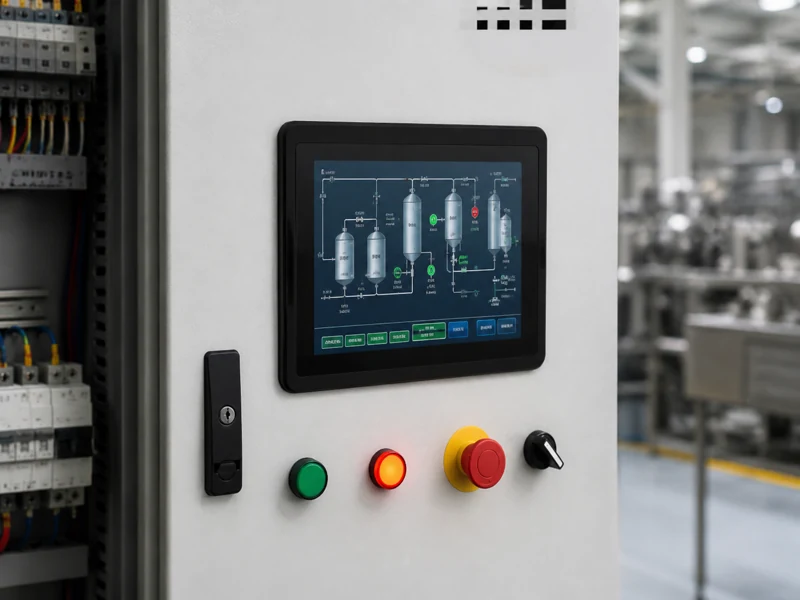
Control Cabinets & Electrical Automation Panels
Touch displays installed into cabinet doors or equipment panels for line operation, power control, system settings and operator-side visualization.
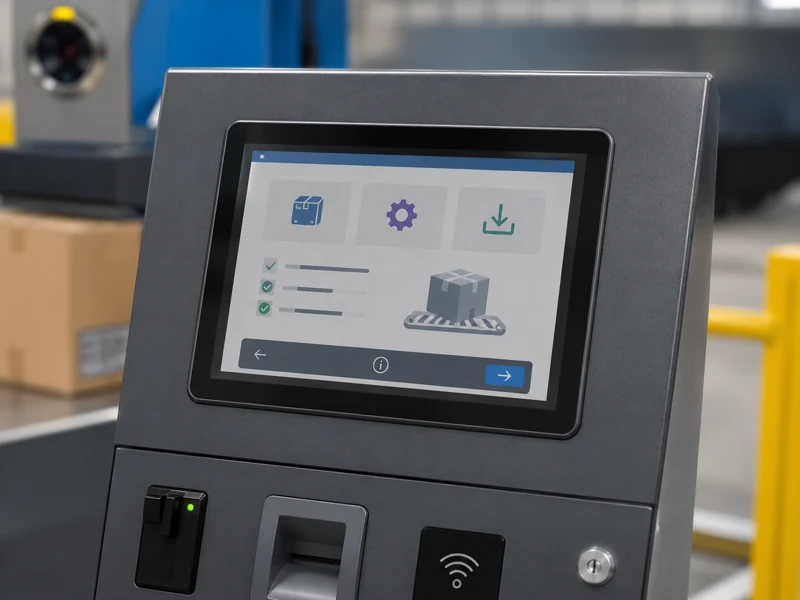
Equipment Service Panels & Operator Terminals
Integrated touch interfaces for guided workflows, access control, service operation, monitoring screens and equipment-side user interaction through a fixed panel opening.
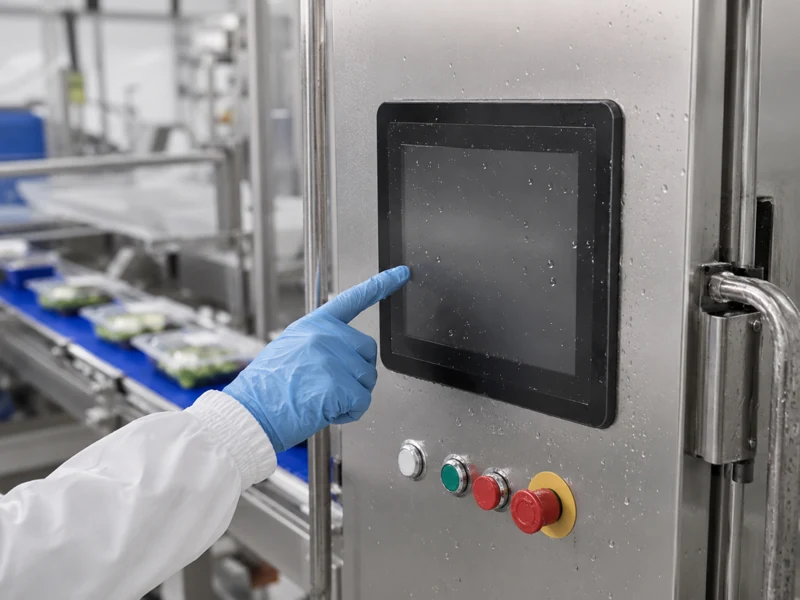
Food, Packaging & Clean Production Areas
Used where the operator side may require front sealing, easy cleaning, anti-glare glass or stable touch response in demanding production environments.
For application matching, share the equipment type, panel cutout, host interface and operating environment so we can recommend a suitable panel mount touch monitor structure.
Panel Mount Touch Monitor OEM Support from Drawing to Production
For OEM equipment projects, the goal is not only to build one sample, but to confirm a configuration that can be repeated in production. Eagle Touch helps review the panel drawing, mounting structure, host interface, touch operation and working environment before the configuration is fixed.
After sample approval, key items such as LCD, touch panel, mechanical drawing, interface layout, cable, label and packaging are recorded as the controlled production baseline for repeat orders.
What to Share for a Faster Panel Mount Touch Monitor Quotation
Panel cutout, visible area, screw position, mounting method, rear clearance or enclosure drawing.
Screen size, resolution, brightness, PCAP or resistive touch, glove use, cover glass and front sealing requirements.
Video input, touch interface, power input, connector direction, cable length, operating system or host computer type.
Application, indoor or outdoor use, cleaning exposure, working temperature, sample quantity and production plan.
With these details, we can check whether an existing panel mount monitor model is suitable, or whether the project needs adjusted mounting, touch, interface, front protection or production configuration.
Certification requirements, sample plan, long-term supply and repeat production control can also be confirmed according to the project requirement.
Panel Mount Touch Monitor FAQ
Common questions about panel fit, mounting structure, touch selection, IP65 front protection, host connection and OEM production support.
Let’s Discuss Your Requirements
Share your application, requirements, or current challenge. Our team will review the details and recommend a practical way forward.