Sunlight Readable Monitors for Outdoor Equipment
Sunlight readable touch monitors for EV chargers, outdoor kiosks and exposed control terminals, with high brightness LCDs, optical bonding and anti-reflective glass options for improved visibility in sunlight.
Eagle Touch matches LCD brightness, cover glass and dimming to your installation. Cabinet temperature, direct sun exposure and touch requirements in rain or with gloves guide the final configuration.
7–32 inch platforms · Optical bonding options · Automatic dimming on selected models
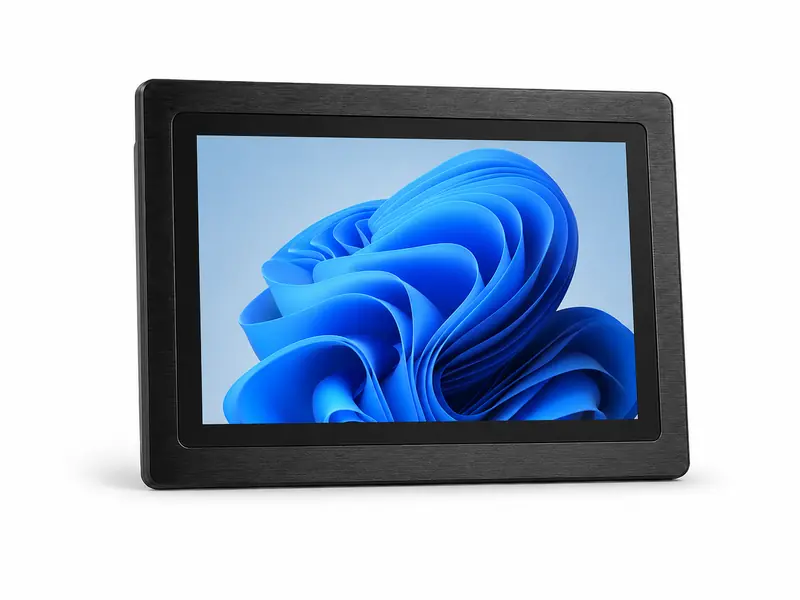
A Complete Monitor, Configured for Your Equipment
Our scope covers the LCD, touch panel, cover glass, display electronics and mounting structure. Start with an existing platform and adapt the parts your installation needs.
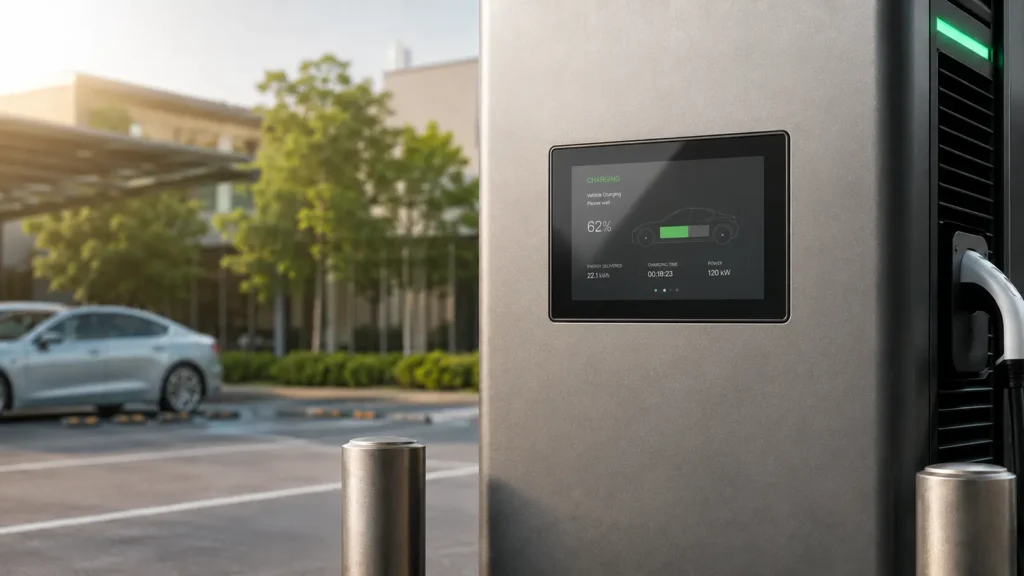
Application illustration · Outdoor EV charging interface
High Brightness, Optical Bonding & Automatic Dimming
ETH101TCIPA09 is a 10.1-inch, 1280 × 800 panel mount touch monitor with optical bonding and automatic dimming. The model is listed at 1200 nits in the product catalogue. It provides a starting point for compact outdoor equipment; the final cover-glass treatment is selected for the application.
- Front assembly: PCAP touch and 3 mm tempered cover glass
- Connections: HDMI and VGA video; USB touch; DC 9–36 V input
- Installation: Panel mount with front IP65 protection when correctly installed
- Operating range: Specified at −20°C to +70°C
These specifications describe one platform. The project quotation should identify the final glass treatment, brightness measurement basis and applicable operating conditions.
Explore other sizes and configurations →Typical Sunlight Readable Monitor Options
Available options depend on the selected size and platform.
| Item | Typical Options |
|---|---|
| Display sizes | 7″–32″ platforms |
| Brightness | 700 / 1000 / 1200 / 1500 nits, depending on model |
| Touch | PCAP touch or non-touch |
| Bonding | Air-gap or optical bonding |
| Cover glass | Custom thickness, outline and printing; AG or AR options |
| Mounting | Open frame, panel mount or VESA |
| Protection | Front IP65 on applicable models when correctly installed |
| Interfaces | HDMI / VGA; DP on selected models; USB for touch |
| Power | DC 12 V / 24 V / 9–36 V, depending on model |
| Dimming | Ambient-light automatic dimming on selected models |
Direct-sunlight suitability depends on the finished optical assembly and installation temperature, not the brightness rating alone. Glove operation, wet-touch performance and full-enclosure protection require application-specific assessment.
Sunlight, Heat & Touch Performance Considered Together
The configuration is developed around the conditions inside and outside your equipment, with validation focused on the final installation.
Readable Through the Finished Glass
We match high brightness LCD options with bonding and surface treatments. Optical bonding reduces internal reflections; AG diffuses reflected light, while AR reduces surface reflection.
Any additional front window and viewing angle are included in the review. Sample evaluation uses your interface to assess readability under representative light conditions.
Selected for the Cabinet Temperature
Internal air temperature, solar exposure, rear clearance and operating hours guide the display selection and thermal requirements. Outdoor ambient temperature alone is not enough.
A fan inside the display helps move heat, but the complete enclosure still needs a path to dissipate it. Image quality and brightness need evaluation after warm-up.
Touch Matched to the Front Assembly
We support controller matching and tuning for the glass, gloves, grounding and moisture conditions. Water rejection and accepting touch on a wet surface are separate requirements.
Touch is evaluated in powered equipment with the intended gloves. Front IP65 protection depends on correct sealing; the cabinet must protect the rear and connections.
Fit the Monitor to Your Machine
We compare your enclosure drawing and host requirements with an existing design, then identify the changes needed. Compatible parts can be retained to limit unnecessary redesign.
The aim is a defined configuration your engineering team can evaluate and your purchasing team can quote against.
Front Appearance & User Interaction
Glass outline, thickness, printed borders and surface treatment, with touch selection matched to the user. Impact requirements apply to the supported front assembly, not glass thickness alone.
Mounting & Enclosure Fit
Open frame, panel mount and VESA structures, with bracket and housing adjustments where required. Panel cutout, gasket contact, rear depth and service access are considered together.
Interfaces & Cable Routing
Video input, touch connection and power options depend on the selected platform. Connector position and cable direction can be reviewed around the host board and available installation space.
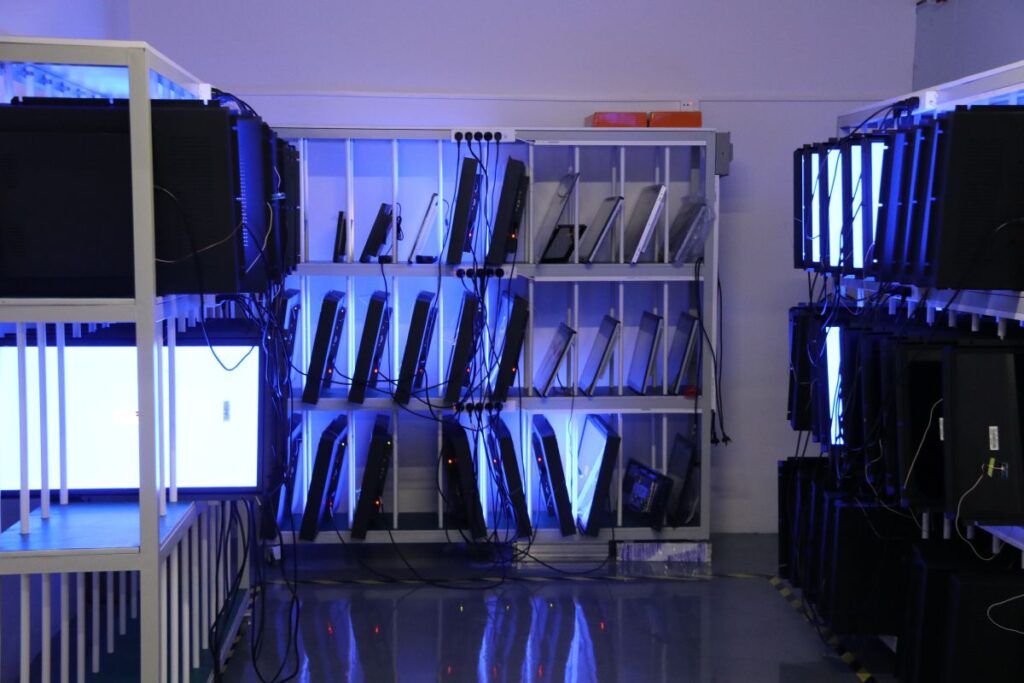
Monitor aging setup. Project-specific optical, thermal and touch validation is addressed separately from powered aging.
Support Beyond the First Sample
Eagle Touch supports sample planning, integration feedback and production coordination, keeping the technical requirements connected to the order.
Sample Configuration
The proposed display specification, mechanical fit and interface requirements form the basis for sample preparation. Open technical points and required documentation are addressed during this review.
Integration Feedback
Our team reviews your installation results and helps identify whether adjustments involve the monitor, touch settings or host equipment. Photos, measurements and test conditions support that assessment.
Production & Repeat Orders
Production is coordinated around the agreed configuration. Inspection requirements, component availability, delivery schedules and repeat-order needs are discussed for the project.
Sunlight Readable Monitor FAQs
Let’s Discuss Your Requirements
Share your application, requirements, or current challenge. Our team will review the details and recommend a practical way forward.