EV Charger Display Design for Outdoor Charging Stations
Introduction In EV charging equipment, the display system is more than a graphical interface. It is …
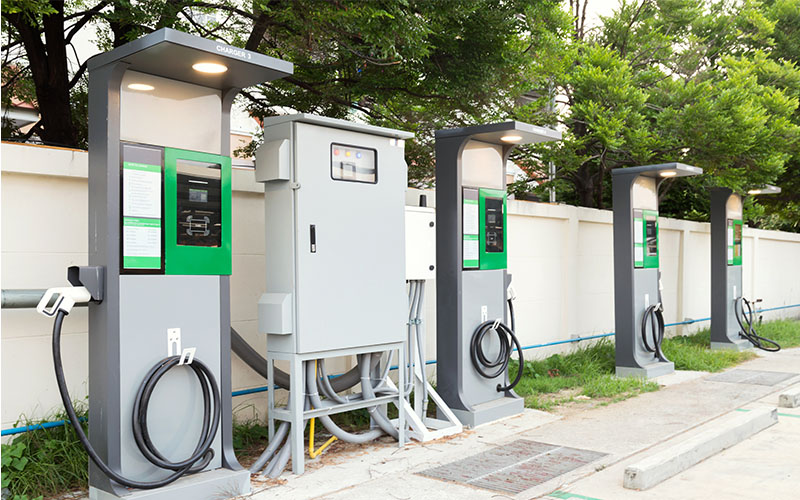
In EV charging equipment, the display system is more than a graphical interface. It is a hardware subsystem that influences usability, service accessibility, and the overall architecture of the charging station.
An EV charger display operates in conditions that differ significantly from consumer electronic devices. Charging stations are typically installed outdoors, where direct sunlight, temperature variation, humidity, and continuous public interaction are normal operating conditions.
The display is also the primary interaction point between the charging station and the user. It communicates charging status, authentication steps, pricing information, and operational instructions that guide the charging process.
In charging infrastructure design, the display subsystem may also be referred to as a charging station display, EV charger screen, or charger HMI (human-machine interface).
From an engineering perspective, display selection affects enclosure layout, thermal management, internal controller architecture, and maintenance access. Design choices such as screen brightness, touch technology, and computing architecture can influence power consumption, reliability, and long-term serviceability.
For these reasons, the display subsystem is typically considered early in the design of EV charging equipment rather than added later as a simple interface component.
An EV charger display is the visual interface integrated into an EV charging station that communicates charging status, system information, and user instructions.
In most charging infrastructure, the display functions as the human-machine interface (HMI) connecting users with charger electronics, authentication systems, and backend management platforms.
Typical EV charger displays include:
This interface allows users to start charging sessions, monitor energy consumption, complete authentication, and receive operational feedback from the charging system.
The EV charger display provides operational feedback and enables user interaction during the charging process.
Typical interface functions include:
Modern charging stations generally use graphical interfaces rather than simple LED indicators. This allows the charger to support multilingual interfaces, flexible interaction workflows, and software updates throughout the product lifecycle.
A typical display assembly used in charging infrastructure includes several components:
Depending on charger design, the display may operate as a peripheral connected to the charger control board or as a self-contained computing system.
Some platforms integrate industrial touch screens connected directly to the charger controller, while others use embedded panel PCs that manage both the graphical interface and communication with backend systems.
Several hardware technologies are commonly used to ensure reliable display operation in outdoor charging environments.
Most charging station displays use TFT LCD technology due to stable component availability and compatibility with embedded computing systems.
Typical screen sizes range between 7 inches and 15 inches, depending on charger type and interface complexity.
Outdoor charging equipment usually requires higher brightness levels than indoor systems. EV charger displays commonly operate within a range of 800 to 1500 nits to maintain readability in daylight conditions.
However, brightness alone does not determine visibility. Other optical factors also affect screen readability, including:
These characteristics collectively determine how well the interface remains readable under strong ambient lighting.
Most modern charging stations use projected capacitive (PCAP) touch technology.
PCAP touch systems support sealed glass surfaces and long operational lifetimes, which are important for public infrastructure equipment.
Advantages include:
Outdoor deployments require additional design considerations. Touch controllers often support:
In environments where heavy gloves are always used, resistive touch interfaces may still be considered.
The charger interface must communicate with both internal control electronics and external network systems.
Two architectures are commonly used.
Display connected to charger controller
In this configuration, the charger controller generates the graphical interface and outputs video directly to the display module.
Display with integrated computing platform
In this design, the display includes an embedded controller or panel PC that runs the interface software.
These embedded systems typically manage:
This architecture can simplify charger controller design but may introduce additional thermal and power considerations.
Charging stations operate in public environments where displays must tolerate environmental exposure and frequent interaction.
Display assemblies typically include strengthened cover glass combined with anti-glare surface treatments.
Some EV charger displays also use optical bonding, which removes the air gap between the LCD panel and protective glass.
Benefits include:
These features are particularly valuable for outdoor charging infrastructure.
When selecting a display subsystem for EV charging equipment, engineers typically evaluate several key requirements.
Charging stations are often installed in exposed environments such as parking areas or roadside infrastructure.
Display modules must tolerate:
Front panels typically achieve protection ratings such as IP65, ensuring reliable outdoor operation.
Proper sealing between the display assembly and charger enclosure is essential to prevent long-term water ingress.
Direct sunlight can significantly reduce display visibility.
Improving readability usually requires combining several design strategies:
Engineers also consider charger orientation and expected user viewing angles during installation.
Charging stations generate heat from power conversion electronics and internal power modules.
Displays located near these components may experience elevated temperatures.
Common thermal design approaches include:
If the display integrates an embedded computing platform, additional thermal considerations may be required.
Public charging equipment experiences frequent user interaction and occasional physical impact.
Display assemblies must tolerate:
Protective glass thickness typically ranges between 2 mm and 4 mm, depending on mechanical requirements and enclosure design.
High-traffic installations may require additional impact resistance.
The charger display interacts with multiple internal subsystems.
Typical integration interfaces include:
Communication interfaces may include Ethernet, USB, and serial communication protocols.
In many charging platforms, the display subsystem also supports remote diagnostics and firmware updates.
OEM manufacturers often develop custom OEM display solutions to match charger enclosure design and internal architecture.
Display requirements vary depending on charger type.
Fast charging stations usually require larger displays that support payment workflows, authentication, and detailed charging session information.
These systems frequently integrate remote monitoring and network management functions.
Commercial AC chargers typically use mid-size displays that present charging status and authentication instructions.
Interface complexity is generally lower than in fast charging systems.
Fleet charging installations often rely on centralized management systems.
In these deployments, the charger display may only provide basic operational status or maintenance access.
Residential chargers may not require a full graphical display and instead rely on mobile applications for user interaction.
Simple indicator lights are often sufficient.
A graphical display is beneficial when the charger requires direct interaction with users.
Typical scenarios include:
In these situations, the display allows flexible interface design and supports software updates during the equipment lifecycle.
In some deployments, a full graphical display may not provide significant benefits.
Examples include:
In these cases, simple indicator lights or mobile interfaces may provide a more efficient solution.
The EV charger display is an important subsystem in many EV charging platforms. It enables user interaction, communicates operational status, and may also support service or diagnostic functions.
However, integrating a display into charging equipment requires careful consideration of environmental exposure, mechanical durability, and system architecture.
Factors such as sunlight readability, thermal management, and enclosure integration can significantly influence long-term reliability.
By evaluating these factors early in the design process, equipment manufacturers can ensure that the display subsystem supports reliable operation throughout the lifecycle of charging infrastructure.
Outdoor EV charger displays typically require brightness levels between 800 and 1500 nits to remain readable in daylight conditions.
Most charging stations use displays between 7 inches and 15 inches, depending on charger type and interface complexity.
Yes. High-brightness LCD panels, anti-reflective coatings, and optical bonding help maintain readability in strong sunlight.
Many projected capacitive touch systems support glove mode, allowing reliable operation in colder environments.
Charging infrastructure is typically designed for 7–10 years of operation, so display components must support long lifecycle availability.
Introduction In EV charging equipment, the display system is more than a graphical interface. It is …

Introduction Industrial equipment interfaces have evolved as control systems have become increasingly software-driven. Traditional operator panels …
Engineering Considerations Beyond Basic Signal Compatibility In industrial Panel PC and monitor projects, LCD interface selection …

Why Higher Ingress Protection Does Not Always Mean Higher Reliability In industrial Panel PC projects, IP …
Send your application details. We respond with configuration direction and next steps.