Industrial Display Brightness (Nits) Guide for HMIs and Outdoor Equipment
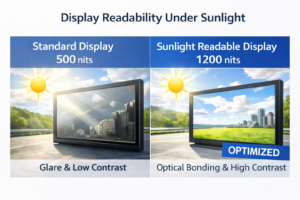
Introduction Display visibility is a critical design parameter in industrial equipment. Operators rely on graphical interfaces …
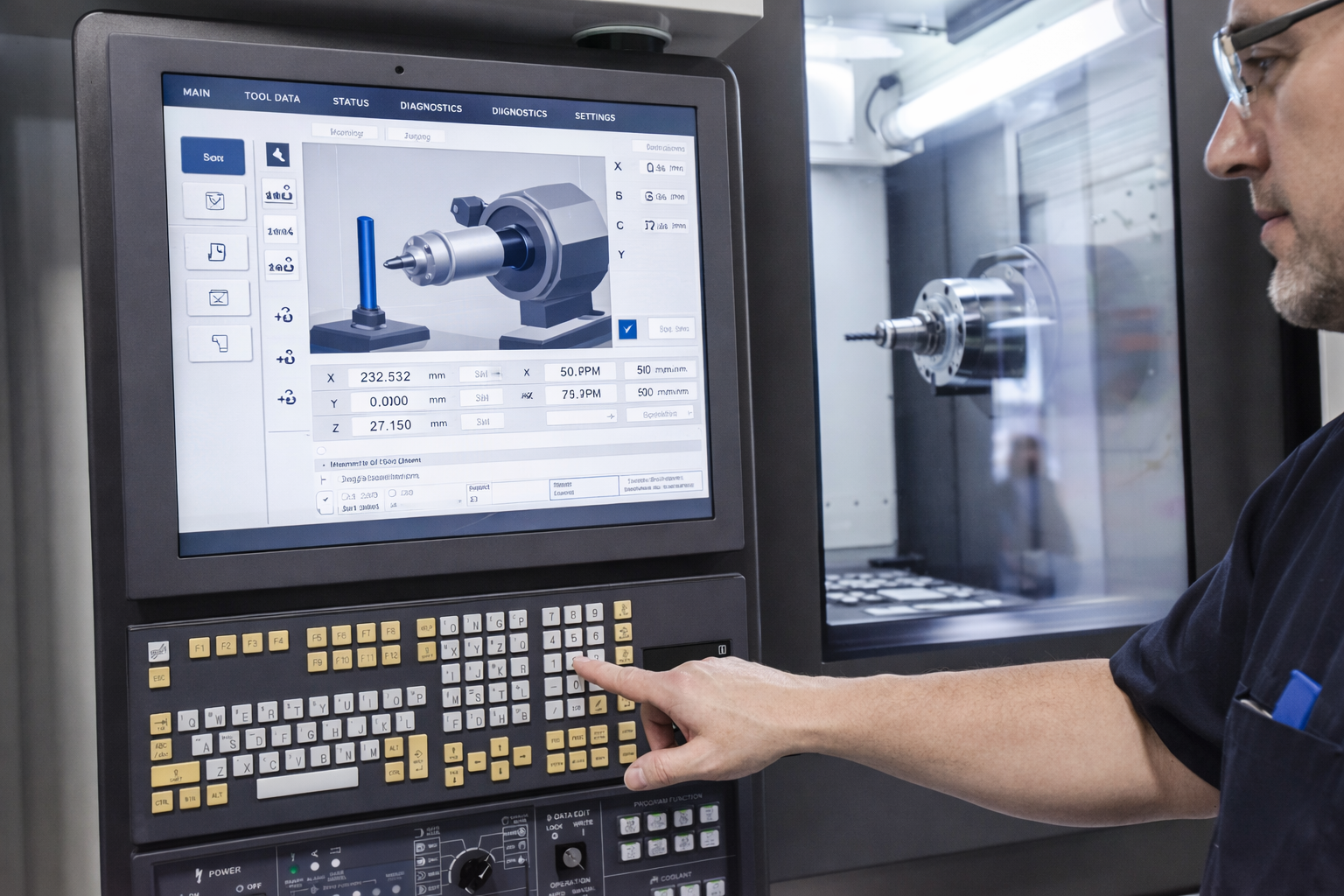
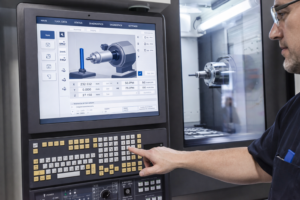
Modern CNC equipment relies on digital human–machine interfaces (HMI) to support machine operation, diagnostics, and process monitoring. The CNC machine display serves as the primary visual interface between the operator and the CNC control system.
Operators use the display to review machining programs, monitor tool positions, adjust spindle speed and feed parameters, and respond to system alarms generated by the CNC controller. In many machines, the display also supports setup procedures, tool management, and production monitoring.
Unlike consumer displays, a CNC machine display must operate reliably in demanding industrial environments. Machine tools generate coolant spray, oil mist, metal particles, and continuous vibration. Displays integrated into CNC equipment must therefore maintain stable visibility and reliable operation under these conditions.
For OEM equipment manufacturers and system integrators, the display subsystem must also integrate with the broader machine control architecture. Mechanical integration, electrical interface compatibility, and long-term component availability are important design considerations.
A CNC machine display is an industrial display module installed in the operator control panel of CNC equipment. It presents machine status information, machining parameters, alarms, and program execution data generated by the CNC controller.
In modern CNC systems, the display often includes a touch interface that allows operators to interact directly with HMI software used for machine setup, monitoring, and diagnostics.
A CNC machine display allows operators to monitor machine status and interact with the CNC control system.
Typical information shown on the display includes:
Most CNC displays are integrated into the machine’s operator control panel. In many modern systems, the display includes touch functionality that allows operators to interact directly with graphical HMI software.
Several display architectures are commonly used.
Many CNC machines use integrated display modules installed directly into the control panel. These displays are typically combined with industrial touch screens that allow operators to navigate machine menus, adjust parameters, and manage machining programs.
In some machine designs, the display is separated from the computing hardware. The display operates as an industrial monitor connected to a CNC controller or industrial computer using standard video interfaces.
This architecture allows the display and computing hardware to be replaced independently during maintenance.
Some CNC machines integrate both computing hardware and the display into a panel PC. The panel PC runs HMI software and communicates with the CNC controller through industrial communication protocols.
This configuration can simplify system wiring and reduce the number of components installed in the operator panel.
Industrial displays used in CNC equipment rely on several technologies that enable reliable operation in factory environments.
Most CNC machine displays use TFT LCD panels designed for industrial applications.
Compared with consumer displays, industrial LCD panels typically provide:
Display sizes used in CNC equipment commonly range from 10 to 21 inches depending on machine interface complexity.
Brightness levels between 300 and 1000 nits are commonly used to maintain visibility in factory lighting conditions.
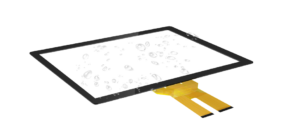
Touch functionality is widely used in modern machine control interfaces.
Two touch technologies are commonly used.
Projected Capacitive Touch (PCAP)
Provides high optical clarity and supports multi-touch interaction. PCAP panels typically use chemically strengthened glass surfaces that resist wear and impact.
Resistive Touch Technology
Allows operation with gloves or stylus input and is less sensitive to water droplets or surface contamination. It is still used in machining environments where coolant exposure is common.
Optical bonding is frequently applied to industrial displays to improve readability and durability.
In this process, the protective glass layer is bonded directly to the LCD panel using a transparent adhesive layer.
Benefits include:
These characteristics are particularly useful in environments with vibration and temperature variations.
A CNC machine display module typically consists of multiple integrated layers designed to protect the LCD panel and support touch interaction.
A typical structure includes:
This layered design improves mechanical durability and display visibility in machining environments.
CNC machine displays must provide stable visual performance during continuous machine operation.
Operator panels are often mounted at fixed angles on the machine frame. Displays with wide viewing angles help maintain visibility from different operator positions.
Industrial LCD panels based on IPS technology are commonly used for this reason.
Machining interfaces often display detailed graphical information such as tool paths and machine coordinates. Adequate contrast helps ensure these details remain visible.
Industrial LED backlights typically provide 30,000 to 70,000 hours of operating life. Proper thermal management helps maintain stable brightness performance over time.
Selecting a reliable CNC machine display requires careful evaluation of environmental conditions and system integration requirements.
Machining environments expose equipment to coolant spray, oil mist, and metal particles. Displays installed in machine control panels are therefore designed with sealed front surfaces.
Protection ratings such as IP65 front sealing are commonly used.
CNC machining generates continuous vibration. Displays mounted on machine panels must tolerate vibration without connector failure or internal component fatigue.
Servo drives and power electronics in CNC machines generate electromagnetic noise. Display electronics must incorporate shielding, filtered power inputs, and proper grounding structures.
Displays installed in sealed panels must dissipate heat from LCD backlights and electronics.
Thermal management strategies include:
Machine tools often remain in operation for more than 10 years. Industrial display suppliers typically provide extended lifecycle support and compatible replacement panels.
Display modules must integrate with the machine control architecture.
Common video interfaces include:
Touch controllers are typically connected through USB or serial interfaces.
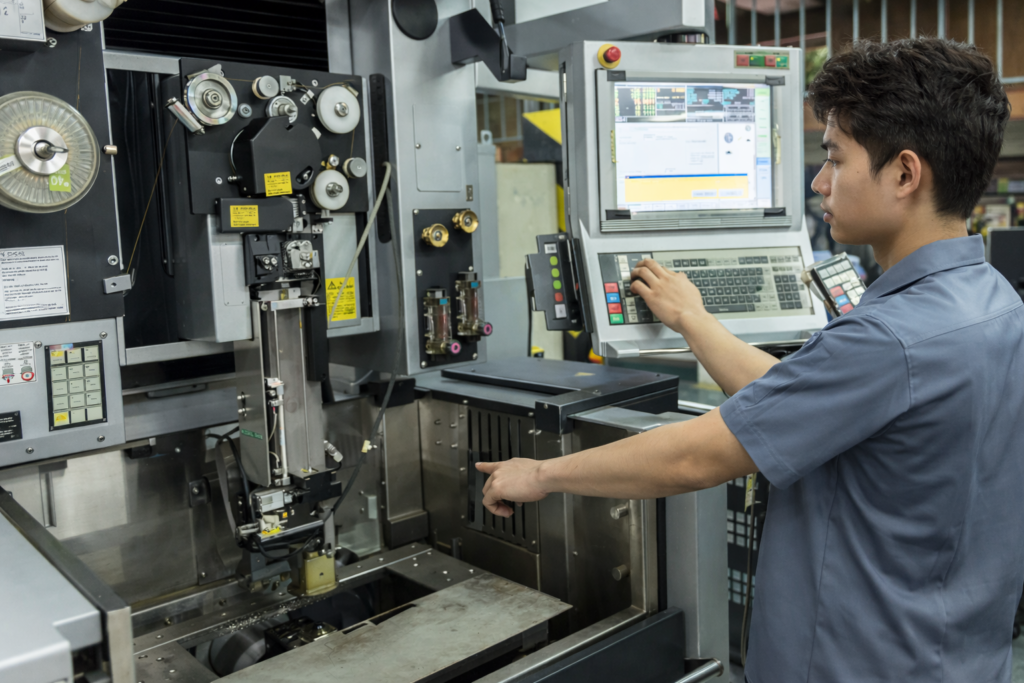
CNC machine displays are primarily used in machine tool operator interfaces.
Displays allow operators to monitor tool paths, machine coordinates, and machining program status.
Turning machines use displays to show spindle parameters, tool offsets, and machining cycle information.
Grinding machines require precise monitoring of machining parameters through the operator display.
Automation systems combining CNC machines and robotic handling equipment use displays for system diagnostics and production monitoring.
A dedicated CNC machine display is appropriate when equipment requires a graphical operator interface for machine monitoring and control.
Machines with complex machining programs or multi-axis motion particularly benefit from larger displays with high readability.
Touch-enabled interfaces can simplify interaction with modern HMI software.
Some equipment may not require a full graphical display.
Simple machines may use:
In automated production lines, machines may also be monitored remotely from centralized control systems.
The CNC machine display is a key component of the human–machine interface in modern CNC equipment. It enables operators to monitor machining processes, review machine status, and interact with control software.
Designing a reliable display subsystem requires attention to environmental protection, vibration resistance, electrical noise tolerance, and long lifecycle availability.
For OEM manufacturers and system integrators, the display should be evaluated as part of the overall control architecture.
What size display is commonly used in CNC machines?
Most CNC operator panels use displays between 10 and 21 inches.
Are touch screens reliable in machining environments?
Industrial touch displays use sealed surfaces and reinforced glass designed to tolerate coolant, dust, and vibration.
What protection rating is recommended for CNC displays?
Front protection ratings such as IP65 are commonly used.
Can a panel PC be used as a CNC machine interface?
Yes. A panel PC integrates computing hardware and display into one unit and runs HMI software that communicates with the CNC controller.
What brightness is recommended for CNC machine displays?
Brightness levels between 400 and 800 nits are commonly used in factory environments.
Introduction Display visibility is a critical design parameter in industrial equipment. Operators rely on graphical interfaces …
Introduction Industrial equipment increasingly relies on graphical interfaces for monitoring, diagnostics, and machine control. Modern automation …
Introduction Modern CNC equipment relies on digital human–machine interfaces (HMI) to support machine operation, diagnostics, and …
Introduction Industrial equipment increasingly relies on graphical interfaces for machine control, diagnostics, and configuration. As human–machine …
Send your application details. We respond with configuration direction and next steps.