Industrial Displays
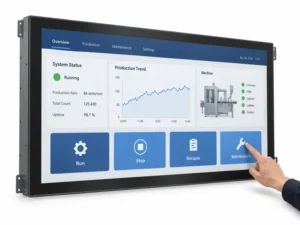
How to Choose a 32-Inch Touch Screen Monitor for OEM Equipment
A 32-inch touch screen monitor makes sense when users need a large interactive area and the equipment has room to position it…
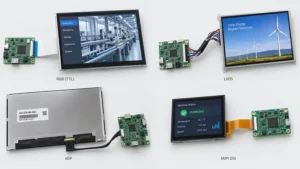
LCD Interface Selection: RGB, LVDS, eDP and MIPI DSI
An LCD can have the right size, brightness and resolution and still be incompatible with your mainboard. Even a matching connector does…
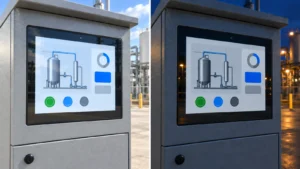
Automatic Dimming in Industrial Displays: How It Works and Saves Power
A kiosk screen that looks right at midday can feel uncomfortably bright after dark. Leaving it at maximum brightness also uses power…
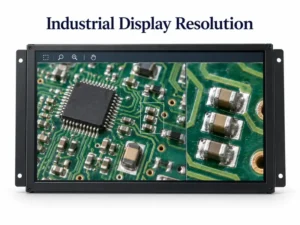
Industrial Display Resolution: When Is Higher Resolution Worth It?
A higher-resolution LCD is worth specifying when operators need image detail or workspace that the existing display cannot provide. It is less…
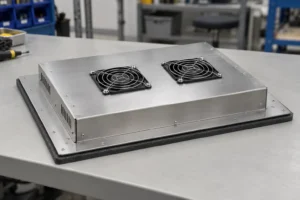
Industrial Display Thermal Management: Fan Cooling, Airflow and Validation
A display can run normally on a workbench and still run too hot inside a machine. A cabinet wall restricts the rear…
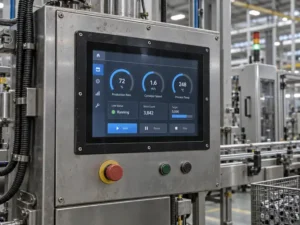
What Makes an Industrial Monitor Rugged?
An industrial monitor is not rugged simply because it has a metal housing or a thick front glass. It is rugged when…
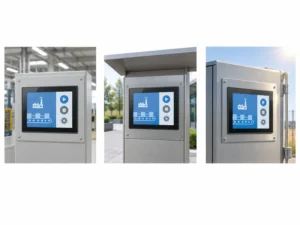
Industrial Display Brightness: How Many Nits Does Your Equipment Need?
For an industrial display, choose brightness around the light reaching the installed screen. A control panel inside a factory may work well…
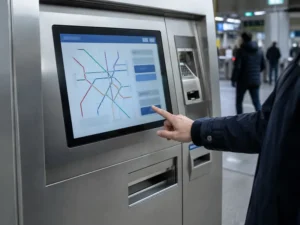
Touch Monitor for Ticket Vending Machines: What TVM OEMs Should Specify
A touch monitor is the main passenger interface in a ticket vending machine (TVM). It presents ticket options, accepts selections and shows…
Custom Sunlight Readable Monitor: OEM Design and Sampling Process
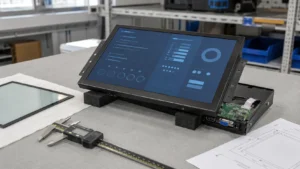
A custom sunlight readable monitor must fit both the equipment and its operating environment. Brightness matters, but so do the cover glass,…
How to Choose an Industrial Touchscreen Monitor for Your Application
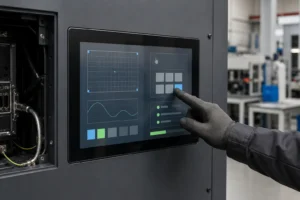
There is no single “best” industrial touchscreen monitor. A configuration that works well on an indoor control panel may be unsuitable for…