Industrial Display Brightness (Nits) Guide for HMIs and Outdoor Equipment
Introduction Display visibility is a critical design parameter in industrial equipment. Operators rely on graphical interfaces …
Display visibility is a critical design parameter in industrial equipment. Operators rely on graphical interfaces to monitor system status, adjust parameters, and respond to alarms. If the display cannot be clearly read in the operating environment, usability and operational efficiency can be affected.
Industrial systems operate under a wide range of lighting conditions. Equipment may be installed in indoor factory environments with strong overhead lighting, outdoor infrastructure exposed to direct sunlight, or semi-outdoor locations such as transportation terminals and public kiosks.
For engineers designing HMIs and embedded control interfaces, selecting the appropriate industrial display brightness is an important step in display specification. Insufficient brightness reduces readability, while excessive brightness increases power consumption, thermal load, and system cost.
Brightness alone does not determine display visibility. Contrast ratio, optical bonding, surface treatments, and enclosure design all influence how a display performs in real deployment conditions.
Engineers evaluating display architectures may find additional context in the industrial display engineering overview available in the Industrial Display Monitor Guide for Industrial Equipment.
Industrial display brightness refers to the luminance output of a display panel, measured in nits (cd/m²). Higher brightness improves screen readability in environments with strong ambient light such as factory floors, outdoor equipment, kiosks, and EV charging stations.
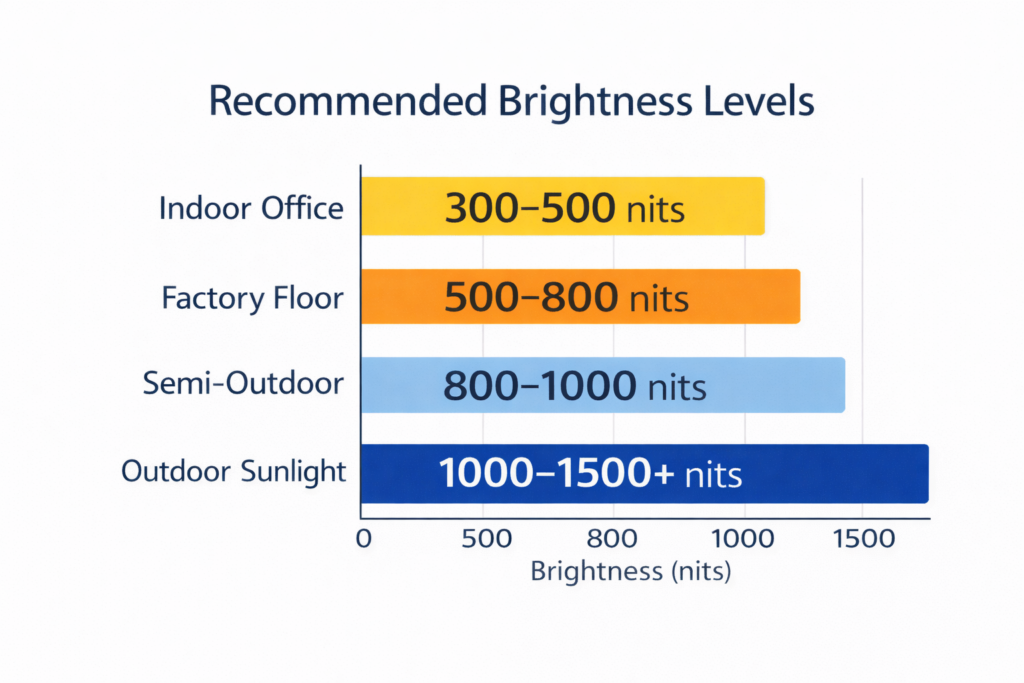
Industrial systems typically use displays between 500 and 1500+ nits, depending on environmental lighting conditions.
Typical brightness ranges used in industrial systems include:
| Brightness | Typical Environment |
|---|---|
| 250–350 nits | Office or indoor control room |
| 400–700 nits | Indoor industrial equipment |
| 800–1000 nits | Bright factory lighting or semi-outdoor installations |
| 1000–1500+ nits | Outdoor sunlight environments |
Many industrial interfaces implemented through industrial touch screen solutions use brightness levels higher than consumer displays to maintain readability in demanding environments.
Brightness requirements are primarily determined by the ambient lighting conditions in the installation environment.
Ambient light is typically measured in lux, while display brightness is measured in nits. As ambient light increases, the display must produce higher luminance to maintain acceptable contrast.
The table below summarizes common engineering guidelines used during display selection.
| Environment | Typical Ambient Light | Recommended Display Brightness |
|---|---|---|
| Indoor control room | 300–500 lux | 300–500 nits |
| Factory floor | 500–1000 lux | 500–800 nits |
| Semi-outdoor equipment | 1000–5000 lux | 800–1000 nits |
| Outdoor sunlight | 10,000+ lux | 1000–1500+ nits |
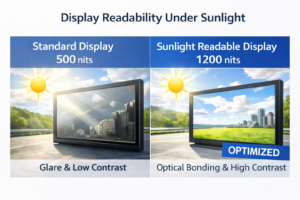
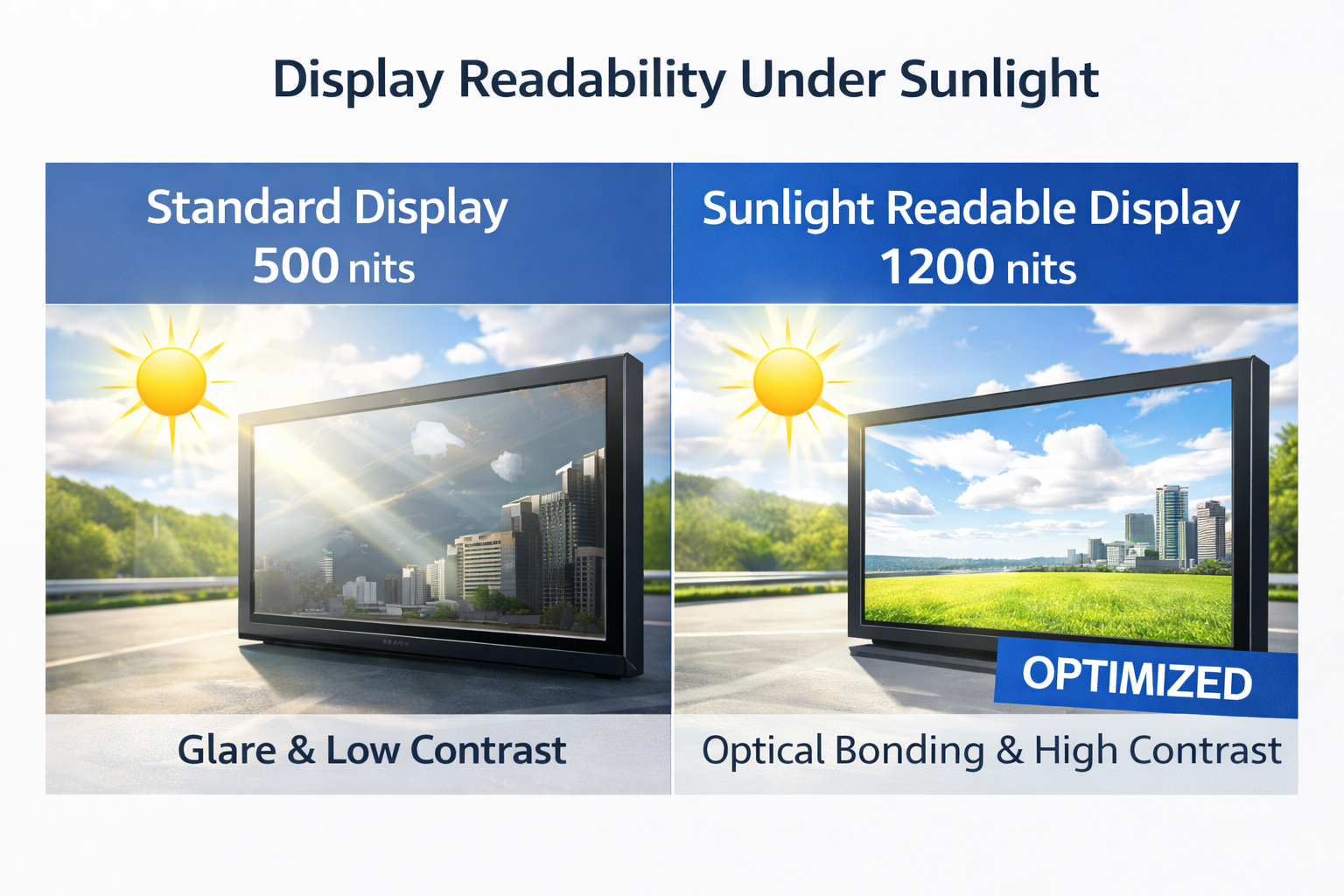
In outdoor installations, sunlight can significantly reduce perceived display contrast. For this reason, sunlight-readable displays typically combine high brightness with optical bonding and anti-reflective glass.
In outdoor environments, display visibility is strongly influenced by direct sunlight and reflections on the display surface. Even high-brightness panels can become difficult to read if reflection control is not properly addressed.
A sunlight readable industrial display typically combines several design elements:
These technologies reduce glare and improve perceived contrast under strong ambient lighting.
Sunlight-readable displays are commonly used in:
When designing outdoor equipment interfaces, brightness and reflection control should be evaluated together rather than independently.
Several hardware and optical technologies determine how effectively an industrial display performs in high-brightness environments.
Most industrial LCD panels rely on LED backlight systems. Increasing brightness typically requires higher luminous output from the LED array.
High-brightness designs may include:
Uniform light distribution is necessary to prevent visible brightness variation across the screen.
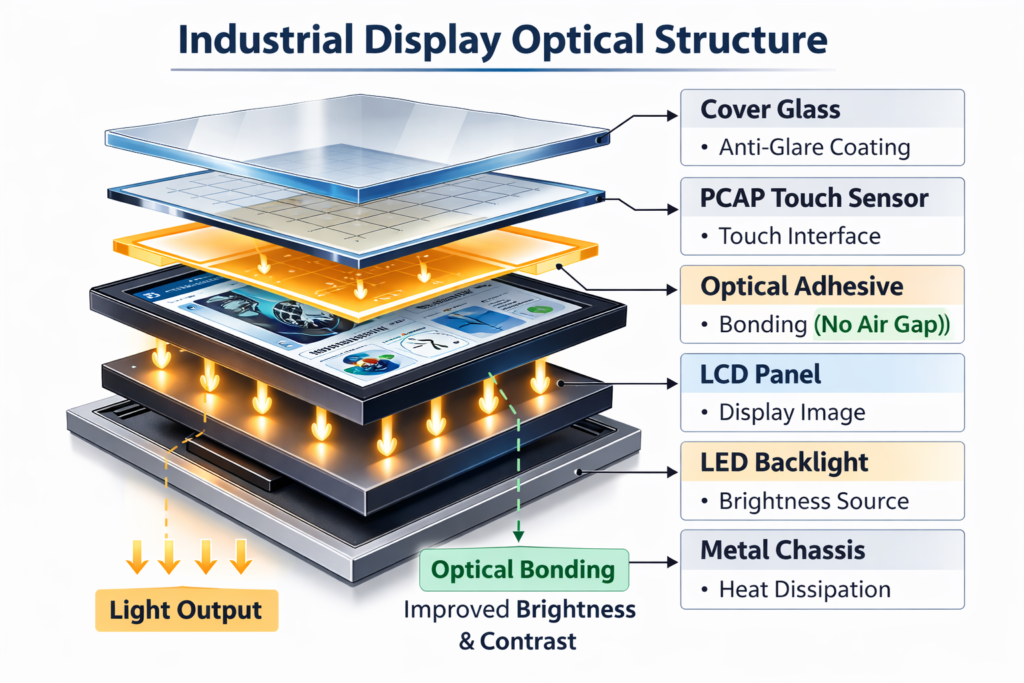
Optical bonding improves visibility by eliminating the air gap between the LCD panel and the protective cover glass or touch sensor.
A transparent adhesive layer bonds the display components together, reducing internal reflections.
Benefits include:
Optical bonding is commonly used in outdoor industrial displays and transportation equipment.
External reflections can significantly reduce effective brightness.
Industrial displays often incorporate surface treatments designed to control reflections, including:
These treatments reduce glare from sunlight and strong overhead lighting.
Many industrial HMIs use projected capacitive (PCAP) touch technology.
Integrating a touch sensor introduces additional layers in the display stack. Glass thickness, sensor materials, and adhesives all influence light transmission and reflection characteristics.
Engineers designing industrial touch screen solutions must balance touch durability with optical performance.
Selecting display brightness requires evaluating several system-level factors.
The installation environment is the most important factor.
Typical examples include:
Displays installed outdoors typically require brightness levels above 1000 nits combined with sunlight-readable design techniques.
Higher brightness requires increased backlight power, which generates additional heat.
Excessive temperature can accelerate LED degradation and shorten display lifespan.
Industrial displays typically incorporate:
Thermal management becomes particularly important in sealed outdoor enclosures.
Backlight power consumption increases with brightness.
For systems with limited power availability — such as solar-assisted infrastructure or battery-powered devices — brightness must be balanced against energy constraints.
Adaptive brightness control using ambient light sensors is sometimes implemented.
Industrial equipment may operate continuously for many years.
LED backlights gradually lose brightness over time. Engineers often specify displays with higher initial brightness to compensate for long-term degradation.
Rugged industrial touch monitors designed for industrial environments typically include long-life LED backlight systems.
Industrial displays are rarely standalone components. They are typically integrated with embedded computing platforms or control electronics.
In many systems, displays are connected to panel PC based HMI systems, allowing software control of brightness, power management, and display timing.
For specialized equipment designs, display assemblies may also be engineered through custom OEM touch solutions to match enclosure geometry and sealing requirements.
Industrial display brightness requirements vary depending on deployment conditions.
EV charging systems are typically installed outdoors and must remain readable under direct sunlight. These systems often use displays between 1000 and 1500 nits, combined with optical bonding and anti-reflective glass.
Manufacturing equipment interfaces are generally installed indoors but may operate under strong factory lighting.
Brightness levels of 500–800 nits are commonly used for these HMIs.
Self-service kiosks in transportation hubs or public infrastructure environments must operate under mixed lighting conditions while supporting durable touch interfaces.
Construction machinery such as excavators and loaders frequently operate in direct sunlight. Displays used in these environments typically require 1000+ nits brightness combined with ruggedized touch interfaces.
Marine equipment operates under strong sunlight reflections from water surfaces. Marine displays therefore rely on high brightness, optical bonding, and anti-reflective coatings to maintain readability.
Higher brightness displays are suitable when equipment operates in environments with significant ambient light.
Typical situations include:
In these environments, brightness improvements combined with reflection control significantly improve usability.
Industrial display brightness is a key factor in determining the usability of equipment interfaces. However, brightness alone does not guarantee readability.
Effective industrial display design requires balancing brightness with optical stack design, reflection control, contrast performance, and environmental conditions.
By evaluating brightness as part of the overall industrial HMI architecture, engineers can design display systems that remain readable and reliable throughout the operational life of the equipment.
Outdoor equipment typically requires displays between 1000 and 1500+ nits, combined with optical bonding and anti-reflective surfaces.
No. Display readability also depends on contrast ratio, reflection control, and optical stack design.
A sunlight-readable display typically provides 1000 nits or higher brightness combined with optical bonding and anti-reflective glass.
Higher brightness increases LED backlight load, which can accelerate brightness degradation over time.
Introduction Display visibility is a critical design parameter in industrial equipment. Operators rely on graphical interfaces …

Introduction Industrial equipment increasingly relies on graphical interfaces for monitoring, diagnostics, and machine control. Modern automation …
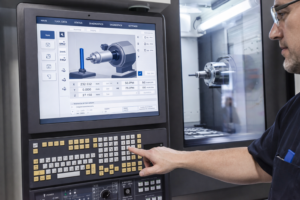
Introduction Modern CNC equipment relies on digital human–machine interfaces (HMI) to support machine operation, diagnostics, and …
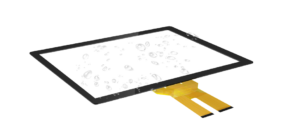
Introduction Industrial equipment increasingly relies on graphical interfaces for machine control, diagnostics, and configuration. As human–machine …
Send your application details. We respond with configuration direction and next steps.