How to Choose the Right Operating System for Industrial Panel PCs
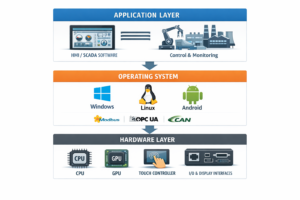
Introduction Industrial panel PCs are a core component of modern HMI (Human-Machine Interface) systems, enabling visualization, …
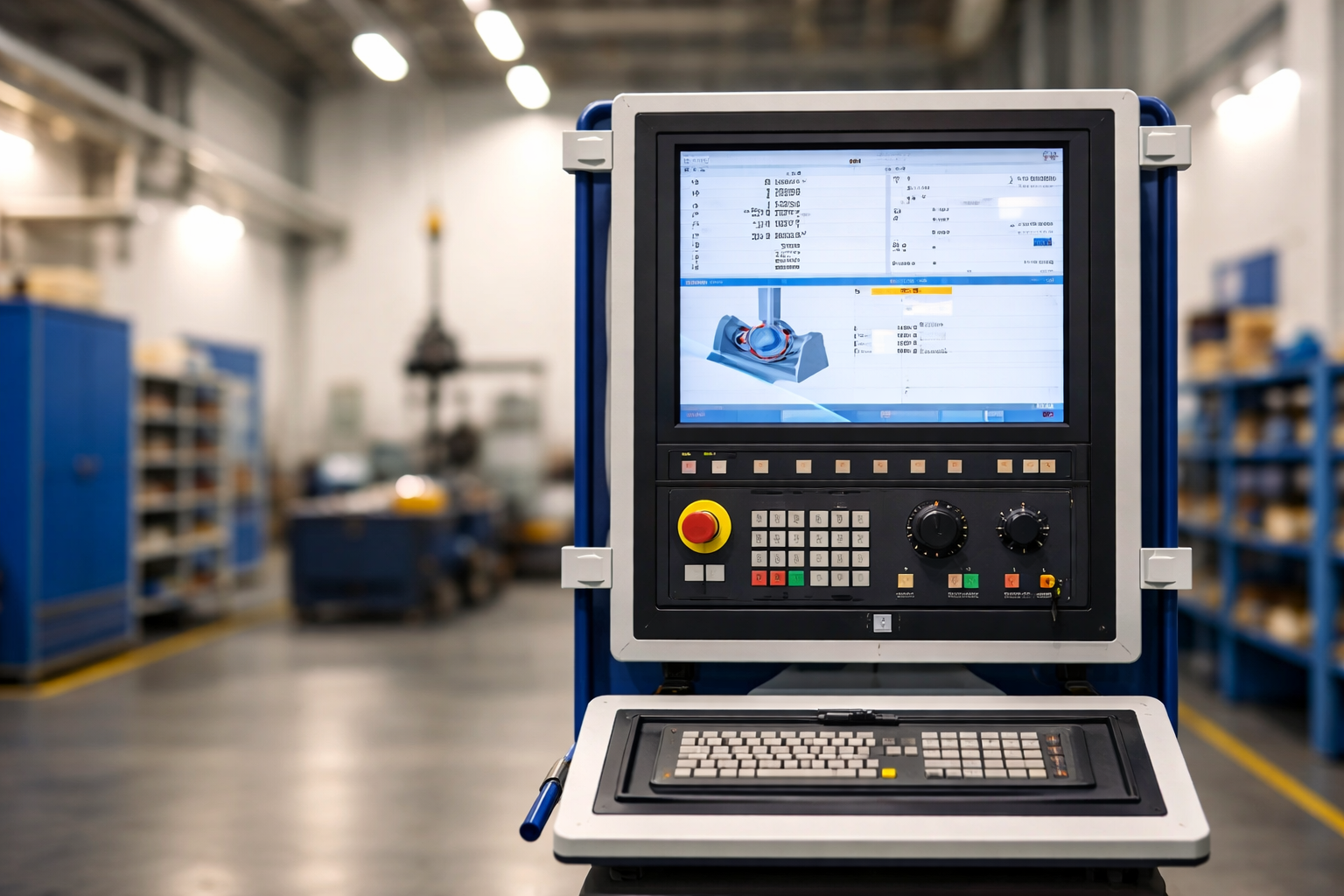
Industrial equipment increasingly integrates computing and human-machine interface (HMI) functions into unified platforms. Industrial panel PCs are widely used to simplify system architecture while maintaining reliability in constrained and harsh environments.
Selecting an industrial panel PC manufacturer is not only a sourcing decision—it directly impacts thermal performance, display reliability, and long-term system maintainability.
Within a complete system, panel PCs act as the interface layer between control systems and operators.
For a broader system-level understanding of their role industrial Panel PC Complete Guide ,click here:
An industrial panel PC is an integrated hardware platform combining:
These systems are typically deployed as front-end operator interfaces in control panels, equipment enclosures, or kiosks.
Compared to modular HMI architectures, panel PCs:
However, integration also concentrates thermal, electrical, and mechanical constraints into a single enclosure.
Display performance depends heavily on optical stack integration rather than panel specifications alone.
Optical bonding eliminates the air gap between LCD and cover glass, resulting in:
Key process variables:
For outdoor systems, brightness levels of 800–1500 nits are typical. This increases thermal load and can raise internal temperature by 10–20°C.
Projected capacitive (PCAP) touch is widely used due to durability and multi-touch capability.
Stable operation in industrial environments depends on:
Common failure mode:
Thicker cover glass (≥3 mm) used for impact resistance reduces signal strength and requires sensitivity tuning.
Industrial panel PCs typically use ARM or x86 architectures depending on application requirements.
Key constraints:
Platform stability is prioritized over performance upgrades. Chipset changes must be controlled to maintain software compatibility.
Thermal design is a primary differentiator between manufacturers.
Typical heat path:
CPU → heat spreader → TIM → chassis → ambient
System reliability depends on minimizing thermal resistance across this path.
Typical characteristics:
Mechanical design must also consider:
Panel PCs must maintain performance under:
Outdoor deployments require attention to long-term material stability.
Display subsystems degrade due to thermal and optical stress.
Typical parameters:
Optical bonding reduces condensation risk but requires controlled processes to avoid long-term delamination.
Panel PCs must align with system-level requirements:
Mismatch between enclosure design and panel PC dimensions is a common integration issue.
Industrial deployments require controlled hardware over extended periods.
Key requirements:
Uncontrolled component changes are a common source of field inconsistency.
Insufficient heat dissipation can lead to CPU throttling or instability, especially in high-brightness systems.
Poor grounding and shielding result in intermittent touch issues in environments with motor drives or inverters.
Thermal cycling and humidity exposure can cause edge delamination if bonding processes are not well controlled.
Panel PCs are suitable when:
Industrial panel PCs are a critical interface component in modern equipment systems. The selection of an industrial panel PC manufacturer directly affects system reliability, integration complexity, and lifecycle stability.
A structured evaluation based on thermal design, display integration, and lifecycle control helps reduce deployment risk and ensures alignment with real operating conditions.
Q1: What is a typical internal temperature rise in panel PCs?
15–25°C above ambient in sealed fanless systems.
Q2: Why is optical bonding important for outdoor use?
It improves readability and reduces condensation, but requires controlled processes to avoid delamination.
Q3: What lifecycle is expected for industrial panel PCs?
Typically 5–10 years with controlled component sourcing.
Q4: What causes touch instability in industrial environments?
Primarily EMI and improper grounding design.
Q5: What is a key risk when selecting a manufacturer?
Uncontrolled component changes across production batches.
If you are evaluating panel PC integration for a specific environment (thermal, outdoor, EMI), engineering input during early design stages can help identify constraints and reduce redesign cycles.
Introduction Industrial panel PCs are a core component of modern HMI (Human-Machine Interface) systems, enabling visualization, …

Introduction In industrial system design, panel PC I/O ports are a primary factor in determining how …
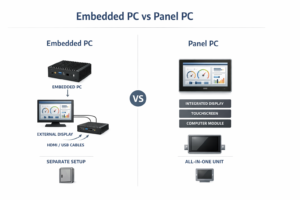
Introduction In industrial system design, selecting between an embedded PC and a panel PC is primarily …
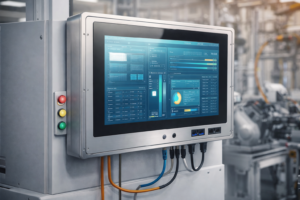
Introduction In OEM equipment development, selecting an industrial panel PC supplier is not simply a purchasing …
Send your application details. We respond with configuration direction and next steps.