Industrial Display Supplier Buyer Guide for OEM Equipment

Introduction Human-machine interfaces (HMIs) are now standard components in modern industrial equipment. Displays allow operators to …
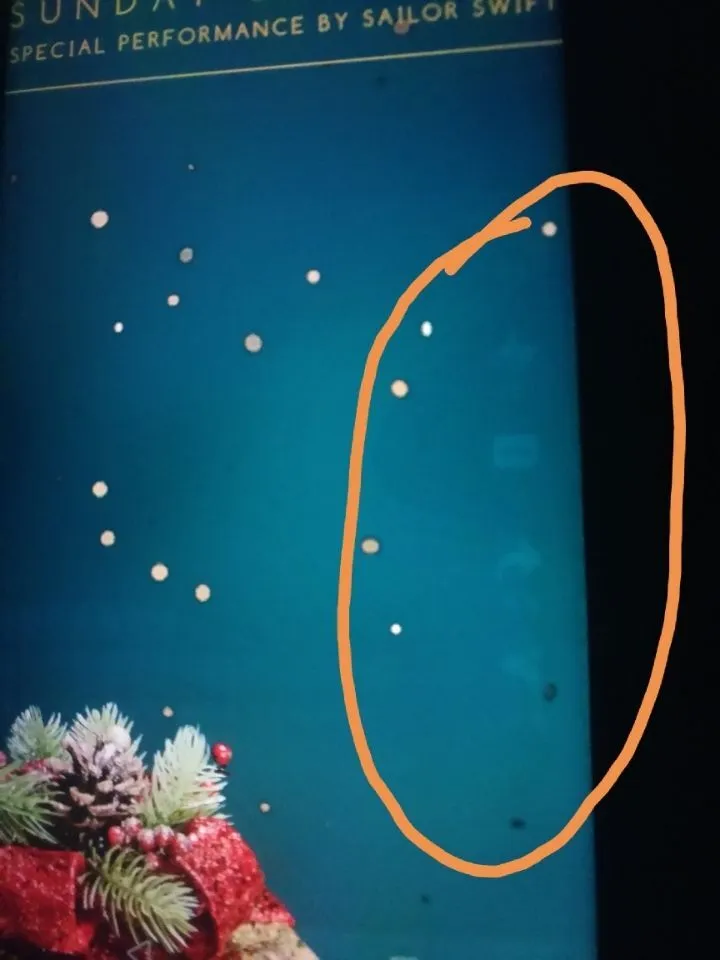
Image retention, commonly referred to as ghosting, describes a condition where faint traces of previously displayed content remain visible after the image has changed.
In industrial TFT LCD applications, ghosting is typically not a product defect, but a display behavior resulting from the combined effect of panel characteristics, driving method, operating environment, and application usage pattern.
Understanding this distinction is critical when evaluating display suitability for long-term or mission-critical deployments.
From an engineering standpoint, image retention observed in TFT LCDs can originate from different mechanisms. Identifying the type helps determine whether the risk can be reduced through selection or integration decisions.
Temporary Image Retention
Driving or Bias-Related Retention
Long-Term Degradation Related Retention
Not all contributing factors are equally controllable. From a system design perspective, it is important to distinguish between design-controllable parameters and application-driven constraints.
| Factor | Engineering Control | Notes |
|---|---|---|
| LCD response time | High | Evaluated during panel selection |
| Driver board matching | High | Electrical compatibility is critical |
| Static UI ratio | Medium | Strongly tied to application design |
| Operating temperature | Medium | System-level thermal management |
| Panel aging | Low | Inherent lifecycle behavior |
Ghosting risk is rarely attributable to a single parameter; it is usually the result of multiple marginal conditions stacking together.
Ghosting likelihood varies significantly depending on how the display is used in the field.
Understanding where an application falls within this spectrum is often more important than focusing on panel specifications alone.
Rather than relying on post-deployment mitigation, ghosting risk should be evaluated during the selection and integration phase.
Key considerations include:
No TFT LCD can guarantee zero image retention under all conditions; the goal is risk control, not absolute elimination.
In industrial projects, image retention is most often observed when application behavior, electrical driving, and thermal conditions are evaluated independently rather than as a system.
During display selection and integration reviews, these factors are typically assessed together to determine long-term suitability and operational risk—especially for 24/7 HMI, kiosk, and unattended systems.
A technical review is recommended if your application involves:
Not sure if your application is suitable for long-term static display operation?
Share your operating conditions, UI behavior, and environment details with our engineering team for a feasibility and risk review.
This content is intended as an engineering reference for display behavior evaluation and should be considered in the context of complete system design.
Introduction Human-machine interfaces (HMIs) are now standard components in modern industrial equipment. Displays allow operators to …
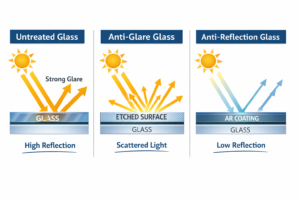
Introduction Industrial displays are frequently deployed in environments where lighting conditions are difficult to control. Equipment …
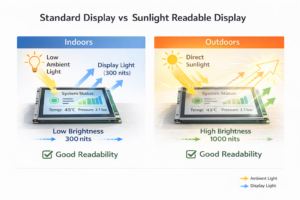
Introduction Displays are a critical interface component in many types of industrial equipment. They provide system …
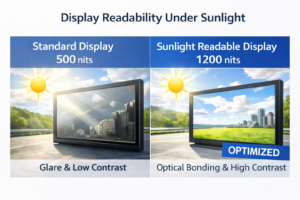
Introduction Display visibility is a critical design parameter in industrial equipment. Operators rely on graphical interfaces …
Send your application details. We respond with configuration direction and next steps.