What Is an Industrial Panel PC? Components, Types and Applications
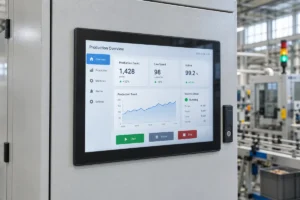
An industrial panel PC is a computer with a built-in display, usually a touchscreen, designed for …
Eagle Touch Engineering Team
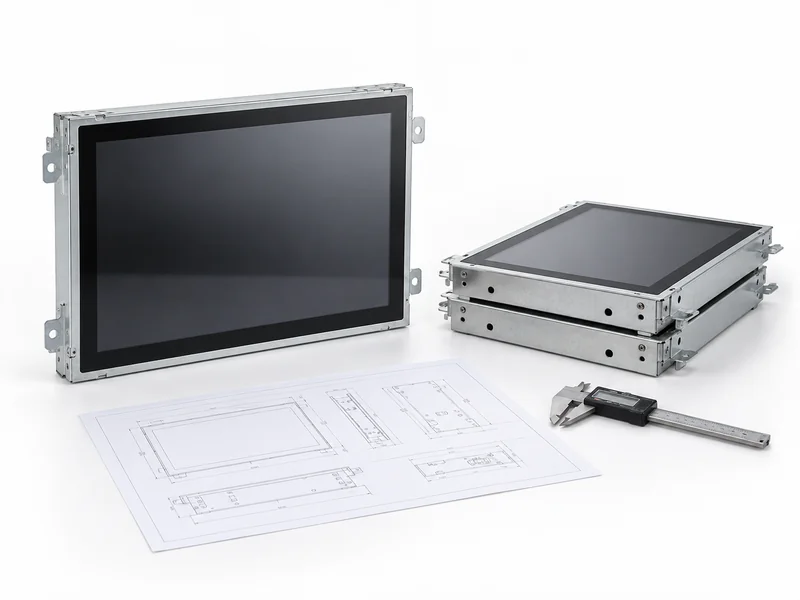
Choose an industrial display supplier that fits your application, order volume and development schedule. Confirm sample and minimum order quantity (MOQ) terms early, then check engineering capability, quotation details and production controls before committing to a batch order.
A supplier may have a suitable display but require more units than your project can absorb. Another may accept a small order but offer limited help when the touch response, mounting or host connection needs adjustment. Both issues belong in the initial supplier discussion.
Start by defining the delivered product. An LCD module, a touch display assembly and a complete industrial monitor leave different amounts of integration work to your team. A panel PC also includes computing hardware and introduces operating-system and software-support questions.
If you need a monitor with video input, USB touch and a finished mounting structure, review the supplier’s industrial display monitor range before discussing a new design.
Then check the fit in four areas:
Ask who handles design, assembly, testing and technical support, including any outsourced work. A clear division of responsibility helps you identify who will resolve an integration problem.
Describe the actual constraint. “We need 30 monitors for a pilot installation, with connectors accessible from below” gives a supplier more to assess than “Please send your best industrial display price.”
Minimum order quantity should be confirmed for each project stage. Permission to buy one sample does not establish the minimum quantity for subsequent orders.
| Stage | Questions to ask |
|---|---|
| Engineering samples | Can we purchase the quantity needed for validation? Will the sample use the intended production configuration? |
| Pilot production | Can you supply our initial deployment quantity? What price and lead time apply? |
| Repeat production | Is MOQ calculated per model, configuration, order or scheduled release? |
| Custom components | Do printed glass, metalwork or other dedicated parts have separate minimum quantities or setup charges? |
| Service replacements | Can small replacement orders be supplied later, and under what conditions? |
A low-volume project may be practical with a standard monitor or a limited modification. Dedicated materials can change the economics even when final assembly quantities are small.
If a component minimum exceeds your first order, ask whether the supplier offers a paid material commitment, staged deliveries or a less customized alternative. Agree who owns unused materials, how long they will be held and what happens if the design changes.
Share both the first order quantity and a realistic forecast. Keep forecast demand separate from a firm purchasing commitment.
Use the proposed product as the basis for verification. A general presentation about quality provides little information about the display you intend to purchase.
| Area | Evidence to request | What to check |
|---|---|---|
| Mechanical integration | Dimensioned drawing and revision number | Mounting points, tolerances, depth and connector clearance |
| Electrical compatibility | Interface, power and touch documentation | Compatibility with your host, wiring and operating system |
| Environmental performance | Relevant test reports or an agreed validation plan | Tested model, configuration, conditions and acceptance criteria |
| Visual quality | Written inspection criteria | Pixel defects, scratches, contamination and bonding appearance |
| Traceability | Example serial or batch identification | How a delivered unit is connected to its production records |
Where protection ratings are required, check which assembly and installation the evidence covers. Ask the supplier to identify any differences between the tested configuration and your proposed version, and whether further validation is needed.
Technical replies also reveal how the supplier works. It should identify missing information, explain limitations and record unresolved items. For projects involving structural or optical changes, use the custom industrial display design guide to prepare the design discussion.
Two quotations for the same screen size may cover different products. Compare the agreed configuration line by line: LCD specification, touch assembly, cover glass, bonding, controller, enclosure and included accessories.
For example, one quotation may include an external power supply and cables while another covers the monitor alone. One may include optical bonding; another may use an air gap. These differences should be visible before comparing unit prices.
Request separate figures for:
Confirm quotation validity, payment milestones and what starts the lead-time clock: payment, drawing approval, sample approval or material availability. Ask whether the stated time covers production only or also transit.
Record exclusions and open requirements alongside the price. An unresolved specification can change the quotation after the project has already been budgeted.
Evaluate the sample in the intended equipment. Check mechanical fit, readability, touch behavior and operation with the actual host, power supply and cable arrangement. Include the conditions that matter to your application, such as representative gloves or repeated power cycling.
If the sample differs from the planned production version, document those differences and decide what must be checked again.
Before release, agree on the production reference:
Keep an identified reference sample where practical. A pilot batch can also help assess assembly consistency and incoming inspection before a larger deployment.
Sample approval should leave both parties with a clear written description of what future orders must deliver.
Ask what “long-term supply” means for the selected configuration. Discuss the current status of key components, how changes or discontinuations will be communicated, and how proposed replacements will be evaluated.
A replacement LCD with the same diagonal size may still require integration checks. Agree who reviews changes and who approves them before they enter repeat production.
For service support, confirm the warranty scope, return authorization process, freight responsibility and expected response and repair times. Establish what information is needed for fault analysis and whether replacement units or spare parts can be supplied while a case is investigated.
These arrangements are especially useful when your equipment is installed far from the supplier and removing a display requires a service visit.
The supplier should be able to confirm these points in writing:
If you are evaluating Eagle Touch for an OEM project, send your specification or installation drawing, application conditions, sample quantity, expected batch size and target date. Include any MOQ or budget constraints at the outset so they can be considered with the technical requirements.
Explore our custom touch display solutions to discuss a suitable starting configuration and the scope of sample evaluation.
An industrial panel PC is a computer with a built-in display, usually a touchscreen, designed for …
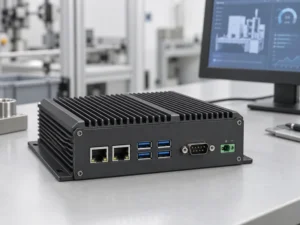
An embedded PC is a computer configured to work as part of a machine or larger …
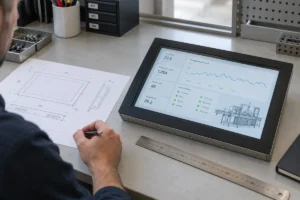
Start with the software the panel PC must run and the conditions it must fit. Then …
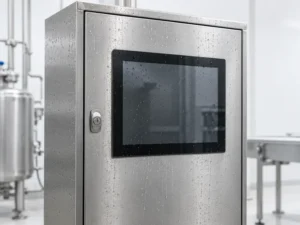
Choosing an industrial panel PC IP rating starts with two questions: what dust and water exposure …
Share your application, requirements, or current challenge. Our team will review the details and recommend a practical way forward.