Optical Bonding for Outdoor Industrial Displays: Performance and Design Considerations
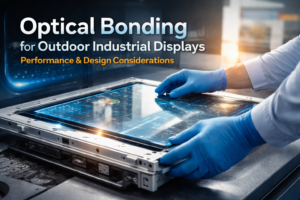
Introduction Outdoor industrial display systems operate under significantly different conditions compared to indoor environments. Typical design …
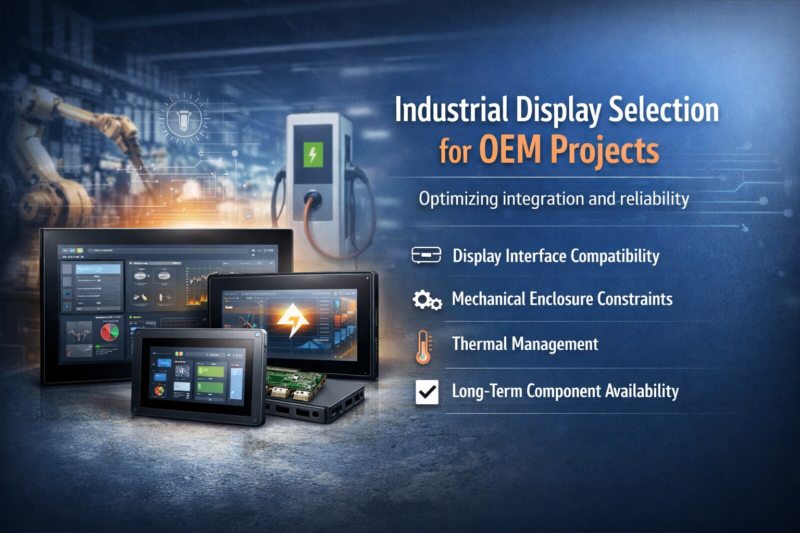
Selecting an industrial display is not only a specification decision. It directly affects system integration, reliability, and long-term maintenance.
For OEM equipment manufacturers, common engineering challenges include:
This guide provides a structured approach to evaluating industrial display manufacturers based on real engineering requirements and integration constraints.
For a broader overview of how displays are selected in real systems, including interface types, enclosure design, and mounting considerations, refer to our guide on industrial display monitors.
Industrial display manufacturers are a key component in OEM equipment design, where the display serves as the primary human-machine interface (HMI).
In applications such as factory automation, EV charging systems, transportation equipment, and smart infrastructure, industrial display systems must maintain stable operation under demanding conditions:
Supplier selection directly impacts:
Industrial display manufacturers design and produce display systems for industrial environments, focusing on durability, visibility, lifecycle stability, and system integration.
These displays are widely used in:
Industrial display manufacturers typically focus on:
Industrial display manufacturers can be grouped into four categories based on system architecture and integration model.
Representative vendors:
Characteristics:
Limitations:
Best suited for:
Single-vendor automation systems.
Representative vendors:
Characteristics:
Engineering implications:
Representative vendor:
Characteristics:
Best suited for:
Outdoor and heavy industrial environments.
Representative vendor:
Characteristics:
Engineering context:
Standard displays often cannot meet:
Custom development becomes necessary in these scenarios.
| Company | Core Strength | Typical Applications | Customization |
|---|---|---|---|
| Siemens | PLC ecosystem | Factory automation | Low |
| Beckhoff | Real-time control | Motion systems | Medium |
| Schneider Electric | Automation platform | Industrial control | Low |
| Omron | PLC-HMI integration | Equipment control | Low |
| Advantech | Open systems | OEM integration | Medium |
| Winmate | Rugged design | Outdoor systems | Medium |
| IEI Integration Corp | Modular systems | System integration | High |
| Axiomtek | Embedded flexibility | OEM platforms | High |
| Hope Industrial Systems | Harsh environments | Process industry | Low |
| EAGLE TOUCH | Custom OEM | Industrial equipment | High |
Standard displays may introduce:
These issues become critical in OEM integration scenarios.
Display selection should align with system-level constraints rather than being treated as an isolated component.
Key factors include:
Custom OEM display development enables:
If your project involves:
Standard industrial displays may not fully meet system requirements.
Engineering support typically includes:
Early-stage evaluation helps reduce integration risk and avoid redesign cycles.
Industrial display manufacturer selection should be based on:
Closed-system vendors such as Siemens and Beckhoff are suitable for integrated platforms.
Open vendors such as Advantech and Winmate provide flexibility for OEM integration.
When standard solutions cannot meet system constraints, custom display development becomes necessary.
Q1: What defines an industrial display manufacturer?
A supplier focused on durability, environmental resistance, and lifecycle stability.
Q2: When should open display vendors be used?
When flexibility and multi-vendor integration are required.
Q3: Why is high brightness important?
To ensure visibility in outdoor or high ambient light environments.
Q4: When is a custom display required?
When standard products cannot meet mechanical or integration requirements.
Introduction Outdoor industrial display systems operate under significantly different conditions compared to indoor environments. Typical design …
Industrial Display Selection for OEM Projects Selecting an industrial display is not only a specification decision. …
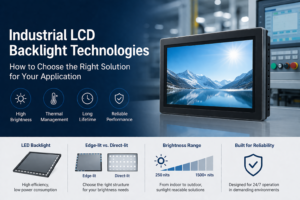
Introduction Industrial LCD backlight design directly determines display visibility, thermal performance, and long-term reliability. While LCD …
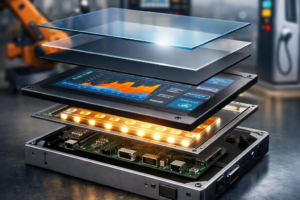
Introduction Industrial display structure directly affects system performance, reliability, and lifecycle cost in OEM equipment. Unlike …
Send your application details. We respond with configuration direction and next steps.