Industrial Panel PC Not Powering On: Causes, Troubleshooting, and Engineering Solutions
Introduction When an industrial panel PC is not powering on, the root cause typically falls into …
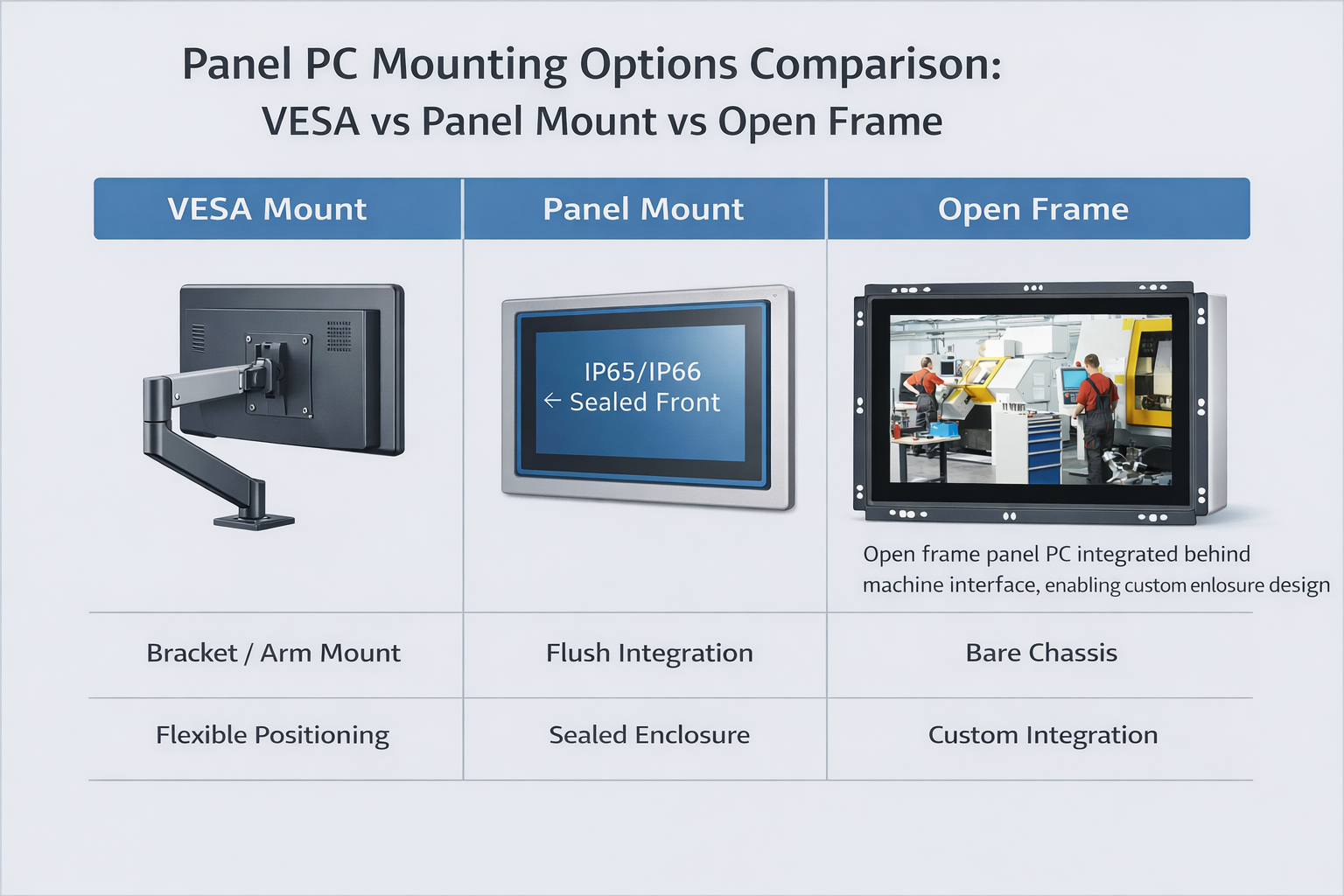
Panel PC mounting options are a key aspect of industrial panel PC system design.
Selecting the correct mounting method directly affects system reliability, thermal performance, and environmental protection.
The mounting method directly influences:
An incorrect selection can lead to overheating, sealing failure, vibration-related issues, and redesign during system integration.
This article explains VESA mount, panel mount, and open frame panel PCs, and provides guidance for selecting the appropriate method based on application and enclosure design requirements.
For early-stage selection:
In most industrial automation environments, panel mount is commonly selected due to its sealed interface and mechanical stability.
Panel PC mounting defines how the device is mechanically integrated into an enclosure, cabinet, or equipment structure.
The three primary methods are:
The mounting method affects enclosure structure, sealing strategy, cooling design, and long-term reliability.
| Feature | VESA Mount | Panel Mount | Open Frame |
|---|---|---|---|
| Installation | Simple | Moderate | Complex |
| Positioning | Adjustable | Fixed | Custom-defined |
| Environmental Protection | Low | High (front IP65/IP66) | Depends on enclosure |
| Thermal Behavior | Good airflow | Limited airflow in sealed systems | Fully customizable |
| Vibration Resistance | Moderate | High | Depends on integration |
| Typical Use | Adjustable terminals | Industrial HMIs | OEM embedded systems |
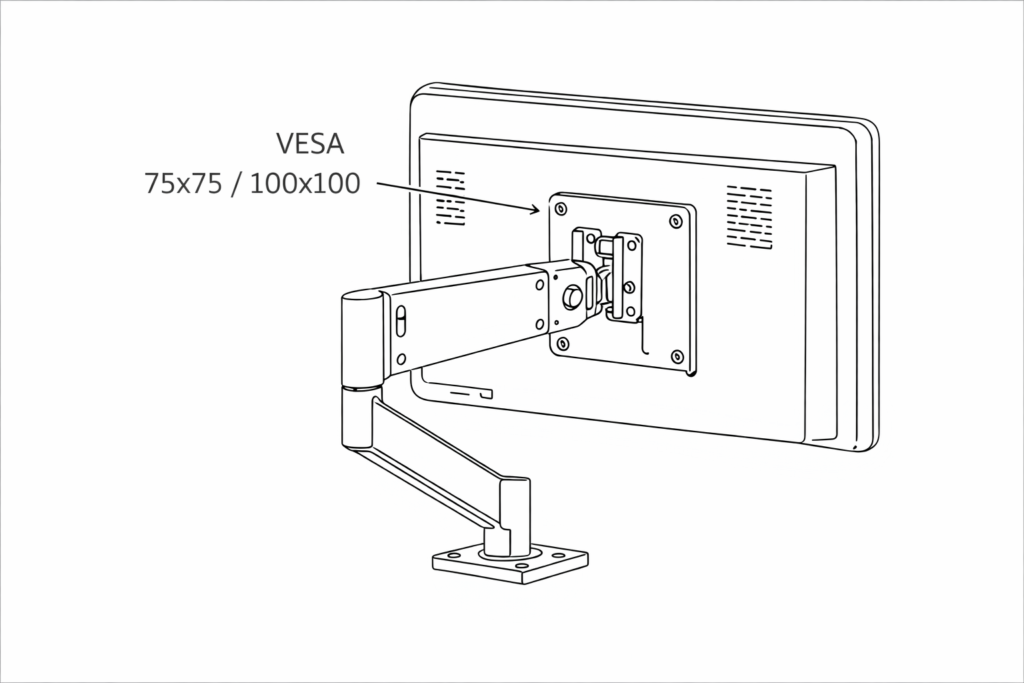
Best suited for: Applications requiring flexible positioning
VESA mounting uses standardized patterns (e.g., 75×75 mm, 100×100 mm) for installation on arms, brackets, or walls.
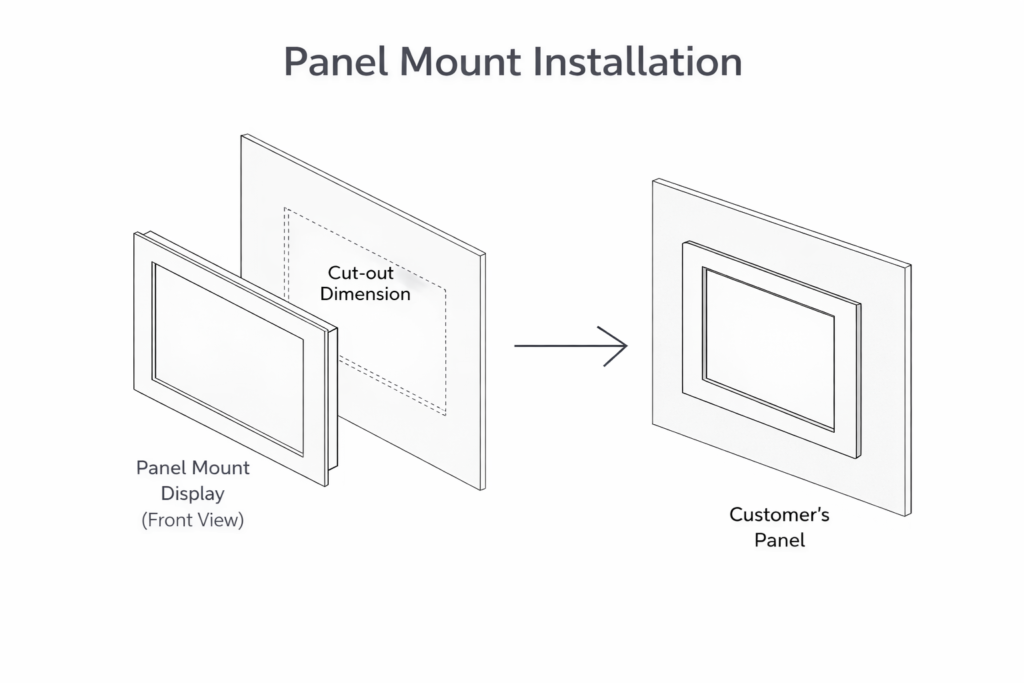
Best suited for: Environments requiring sealing and mechanical robustness
Panel mount systems are installed into a panel cut-out and secured with clamps, forming a sealed front interface.
Engineering note:
Thermal management must be evaluated when using panel mount in sealed enclosures. Passive or active cooling strategies may be required.
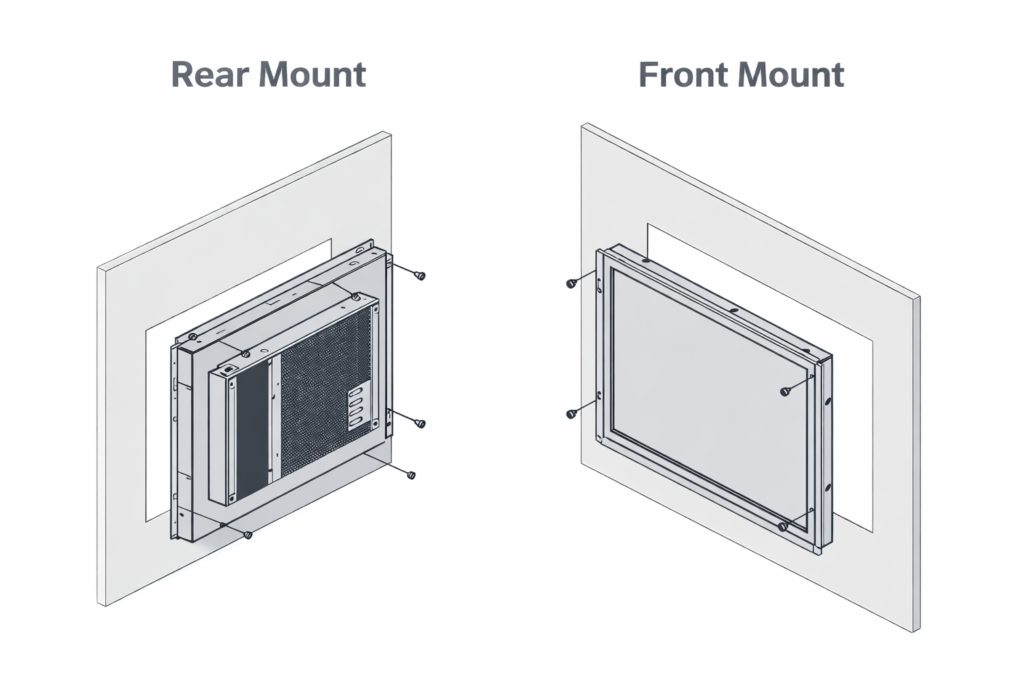
Best suited for: Fully customized equipment and embedded systems
Open frame panel PCs remove the external housing, allowing direct integration into a system-level mechanical design.
Thermal performance should be evaluated at the system level.
Typical design issues include:
Mounting selection must align with environment, enclosure, and thermal design constraints.
Use these decision points:
1. Is environmental protection required?
→ Yes: Panel Mount
→ No: VESA or Open Frame
2. Is a custom enclosure being designed?
→ Yes: Open Frame
→ No: Panel Mount or VESA
3. Is thermal performance a constraint?
→ Sealed enclosure: evaluate cooling for panel mount
→ Open environment: VESA or open frame preferred
Panel PC mounting selection should be treated as a system-level engineering decision.
For most industrial HMI deployments, panel mount provides a balanced solution in terms of protection, mechanical stability, and integration consistency.
What is the difference between panel mount and open frame panel PCs?
Panel mount includes a sealed front bezel for enclosure integration, while open frame requires full mechanical and sealing design.
Is VESA mounting suitable for industrial environments?
Yes, but additional measures are required for vibration resistance and environmental protection.
Which mounting method is suitable for outdoor use?
Panel mount is typically used due to its front sealing capability.
Does mounting method affect thermal performance?
Yes. Panel mount may restrict airflow, while open frame allows customized cooling design.
Choosing the wrong mounting method can lead to overheating, sealing failure, or costly redesign.
Share your application details with us — our engineering team will recommend the most suitable panel PC configuration within 24 hours.
Introduction When an industrial panel PC is not powering on, the root cause typically falls into …
Introduction Panel PC mounting options are a key aspect of industrial panel PC system design.Selecting the …
Introduction: Why Industrial Panel Pc Power Input Selection Matters Selecting the correct power input for an …

Introduction Industrial panel PC reboot issues are often misattributed to software faults. In practice, most reboot …
Send your application details. We respond with configuration direction and next steps.