Industrial Display Supplier Buyer Guide for OEM Equipment

Introduction Human-machine interfaces (HMIs) are now standard components in modern industrial equipment. Displays allow operators to …
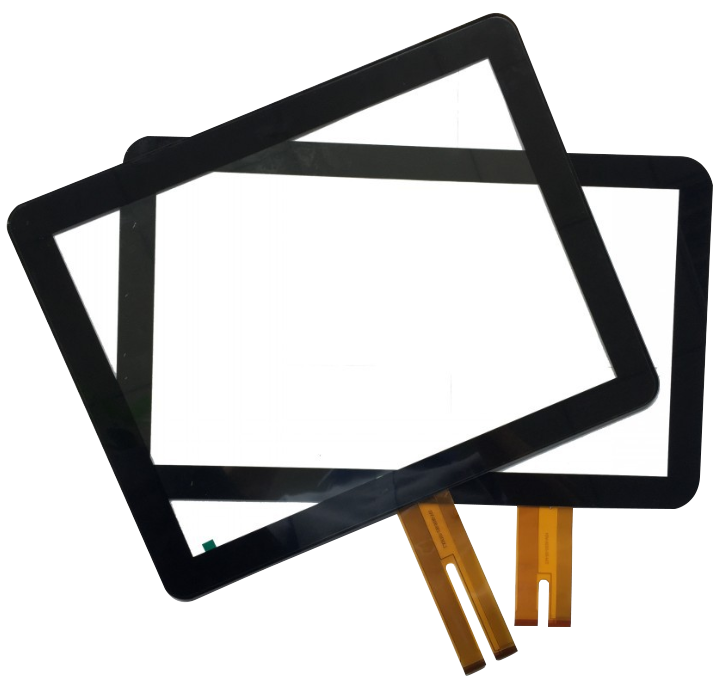
Projected Capacitive Touch Screens—commonly known as PCAP touch screens—are one of the most widely used touch technologies in modern interactive displays.
From industrial touch monitors and kiosks to medical devices and transportation systems, PCAP technology has become the preferred choice for applications that require:
This guide explains how PCAP touch works, why it is used, and where it performs best—with a focus on industrial and project-based applications.
A projected capacitive touch screen is a type of touch interface that uses a transparent conductive grid, typically made of indium tin oxide (ITO), embedded within the glass structure.
Unlike surface capacitive or resistive touch screens, PCAP technology projects an electrostatic field through the cover glass, allowing it to detect touch without physical pressure.
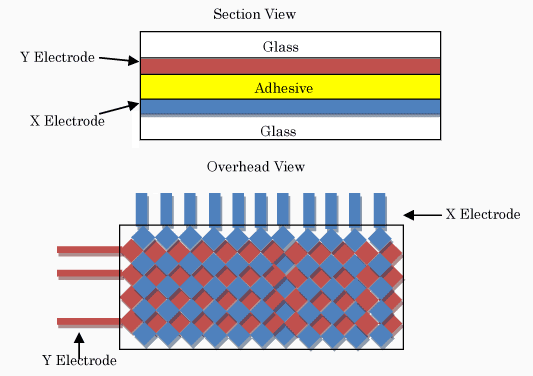
PCAP touch screens operate by detecting changes in capacitance when a conductive object—such as a human finger—approaches the surface.
The process works as follows:
Because the sensing layer is embedded within the glass, PCAP touch screens can support multi-touch gestures and maintain excellent optical clarity.
PCAP technology supports advanced gestures such as:
This makes it ideal for modern graphical user interfaces (GUI).
Since PCAP touch does not rely on mechanical pressure:
This is critical for industrial and public-facing systems.
PCAP touch screens offer:
These features ensure clear visibility even in bright environments.
PCAP technology can operate through thick toughened glass, enabling:
This is a key reason PCAP is widely used in kiosks and ticketing machines.
| Feature | PCAP | Resistive Touch | Infrared Touch |
|---|---|---|---|
| Multi-touch | Yes | No | Yes |
| Glass Surface | Yes | No | Yes |
| Optical Clarity | High | Medium | High |
| Industrial Sealing | Excellent | Limited | Moderate |
| Typical Use | Industrial / Commercial | Legacy / Low-cost | Large Displays |
Projected capacitive touch screens are commonly used in:
Their combination of precision, durability, and modern UI support makes them ideal for long-term industrial deployment.

When selecting a PCAP touch screen for industrial use, key factors include:
These parameters must be defined early in OEM and project-based designs.
While powerful, PCAP touch screens also have limitations:
For industrial projects, engineering validation is essential before mass production.
When evaluating a projected capacitive touch screen for industrial use, understanding the key technical parameters is essential.
Not all PCAP touch screens perform the same, even if they appear similar on paper.
Critical parameters include:
These parameters collectively define how well a PCAP touch screen performs in real-world industrial conditions, not just laboratory tests.
In OEM and project-based applications, PCAP touch screens are rarely “off-the-shelf” components.
Industrial projects typically require:
During OEM development, PCAP touch screens go through several critical stages:
Successful PCAP integration depends heavily on early engineering alignment, rather than last-minute component selection.
Although PCAP touch technology is powerful, it also presents challenges if not properly designed.
Standard PCAP touch screens may struggle with gloves or water droplets.
This can be addressed through:
Industrial environments often contain motors, power supplies, and metal structures.
Without proper shielding and tuning, touch performance may degrade.
Solutions include:
Thicker glass improves durability but reduces touch sensitivity.
Balancing mechanical strength and touch responsiveness is a key engineering task in PCAP projects.
Selecting the right PCAP touch screen is not just about choosing the latest technology—it’s about matching the design to the application.
Key questions to consider include:
For industrial systems, a well-matched PCAP touch solution improves:
Careful selection at the early design stage reduces costly redesigns and delays later in the project.
PCAP is a type of capacitive touch technology, specifically designed to project the sensing field through glass.
Yes. With the correct controller tuning and glove-compatible design, PCAP can support industrial gloves.
Yes. With high-brightness displays, optical bonding, and proper enclosure design, PCAP touch screens are widely used in semi-outdoor environments.
Projected capacitive touch technology has become the dominant solution for modern industrial touch interfaces.
Its ability to combine:
makes PCAP touch screens a foundational component in next-generation industrial and public systems.
Introduction Human-machine interfaces (HMIs) are now standard components in modern industrial equipment. Displays allow operators to …
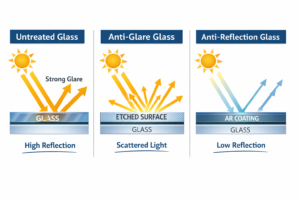
Introduction Industrial displays are frequently deployed in environments where lighting conditions are difficult to control. Equipment …
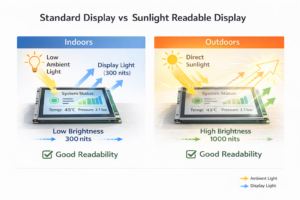
Introduction Displays are a critical interface component in many types of industrial equipment. They provide system …
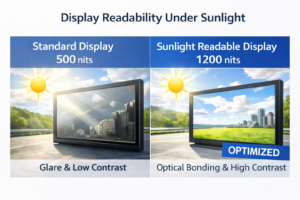
Introduction Display visibility is a critical design parameter in industrial equipment. Operators rely on graphical interfaces …
Send your application details. We respond with configuration direction and next steps.