Industrial Display Supplier Buyer Guide for OEM Equipment

Introduction Human-machine interfaces (HMIs) are now standard components in modern industrial equipment. Displays allow operators to …
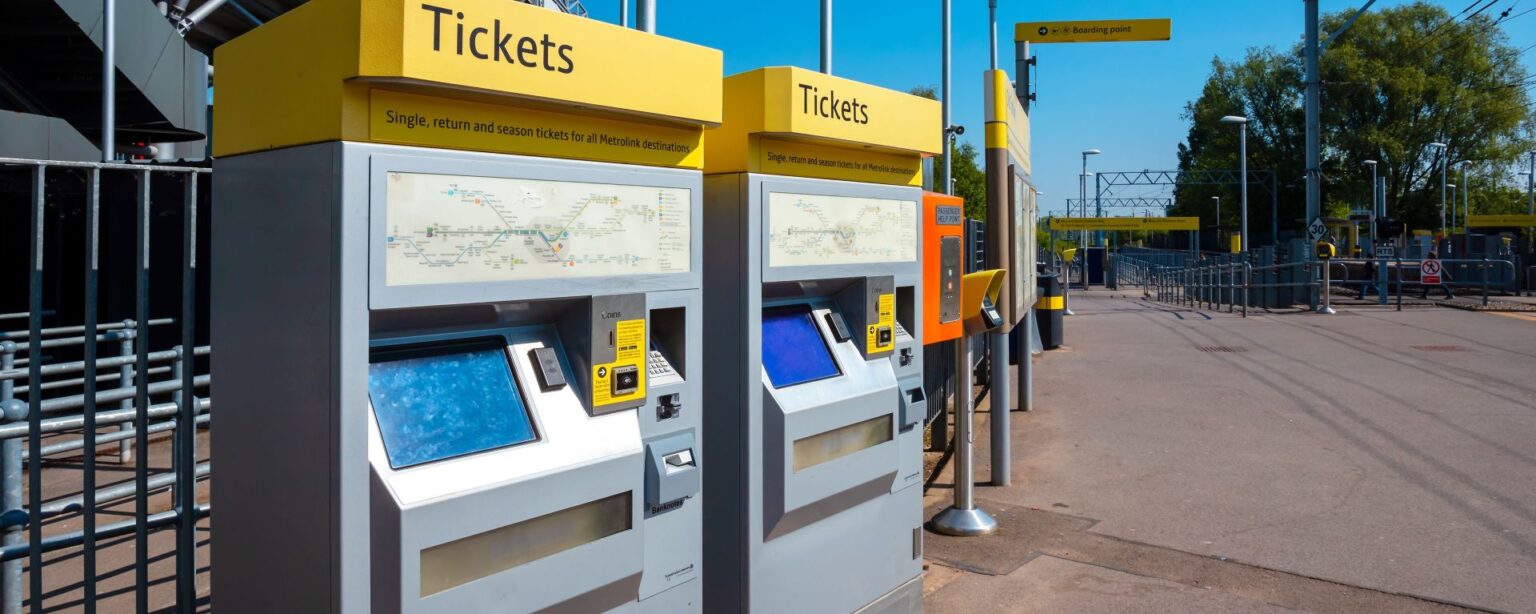
A sunlight readable monitor remains clearly visible in high-brightness outdoor environments where standard displays fail.
In 2026, the key specifications to look for include ≥1000 nits brightness, optical bonding, anti-glare and anti-reflective coatings, rugged IP65/IK10 protection, and wide temperature tolerance.
This guide explains each factor in practical terms—helping you select the right industrial-grade display and avoid costly mistakes in outdoor projects.
In 2026, outdoor digital systems are everywhere—EV chargers, smart kiosks, industrial HMIs, marine consoles, and transportation equipment.
Yet one problem has not disappeared:
Under direct sunlight, many displays still become washed out, unreadable, or fail due to heat.
Poor visibility is not just inconvenient. It causes:
Selecting the right sunlight readable monitor is therefore a system-level decision, not just a display upgrade.
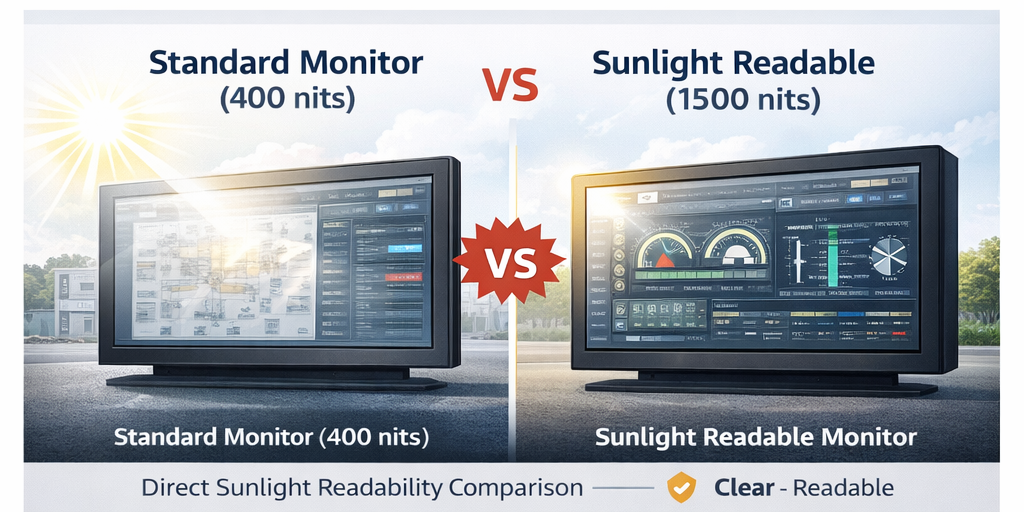
Brightness is the foundation of outdoor readability.
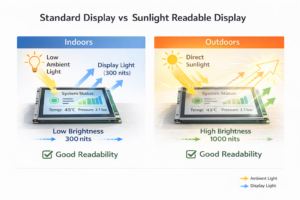
Standard indoor monitors (300–400 nits) are unsuitable outdoors. In 2026, practical benchmarks are:
High brightness ensures legibility during peak daylight hours, especially for kiosks, transportation systems, marine equipment, and industrial machinery.
Bonus tip:
Choose monitors with automatic brightness adjustment to reduce power consumption at night and extend panel lifespan.
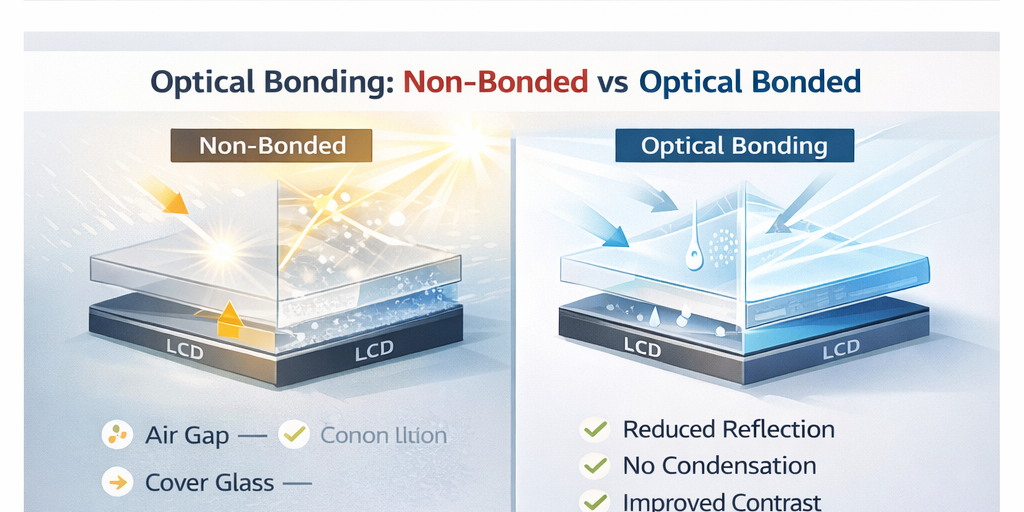
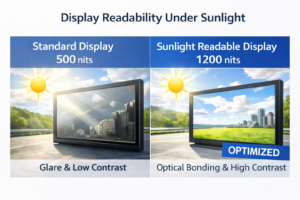
Without optical bonding, an air gap exists between the LCD panel and the cover glass. This gap causes:
Optical bonding eliminates this gap using optical adhesive, delivering:
In modern outdoor systems, optical bonding is no longer optional—it is expected.
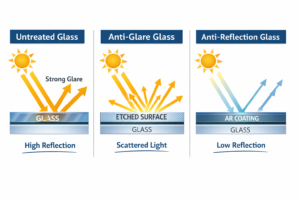
Brightness alone cannot overcome reflections from sunlight, glass, or vehicle headlights.
That’s where surface treatments play a critical role:
In 2026, many rugged displays combine AG + AR coatings with scratch-resistant (7H+) glass, ensuring long-term readability in public and industrial environments.
A display designed for indoor use may fail within weeks outdoors.
To ensure long-term reliability, confirm the following ruggedization features:
Outdoor readability and durability must be engineered together.
Visibility is only half the equation—touch performance matters just as much.
| Touch Type | Best For |
|---|---|
| Projected Capacitive (PCAP) | Multi-touch, gestures, glove operation |
| Resistive Touch | Single-touch, wet or dusty environments |
| Waterproof Touch | Marine systems, outdoor kiosks, hygiene-critical use |
In 2026, PCAP with glove and wet-touch tuning is the most common choice for industrial and outdoor applications.
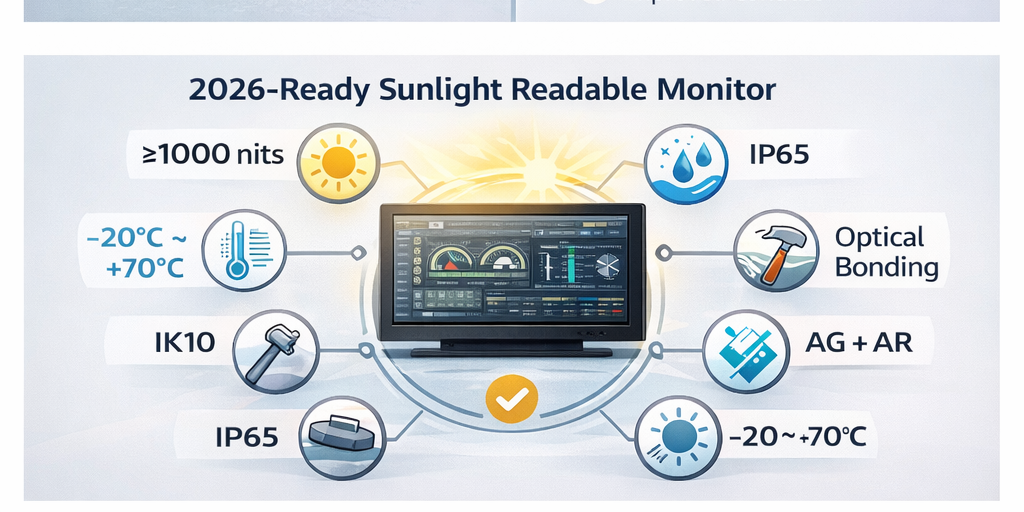
Make sure your display includes:
Meeting these criteria ensures reliable performance in high-ambient-light and harsh outdoor environments.
Sunlight readability is not defined by a single specification—it is the result of integrated design decisions.
A properly designed sunlight readable monitor doesn’t fight the environment—it performs within it.
By prioritizing:
you ensure your outdoor display remains readable, durable, and dependable—no matter how intense the sunlight becomes.
At Eagle Touch, we design and manufacture industrial touch monitors and sunlight readable panel PCs for demanding outdoor applications—from kiosks and transportation systems to heavy equipment and marine environments.
👉 Contact us to discuss your project requirements or request a recommendation.
Introduction Human-machine interfaces (HMIs) are now standard components in modern industrial equipment. Displays allow operators to …
Introduction Industrial displays are frequently deployed in environments where lighting conditions are difficult to control. Equipment …
Introduction Displays are a critical interface component in many types of industrial equipment. They provide system …
Introduction Display visibility is a critical design parameter in industrial equipment. Operators rely on graphical interfaces …
Send your application details. We respond with configuration direction and next steps.