Blog
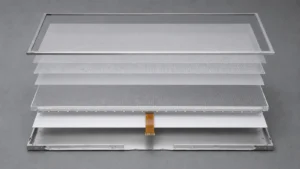
Industrial LCD Backlight: Types, Specifications and Selection Guide
An LCD controls how much light passes through each pixel but does not produce its own light. The backlight behind it makes…
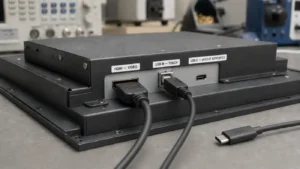
Can a USB Port Be Used as a Video Input for an Industrial Monitor?
Sometimes, but the connector alone does not answer the question. A standard USB-A port does not provide a native video signal. The…
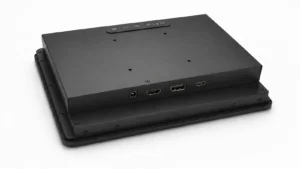
HDMI vs DisplayPort vs USB-C for Industrial Displays
Customers often ask which display interface is the most reliable for industrial equipment. In practice, the host computer has usually made half…
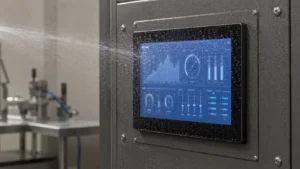
Industrial Waterproof Touch Screen Design: IP Rating, Sealing and Wet-Touch
Waterproof performance does not come from a touch sensor alone. It depends on how the cover glass, touch panel, gasket, display frame,…
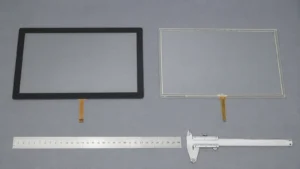
PCAP vs Resistive Touch Screen for Industrial Equipment
For most new industrial HMIs with a sealed glass front, PCAP is the practical starting point. It offers better optical clarity, a…
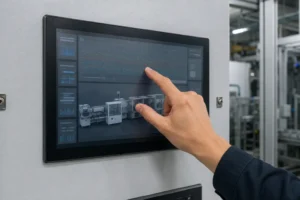
Do You Really Need a Multi-Touch Industrial Screen?
Multi-touch is now a standard option on many projected capacitive touch screens. That does not mean every industrial HMI needs it. If…
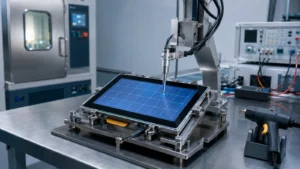
How to Test Industrial Touch Screen Durability Before Production
Industrial touch screen durability cannot be confirmed by one lifetime figure, an IK rating or an “industrial-grade” label. A reliable assessment must…
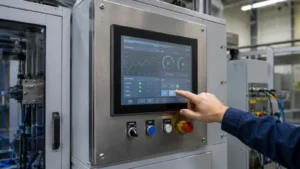
Industrial Touch Screen Guide for OEM Equipment
An industrial touch screen is not selected by size and touch technology alone. It must work with the operator, cover glass, controller,…
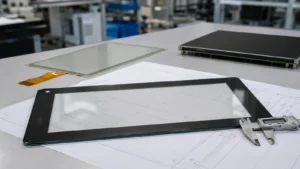
Industrial Touch Screen Cover Glass Design Guide
Industrial touch screen cover glass is more than a transparent protective sheet. It defines the front appearance of the product and protects…
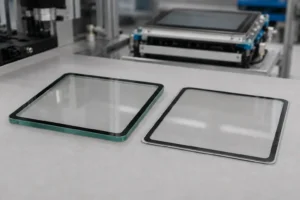
Toughened Glass for Industrial Touchscreens: Thermal Tempering vs. Chemical Strengthening
Industrial touchscreen projects often use the terms toughened glass, tempered glass, and chemically strengthened glass as if they mean the same thing….